tempera, painting
#
portrait
#
figurative
#
tempera
#
painting
#
oil painting
#
orientalism
#
portrait art
#
modernism
#
realism
Copyright: Public Domain: Artvee
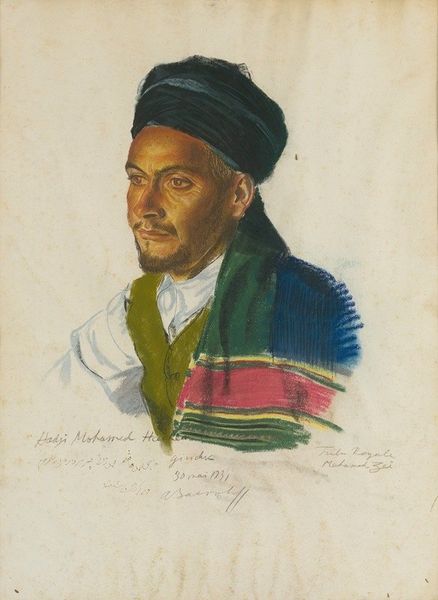
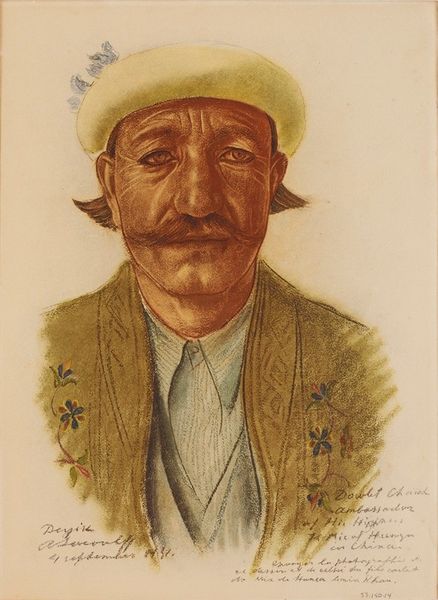
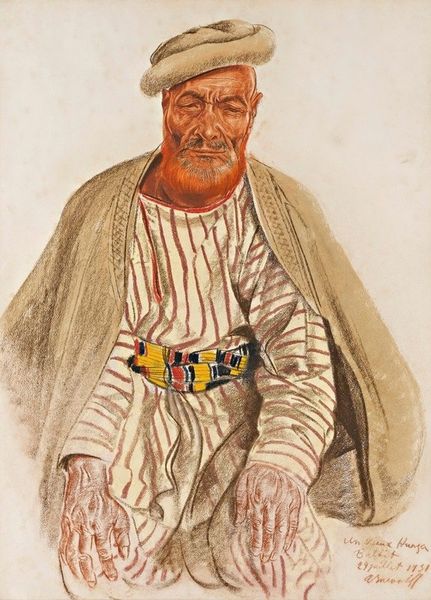
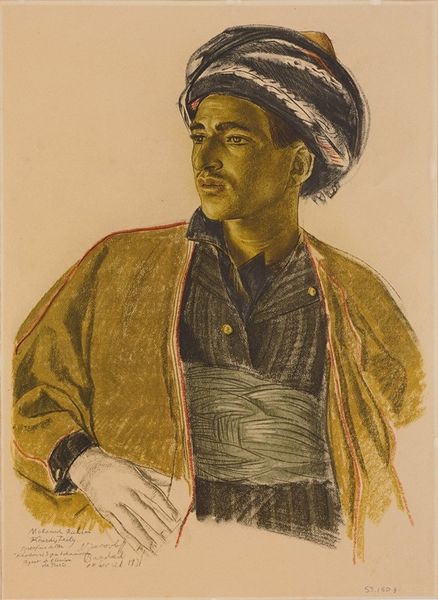
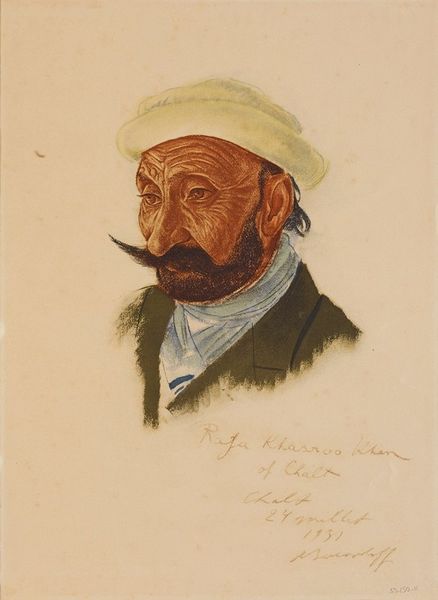
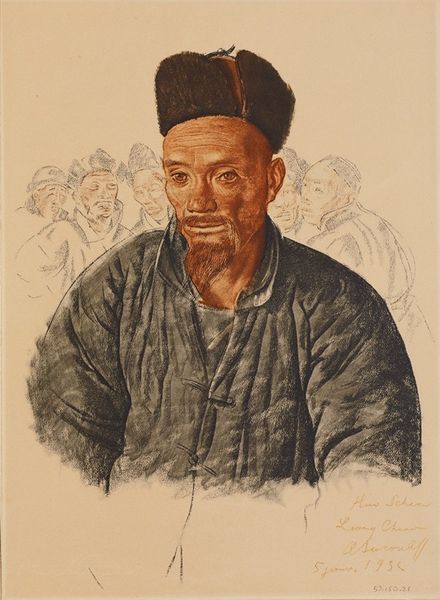
Alexandre Jacovleff made this portrait of Sir Mohamed Nazim Khan, the Mir of Hunza, in Baltit. It’s rendered in a dry brush technique with gouache and graphite on paper. Jacovleff was a Russian artist known for his portraits of ethnic types, often produced during his travels as part of expeditions. In 1931, when this portrait was made, the region of Hunza was part of British India. Nazim Khan, as Mir, was both a local ruler and a figure within the British colonial system, reflected in the "K.C.I.E." inscription, which denotes a Knight Commander of the Indian Empire, a British honor. The portrait captures Nazim Khan in traditional attire, with a fur hat and a dignified bearing. There's a tension here: Jacovleff's gaze, as a European artist, intersects with the Mir’s identity as a ruler navigating colonial power. The Mir's expression carries a weight of responsibility, of holding onto cultural identity amidst external forces. It prompts us to consider how identity is both performed and perceived, especially in contexts of cultural exchange and power dynamics.
Comments
No comments
Be the first to comment and join the conversation on the ultimate creative platform.
 Collect
 React
React Comment
More like this