1728
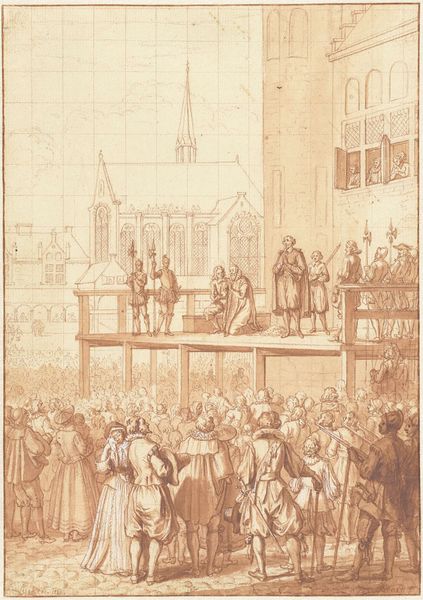
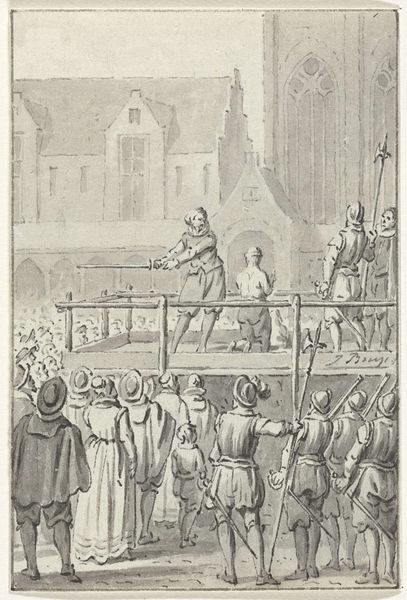
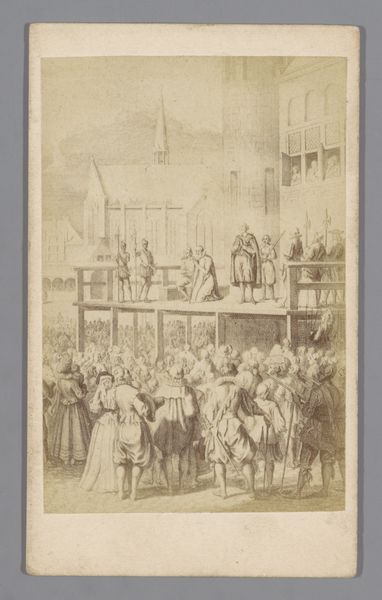
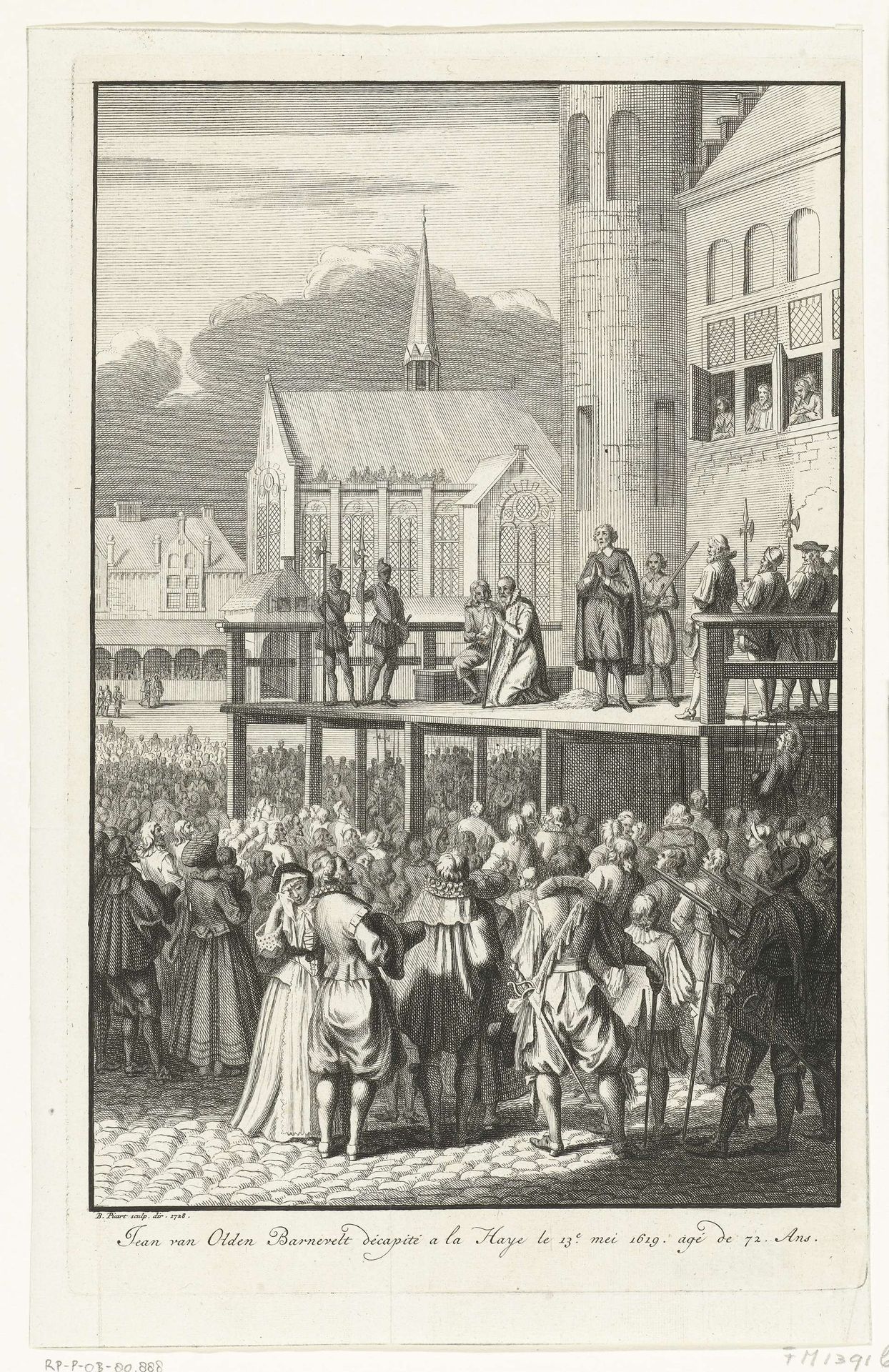
Johan van Oldenbarnevelt knielt voor zijn onthoofding, 1619

Bernard Picart
1673 - 1733Location
RijksmuseumListen to curator's interpretation
Curatorial notes
Bernard Picart created this engraving of Johan van Oldenbarnevelt's execution in 1619. Observe Oldenbarnevelt kneeling, a posture laden with the symbolism of submission and impending doom, yet also humility and acceptance. This motif of kneeling before execution echoes across centuries. Think of depictions of saints facing martyrdom in early Christian art, where kneeling signifies piety in the face of death. Yet, consider how this posture is subverted in modern contexts. The kneeling protestor, head held high, reclaims agency, transforming submission into a powerful act of defiance. The emotional intensity of this scene stems from the primal fear of death and the inherent drama of public execution. Such images tap into our collective memory, triggering deep-seated anxieties and moral considerations about justice, power, and sacrifice. It reminds us that the symbols of power and resistance are perpetually in flux, their meanings shaped by the shifting sands of history and human experience.