1875
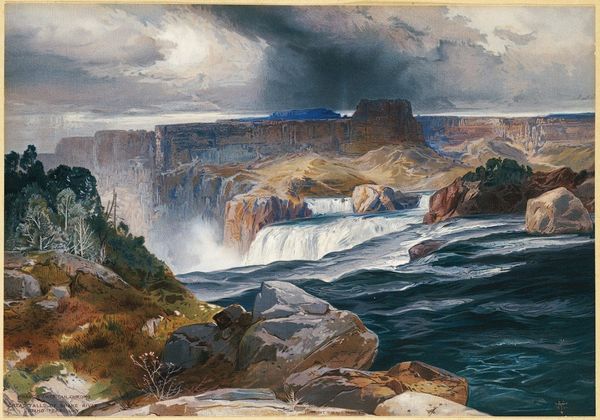
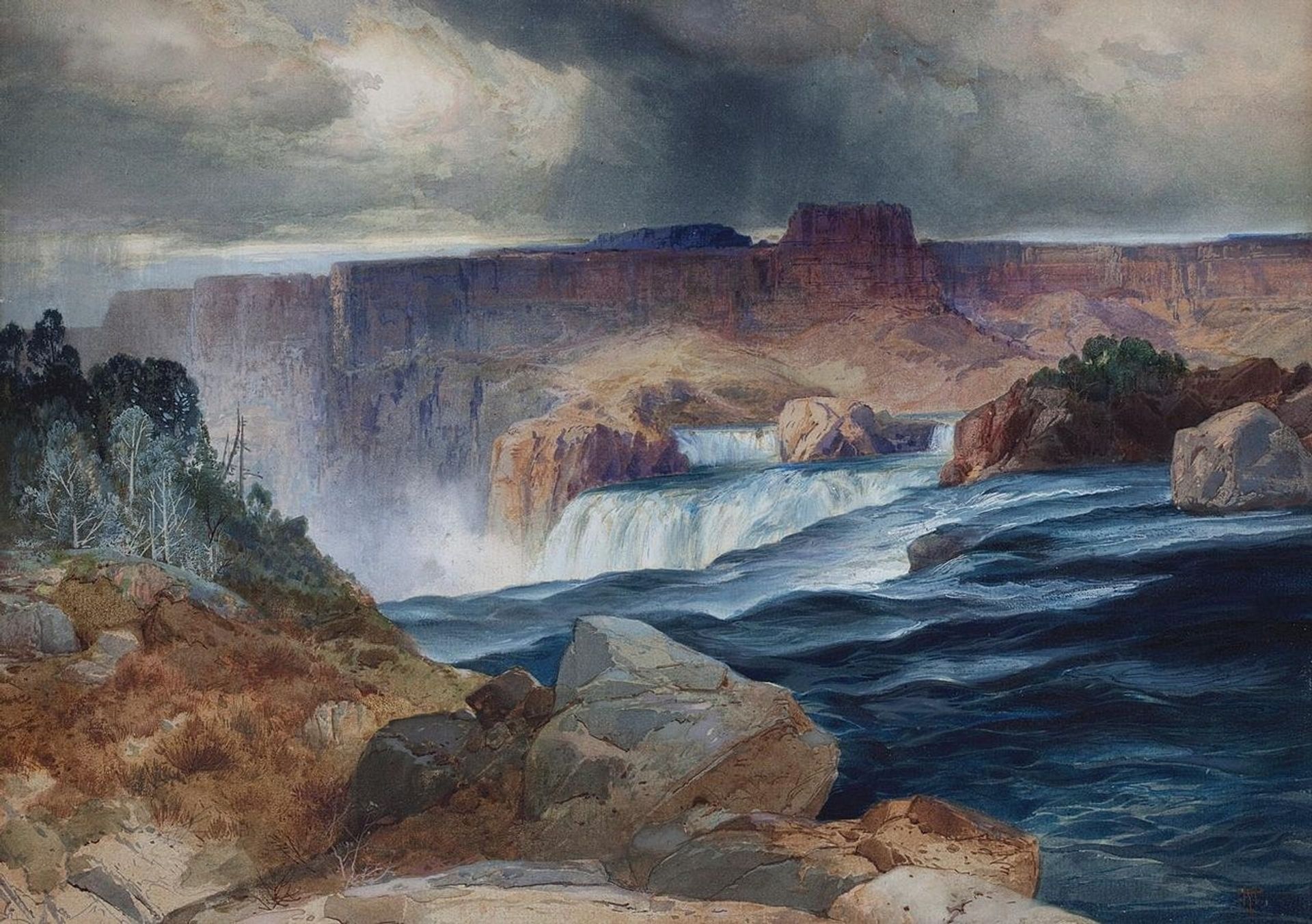
Shoshone Falls, Snake River, Idaho

Listen to curator's interpretation
Curatorial notes
Thomas Moran made this watercolor painting of Shoshone Falls, Snake River, Idaho, during the 19th century. It captures the sublime grandeur of the American West, a subject that resonated deeply with the cultural values of the time. Moran's rendering of the Shoshone Falls isn’t just a landscape; it's a visual statement that participates in the 19th-century American narrative of expansion and progress. The monumental scale of the falls, combined with the dramatic lighting, evokes a sense of awe and reverence. This reflects the cultural drive to see the American West as a source of national pride and identity, and it coincided with the rise of landscape painting as a celebrated genre within academic art institutions. To understand this work fully, we can look at travel accounts, geological surveys, and the promotion of tourism by railroad companies. Moran's art played a role in shaping perceptions of the American West and helped drive its integration into the national consciousness.