About this artwork
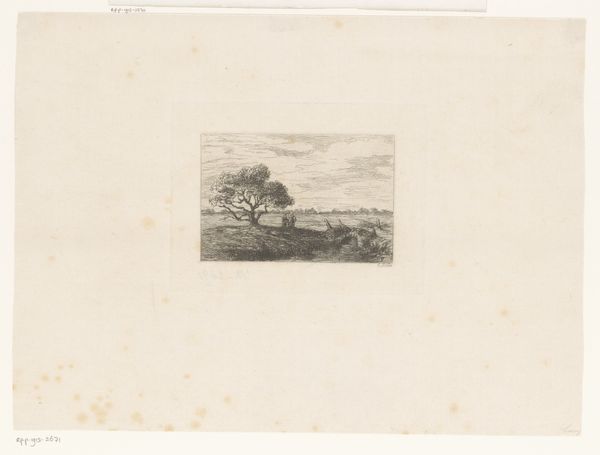
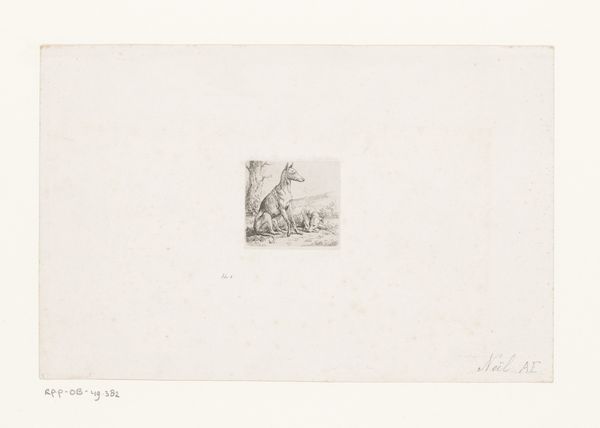
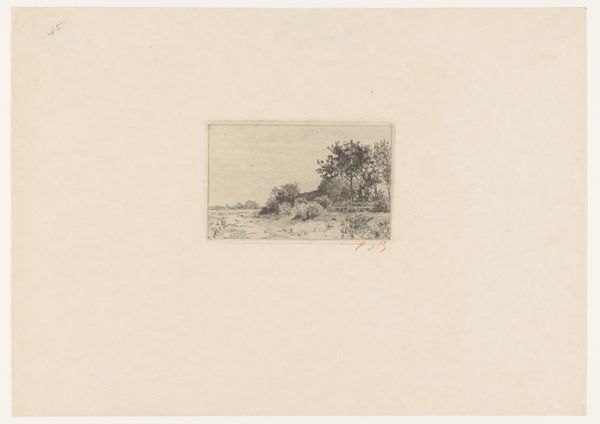
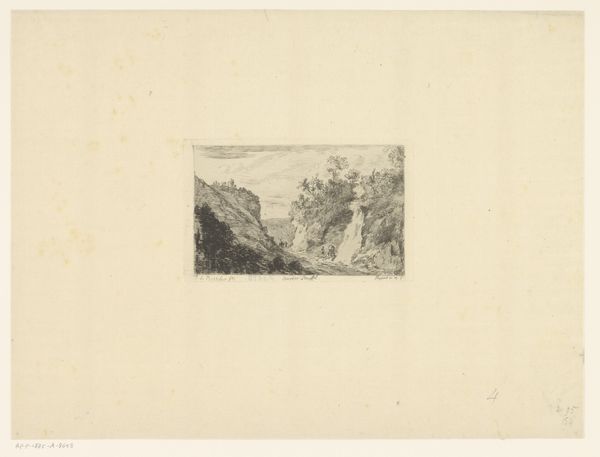
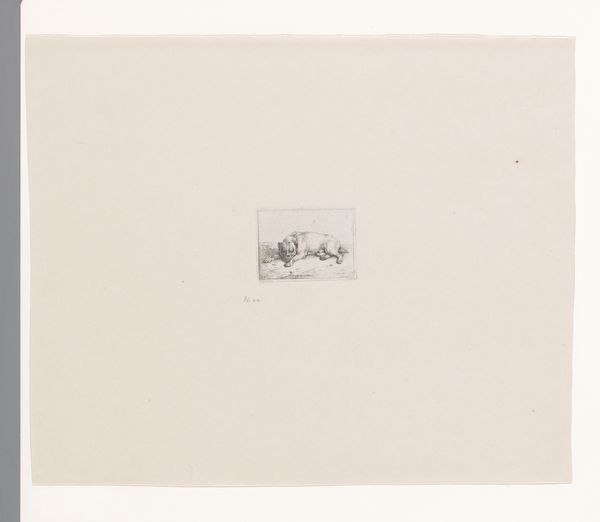
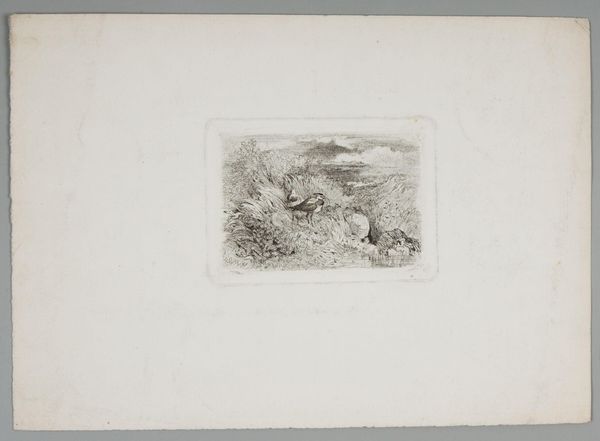
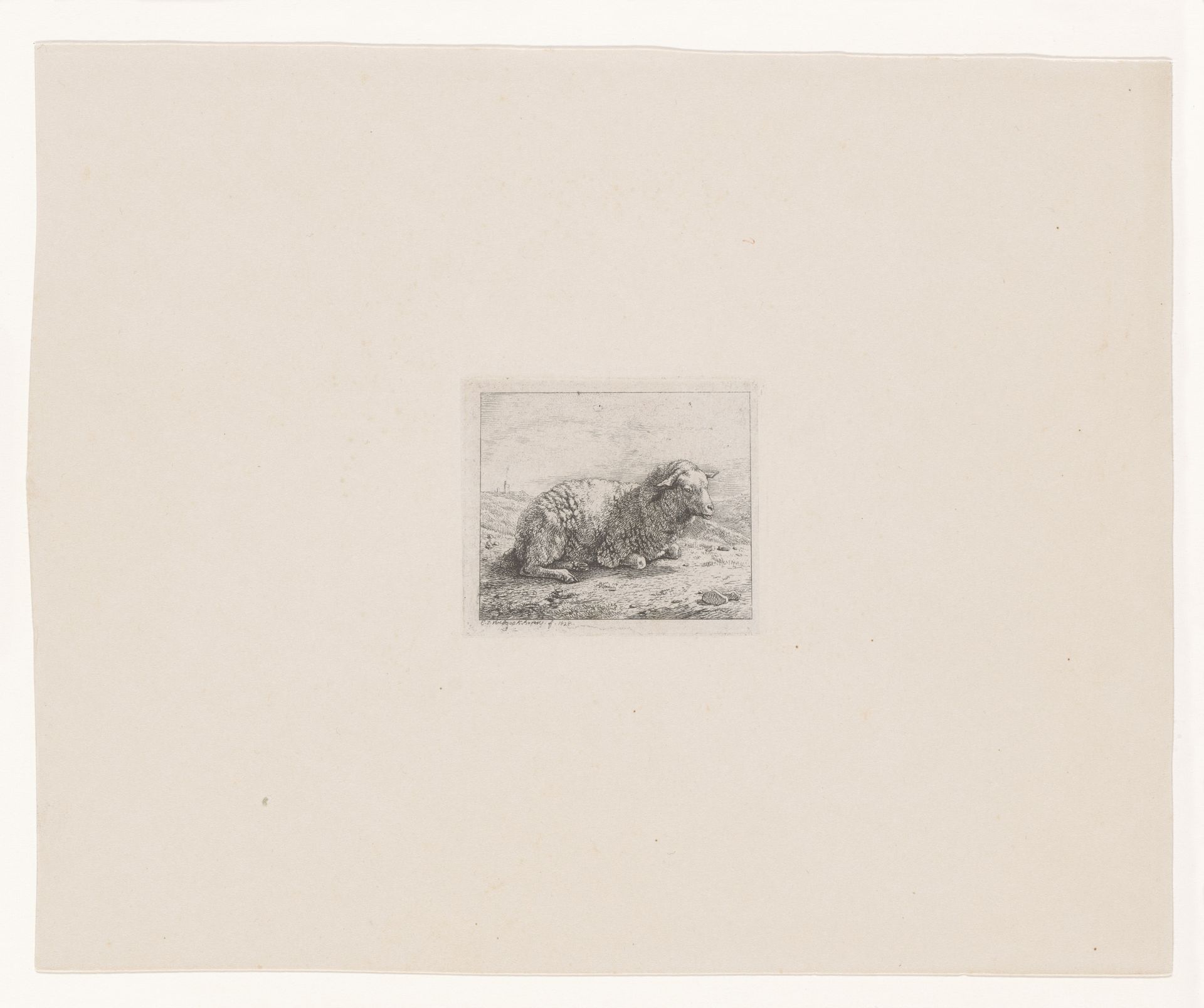
Eugène Verboeckhoven made this etching of a resting sheep sometime in the nineteenth century. Sheep and cattle were this Belgian artist’s specialty, and his animal paintings were very popular with the rising middle class. Verboeckhoven was part of a long tradition of animal painting, but the market revolution of the nineteenth century changed the social role of this kind of art. Instead of aristocratic displays of ownership, animal paintings like this one became sentimental images of rural life for middle-class consumption. The etching’s small size speaks to this new context. So does the artist’s careful attention to the sheep’s soft wool, and its calm demeanor. What was once a symbol of wealth and power has become a symbol of peaceful domesticity. To understand this transformation, we can look at exhibition reviews, auction records, and other documents of the period, all of which help to reveal how the social meaning of art changes over time.

Artwork details
- Medium
- drawing, print, etching, paper
- Dimensions
- height 63 mm, width 75 mm
- Location
- Rijksmuseum
- Copyright
- Rijks Museum: Open Domain
Tags
Comments
Share your thoughts
About this artwork
Eugène Verboeckhoven made this etching of a resting sheep sometime in the nineteenth century. Sheep and cattle were this Belgian artist’s specialty, and his animal paintings were very popular with the rising middle class. Verboeckhoven was part of a long tradition of animal painting, but the market revolution of the nineteenth century changed the social role of this kind of art. Instead of aristocratic displays of ownership, animal paintings like this one became sentimental images of rural life for middle-class consumption. The etching’s small size speaks to this new context. So does the artist’s careful attention to the sheep’s soft wool, and its calm demeanor. What was once a symbol of wealth and power has become a symbol of peaceful domesticity. To understand this transformation, we can look at exhibition reviews, auction records, and other documents of the period, all of which help to reveal how the social meaning of art changes over time.
Comments
Share your thoughts