About this artwork
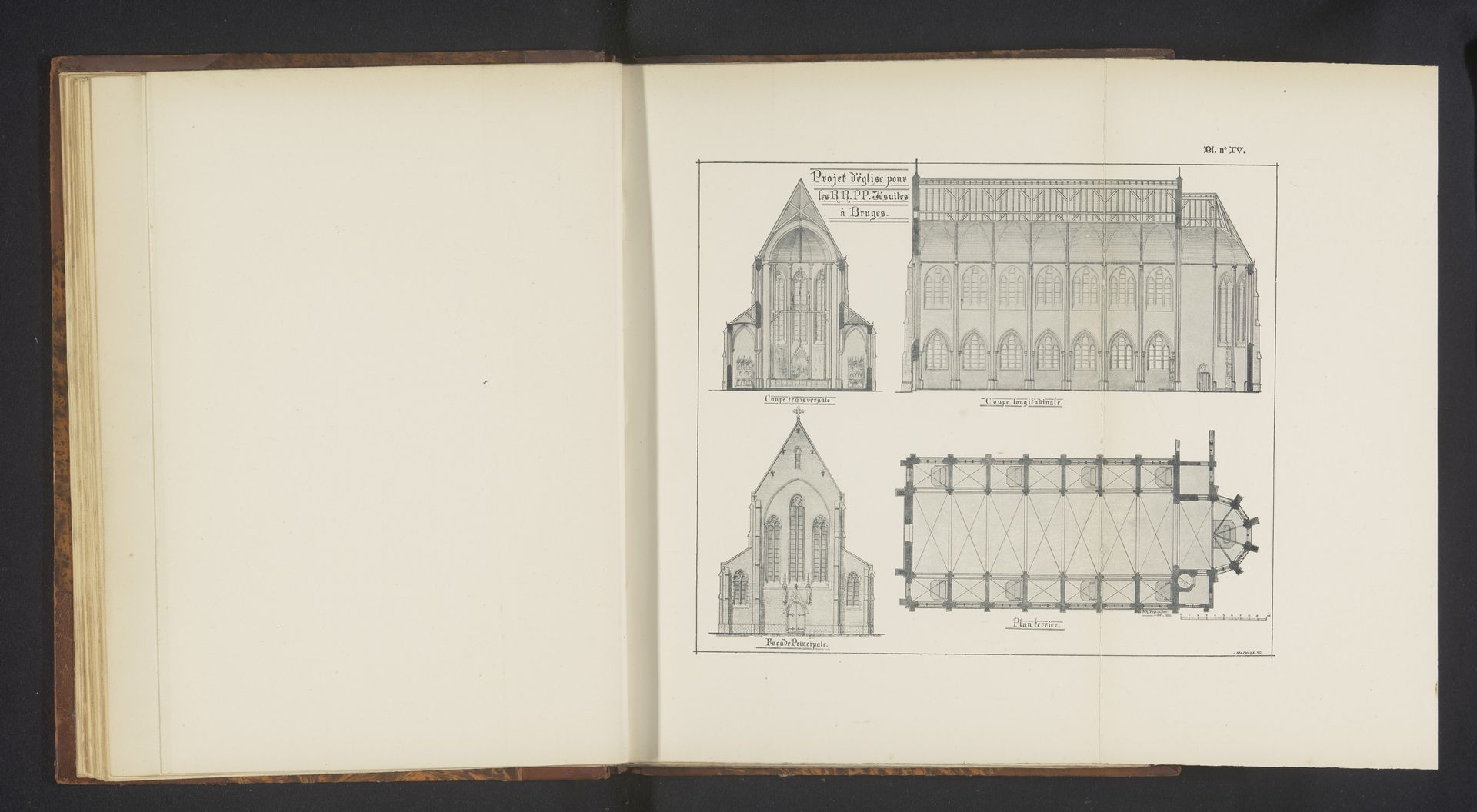
These reproductions present architectural plans for a Jesuit church in Brugge, conceived by Joseph Piscador. The drawings are rendered in ink on paper, a method demanding precision and control. The cross-section, side, front, and floor plan, show a meticulous representation of the proposed structure, and the architect's vision, but it's also a window onto the labor involved in realizing such a design. Consider the traditional skills required. Not just architectural expertise, but drafting, and the coordination of various trades – stonemasons, carpenters, glaziers. Each line represents hours of labor, both in the drawing and the future construction. The church itself, if built, would have been a nexus of social activity, of course. But we should also consider the economic implications: the resources consumed, the livelihoods sustained. Thinking about these drawings in terms of material and making helps us to see them not just as design documents, but as nodes in a wider network of labor, politics, and consumption.
Reproductie van ontwerptekeningen van een dwarsdoorsnee, zijaanzicht, vooraanzicht en plattegrond van een kerk voor jezuïeten in Brugge door Joseph Piscador
before 1896

Artwork details
- Medium
- drawing, paper, pencil, architecture
- Dimensions
- height 192 mm, width 225 mm
- Copyright
- Rijks Museum: Open Domain
Tags
Comments
Share your thoughts
About this artwork
These reproductions present architectural plans for a Jesuit church in Brugge, conceived by Joseph Piscador. The drawings are rendered in ink on paper, a method demanding precision and control. The cross-section, side, front, and floor plan, show a meticulous representation of the proposed structure, and the architect's vision, but it's also a window onto the labor involved in realizing such a design. Consider the traditional skills required. Not just architectural expertise, but drafting, and the coordination of various trades – stonemasons, carpenters, glaziers. Each line represents hours of labor, both in the drawing and the future construction. The church itself, if built, would have been a nexus of social activity, of course. But we should also consider the economic implications: the resources consumed, the livelihoods sustained. Thinking about these drawings in terms of material and making helps us to see them not just as design documents, but as nodes in a wider network of labor, politics, and consumption.
Comments
Share your thoughts