

1648 - 1669
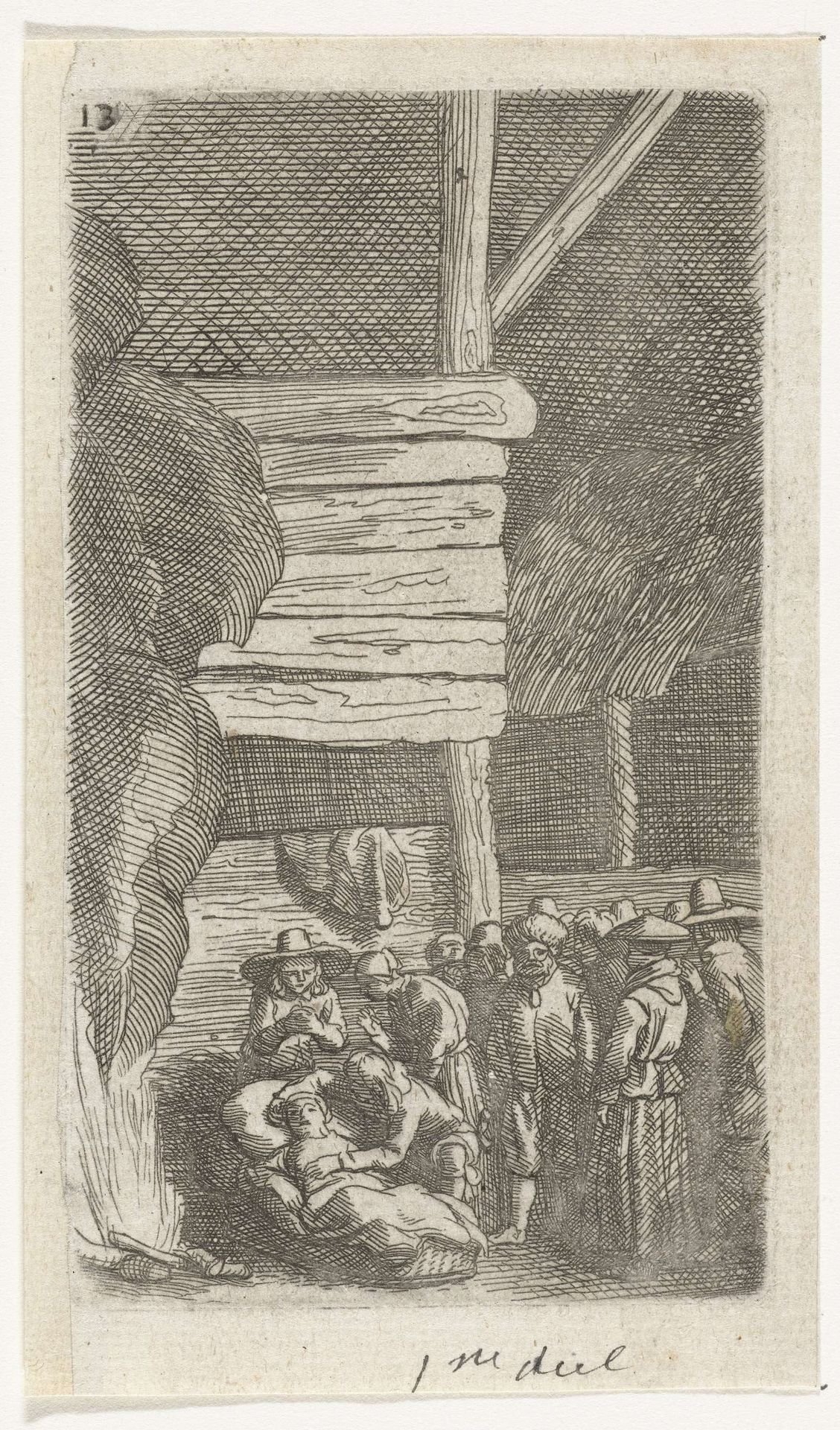
Stervende vrouw

Samuel van Hoogstraten
1627 - 1678Location
RijksmuseumListen to curator's interpretation
Curatorial notes
Samuel van Hoogstraten created this etching, "Stervende Vrouw", or "dying woman", at an unknown date. In 17th century Netherlands, death was a public, communal event. Here, the humble setting suggests the woman is of low social status, lying in what seems to be a barn. Attending her are family and perhaps a clergyman, their presence underscoring the social and religious rituals surrounding death in Dutch society. Hoogstraten's choice of etching, a printmaking technique, democratized the image, making it accessible to a wider audience. This accessibility speaks to the didactic function of art in the Dutch Golden Age, where moral lessons were often conveyed through everyday scenes. To fully grasp this work, we might turn to period documents – wills, sermons, and medical texts – to understand contemporary attitudes toward death and the social structures that governed it. By situating the artwork within its social context, we recognize its power to reflect and shape cultural values.