About this artwork
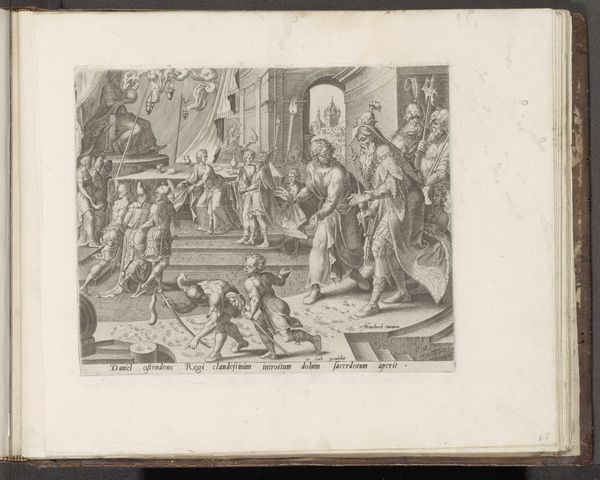
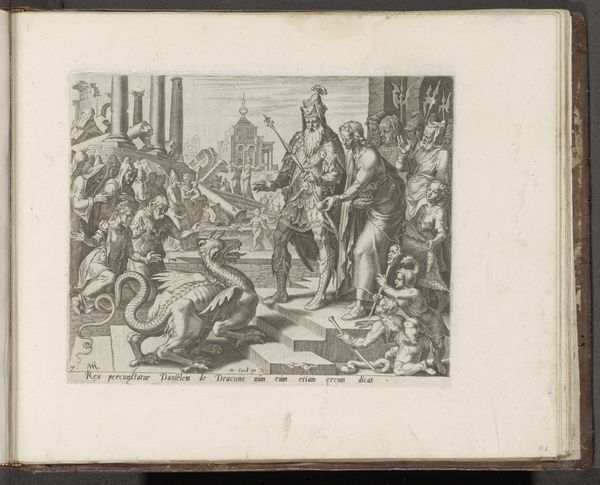
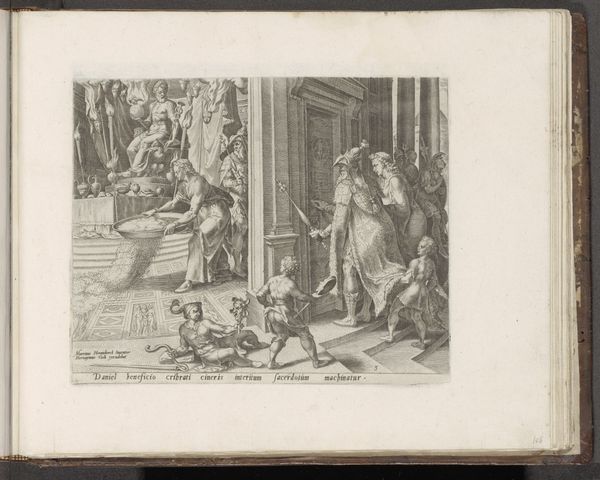
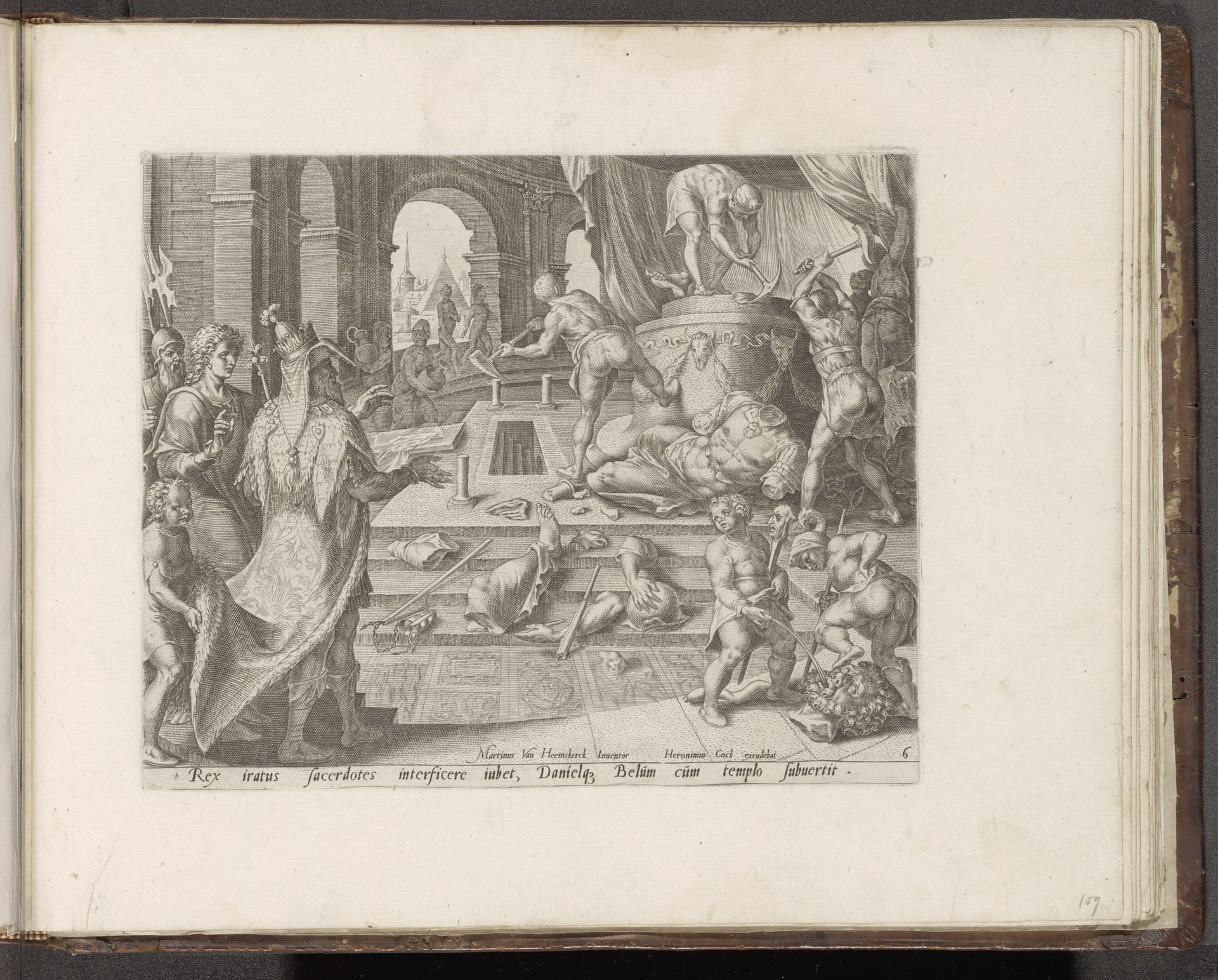
Philips Galle’s engraving depicts King Cyrus ordering the destruction of the idol Bel, part of a series illustrating stories from the Book of Daniel. Made in the late 16th century, this work reflects the religious and political tensions of the time, particularly the Protestant Reformation's critique of idolatry. Galle’s choice to visualize this specific narrative wasn't accidental. The destruction of idols, like Bel, was loaded, particularly after the iconoclasm that spread through the Netherlands just prior to this work. The image emphasizes the power dynamics inherent in religious conversion and cultural imposition. The act of destroying the idol could be seen as a commentary on the imposition of new belief systems. Consider how such images participated in shaping societal attitudes towards religious and cultural differences during a period of significant upheaval. The emotional impact of witnessing such destruction, whether in reality or through art, highlights the profound connection between belief, identity, and conflict.
Koning Cyrus laat het beeld van Bel aan stukken slaan
1565 - 1579

Philips Galle
1537 - 1612Location
RijksmuseumArtwork details
- Medium
- print, paper, engraving
- Dimensions
- height 203 mm, width 250 mm
- Location
- Rijksmuseum
- Copyright
- Rijks Museum: Open Domain
Tags
Comments
Share your thoughts
About this artwork
Philips Galle’s engraving depicts King Cyrus ordering the destruction of the idol Bel, part of a series illustrating stories from the Book of Daniel. Made in the late 16th century, this work reflects the religious and political tensions of the time, particularly the Protestant Reformation's critique of idolatry. Galle’s choice to visualize this specific narrative wasn't accidental. The destruction of idols, like Bel, was loaded, particularly after the iconoclasm that spread through the Netherlands just prior to this work. The image emphasizes the power dynamics inherent in religious conversion and cultural imposition. The act of destroying the idol could be seen as a commentary on the imposition of new belief systems. Consider how such images participated in shaping societal attitudes towards religious and cultural differences during a period of significant upheaval. The emotional impact of witnessing such destruction, whether in reality or through art, highlights the profound connection between belief, identity, and conflict.
Comments
Share your thoughts