About this artwork
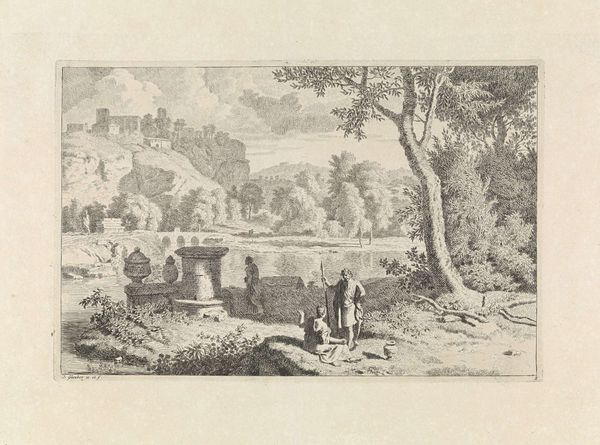
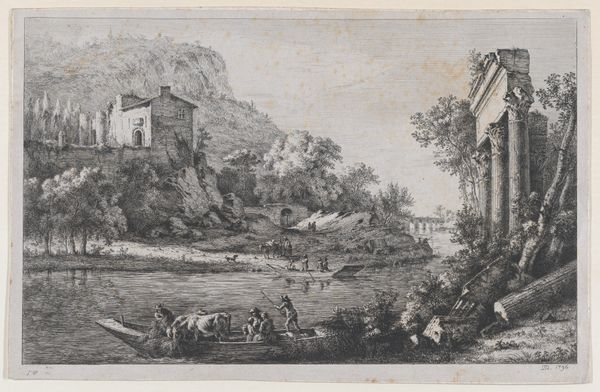
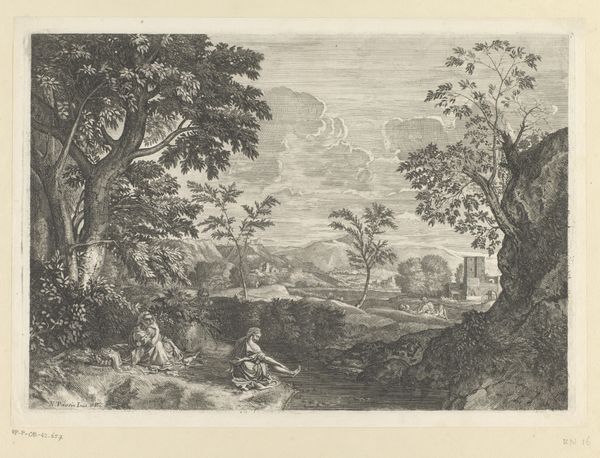
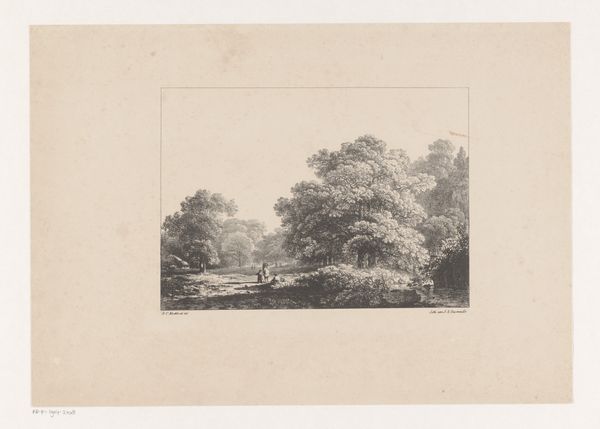
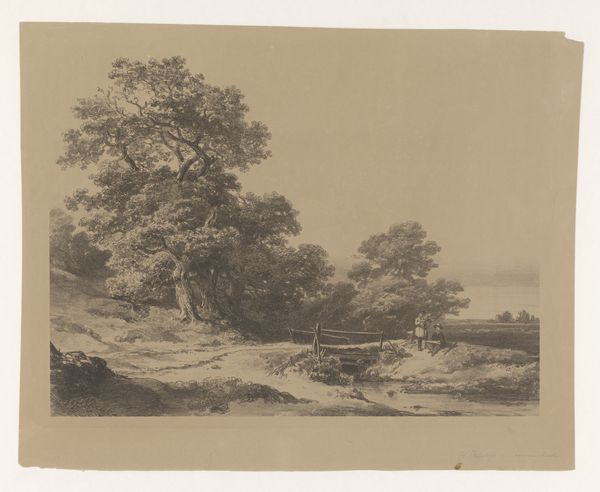
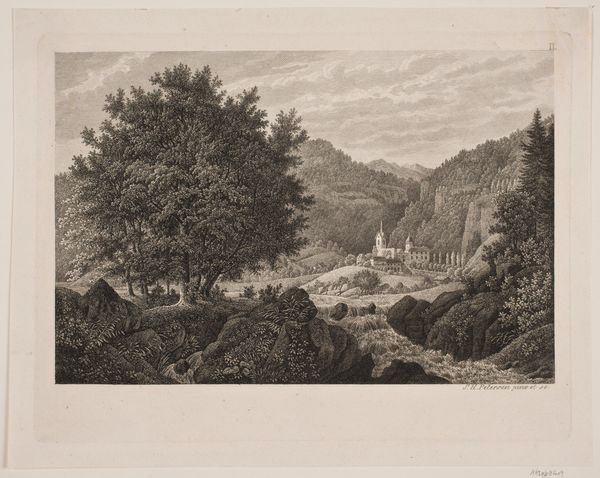
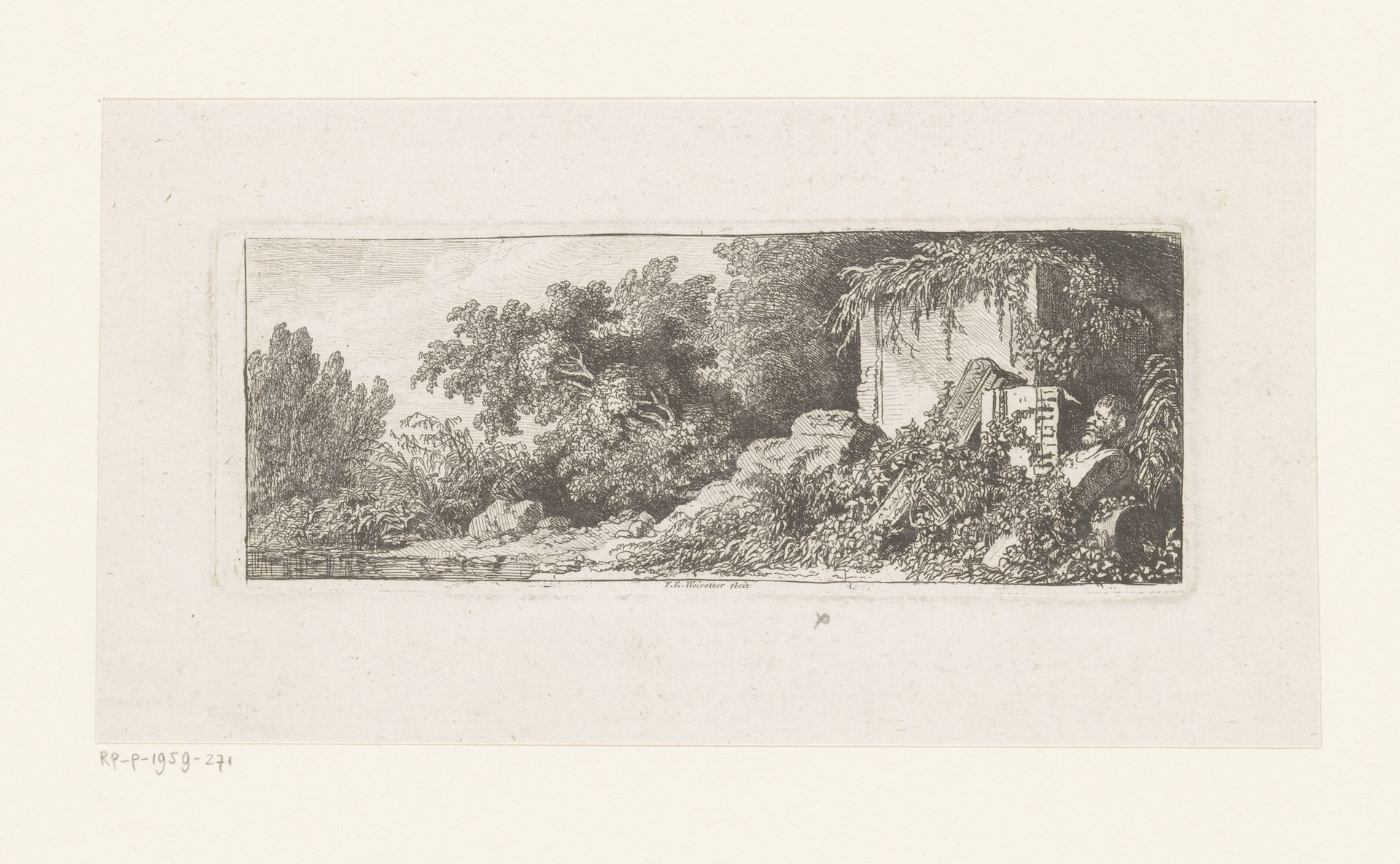
Franz Edmund Weirotter made this etching, "Ruined parts of a monument next to a pond," sometime in the mid-18th century. It presents a scene of classical decay, and we can consider it in terms of the cultural phenomenon known as "the picturesque," which was gathering steam at this time. The picturesque was a reaction against the formal gardens and architecture favored by the aristocracy. Instead, it celebrated a wilder, more “natural” aesthetic, including decaying buildings overtaken by nature. Weirotter, who worked in France and Austria, here indulges this taste for the ruin. But this image is more than just a reflection of aesthetic preferences. It speaks to a broader cultural shift toward valuing the non-hierarchical and the impermanent. To understand this moment fully, we can turn to period writings on aesthetics, garden design, and social theory, all of which can give us insight into the changing values of the time.
Ruïneuze delen van een monument naast een vijver
1767

Franz Edmund Weirotter
1733 - 1771Location
RijksmuseumArtwork details
- Dimensions
- height 70 mm, width 188 mm
- Location
- Rijksmuseum
- Copyright
- Rijks Museum: Open Domain
Comments
Share your thoughts
About this artwork
Franz Edmund Weirotter made this etching, "Ruined parts of a monument next to a pond," sometime in the mid-18th century. It presents a scene of classical decay, and we can consider it in terms of the cultural phenomenon known as "the picturesque," which was gathering steam at this time. The picturesque was a reaction against the formal gardens and architecture favored by the aristocracy. Instead, it celebrated a wilder, more “natural” aesthetic, including decaying buildings overtaken by nature. Weirotter, who worked in France and Austria, here indulges this taste for the ruin. But this image is more than just a reflection of aesthetic preferences. It speaks to a broader cultural shift toward valuing the non-hierarchical and the impermanent. To understand this moment fully, we can turn to period writings on aesthetics, garden design, and social theory, all of which can give us insight into the changing values of the time.
Comments
Share your thoughts