Carl Theodor Anton Maria von Dalberg Großherzog von Frankfurt


Listen to curator's interpretation
Curatorial notes
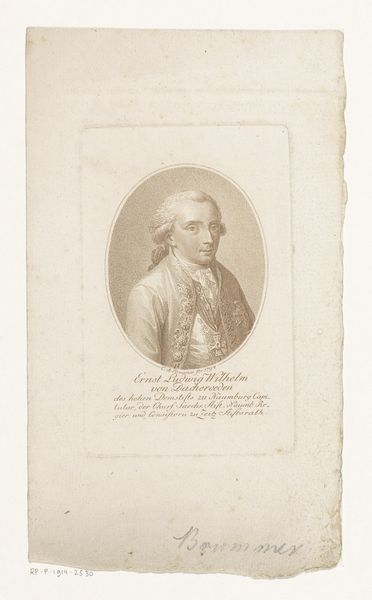
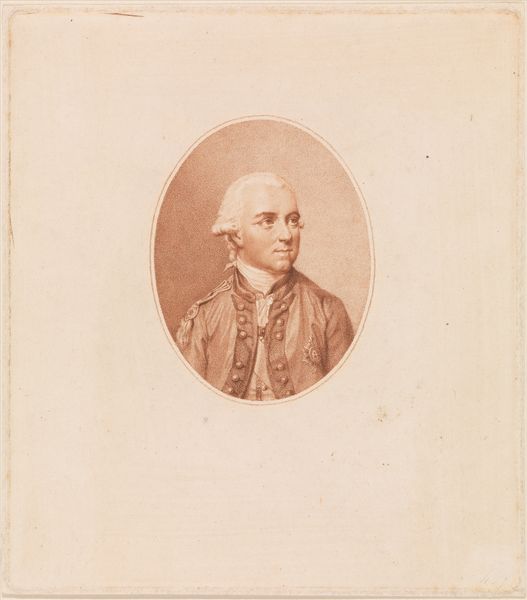
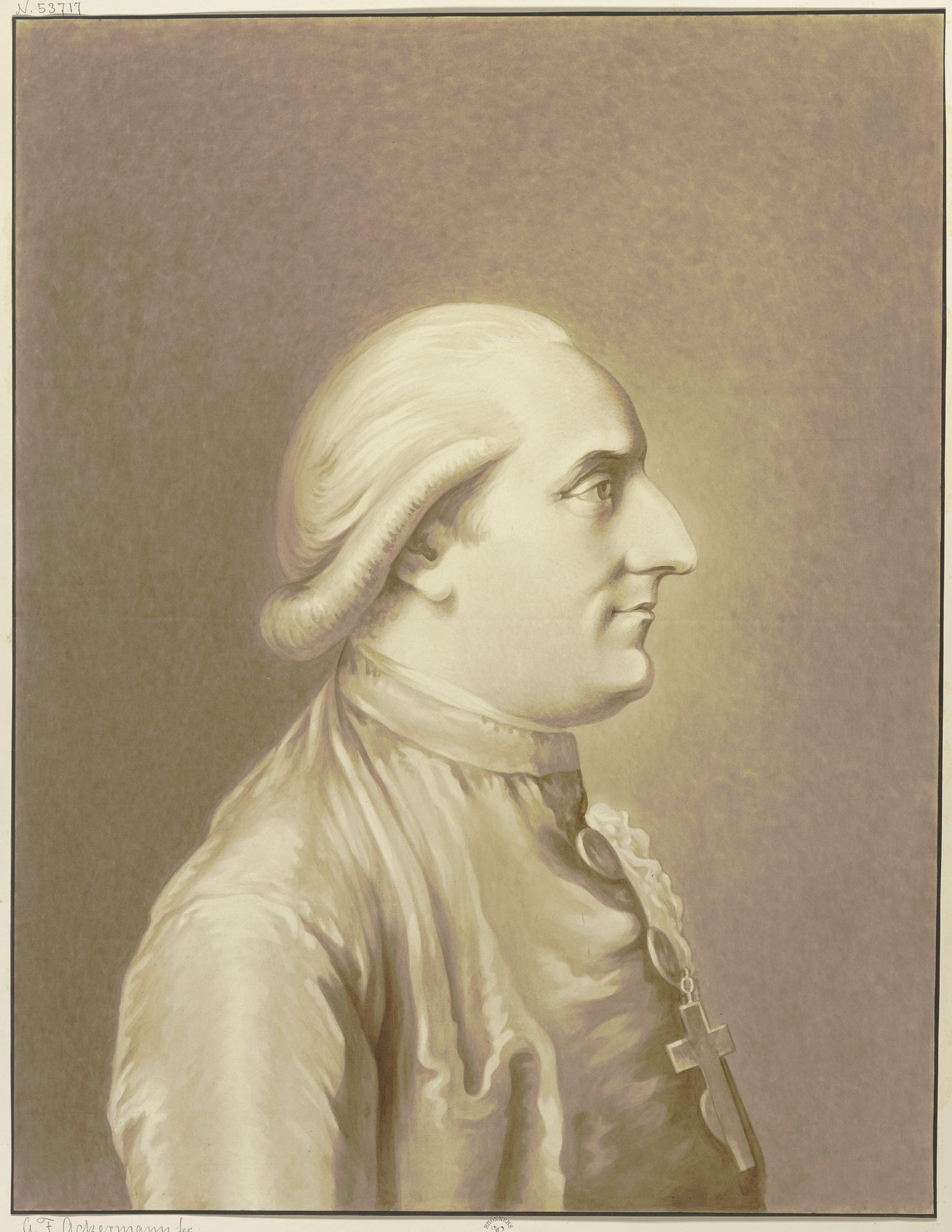
Curator: My first thought is cool serenity. The restrained palette, almost monochromatic, gives it such composure. Editor: Precisely. The artwork, residing here at the Städel Museum, is a portrait drawing in ink of Carl Theodor Anton Maria von Dalberg, Großherzog von Frankfurt, created by Georg Friedrich Ackermann. It definitely falls within the Romanticism movement while showcasing academic artistic qualities. The artist expertly captures the Duke's profile. The subdued tonal range really does create a sense of controlled authority, doesn't it? Curator: Absolutely. Note how the stark lighting contrasts with the softer shadows across his face and the folds of his garment. This effect enhances the volume, bringing his form forward. This formal approach reminds me of classical busts – invoking ideas of status and the individual's role within society. The Cross is visually very striking. Editor: Yes, the cross. Think about its multiple layers of meaning here: the obvious indication of religious affiliation, certainly, but it's also functioning as an emblem of power. This was a turbulent period in Europe; images were crucial in constructing and maintaining authority. A symbol that signifies order amid such turmoil. Curator: A really acute point. Beyond that, even the slight upward tilt of his chin communicates resolve. What this symbol does in combination with the sitter's gesture is quite impressive from a compositional standpoint. The artist truly captured the essence of this influential figure, using subtle symbolism that adds profound depth to what appears to be just a regal profile. Editor: And just notice the texture—the slight blurring, like it is almost watercolor—and the contrast of line, to give a solid, calm, clear statement about an important person, holding both earthly and spiritual power. The artwork achieves an impactful depiction through masterful yet minimalist choices. I'll be rethinking academic-art with new eyes for a while now. Curator: Me too. It proves how technical mastery and considered symbolism create a portrait far more layered and resonant than a simple likeness.