About this artwork
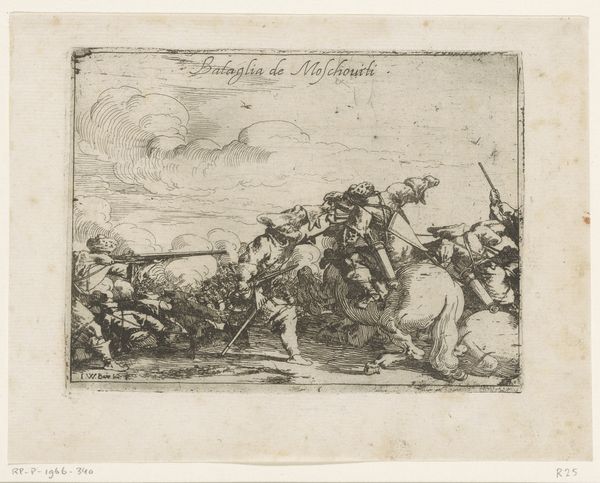
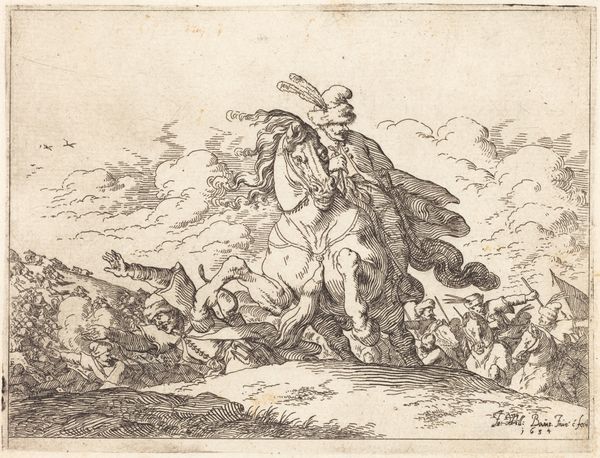
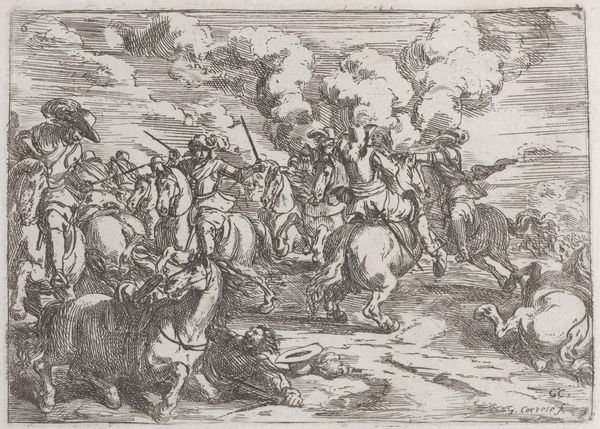
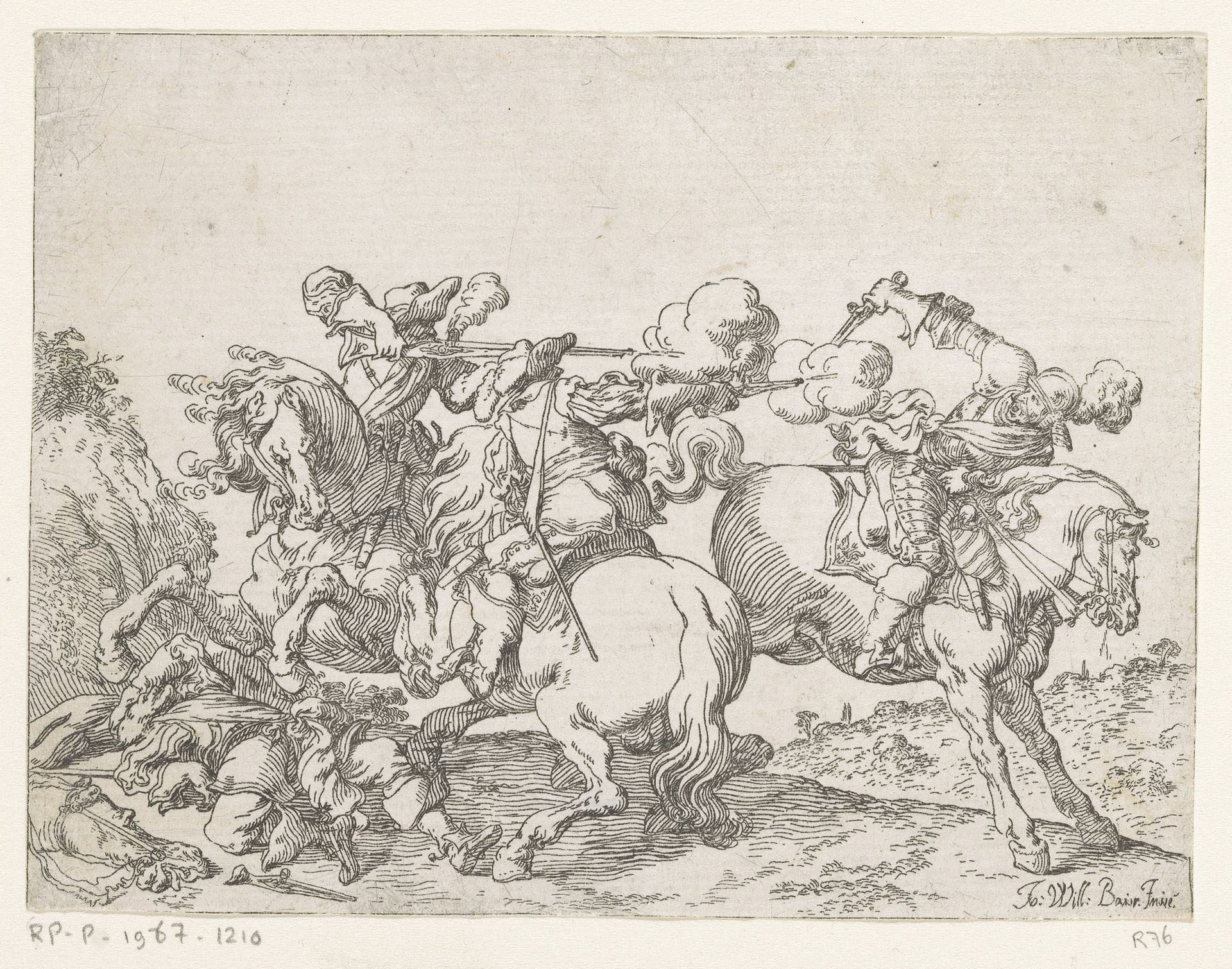
Johann Wilhelm Baur etched this print, now in the Rijksmuseum, depicting two mounted musketeers assailing another rider. Here, the horse is more than mere transport; it embodies power and status, reminiscent of classical equestrian statues of emperors. Consider the rearing horse, a motif echoing through art history from ancient battle scenes to Renaissance triumphs. This symbol carries echoes of aggression but also nobility. The act of shooting itself appears frequently, too, with arrows, crossbows, and now muskets, each an instrument of death and power. Think of Saint Sebastian pierced by arrows, or the archer gods like Apollo; these images reveal how the act of shooting transcends mere violence to touch upon themes of sacrifice, divine wrath, and fateful accuracy. Such images tap into a deep, primal understanding of conflict and its ever-changing tools across time.
Twee musketiers te paard beschieten een ruiter
1635

Johann Wilhelm Baur
1607 - 1642Location
RijksmuseumArtwork details
- Medium
- print, etching, engraving
- Dimensions
- height 102 mm, width 136 mm
- Location
- Rijksmuseum
- Copyright
- Rijks Museum: Open Domain
Tags
Comments
Share your thoughts
About this artwork
Johann Wilhelm Baur etched this print, now in the Rijksmuseum, depicting two mounted musketeers assailing another rider. Here, the horse is more than mere transport; it embodies power and status, reminiscent of classical equestrian statues of emperors. Consider the rearing horse, a motif echoing through art history from ancient battle scenes to Renaissance triumphs. This symbol carries echoes of aggression but also nobility. The act of shooting itself appears frequently, too, with arrows, crossbows, and now muskets, each an instrument of death and power. Think of Saint Sebastian pierced by arrows, or the archer gods like Apollo; these images reveal how the act of shooting transcends mere violence to touch upon themes of sacrifice, divine wrath, and fateful accuracy. Such images tap into a deep, primal understanding of conflict and its ever-changing tools across time.
Comments
Share your thoughts