

c. 1613 - 1661
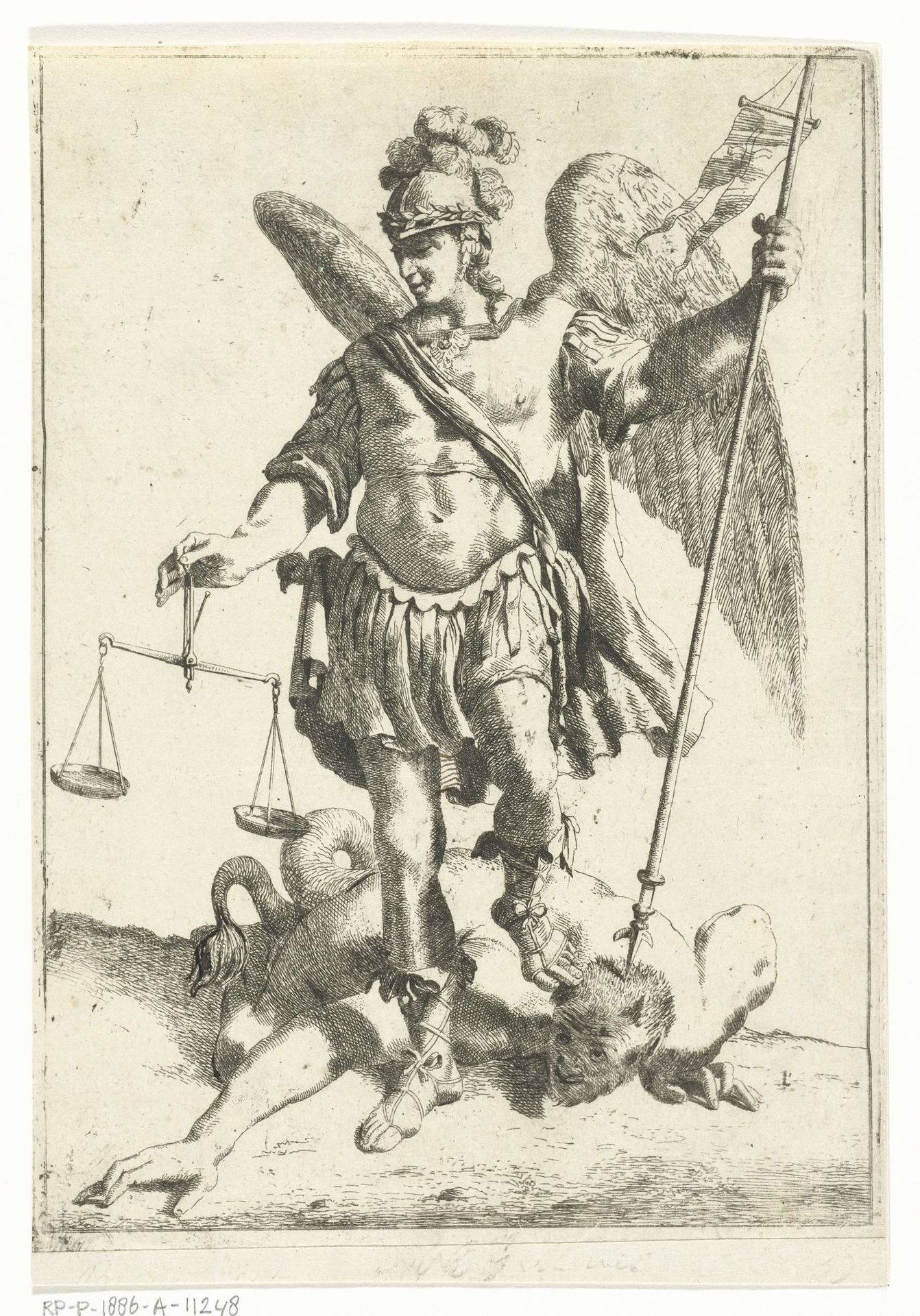
Aartsengel Michaël en de draak

Jan Gerritsz van Bronckhorst
1603 - 1661Location
RijksmuseumListen to curator's interpretation
Curatorial notes
Curator: Immediately, I'm struck by the dynamism; there's a clear sense of movement and conflict despite the stillness inherent in a print. Editor: Indeed. We're looking at "Archangel Michael and the Dragon" by Jan Gerritsz van Bronckhorst, likely created sometime between 1613 and 1661. It's an etching. Notice how the artist masterfully uses line weight to create depth and drama. Curator: The symbolic weight of this piece is immense. Michael, often portrayed as the leader of the heavenly hosts, here holds the scales of justice in one hand, balancing good and evil as he vanquishes the dragon beneath his feet. Editor: Absolutely. The scales introduce another layer. Justice, discernment—the battle isn’t purely one of might, but of moral assessment. And consider the dragon, writhing beneath Michael’s foot. This symbolizes the ultimate triumph of good over evil. Its subjugation serves as a constant, reassuring image, resonant through the ages. Curator: Observe how Bronckhorst manipulates texture and light. The hatching and cross-hatching give volume to Michael's form, almost making him appear sculptural. Note how the dragon melts into the background through a softer touch, suggesting its shadowy, amorphous nature. The stark contrast places full emphasis on Michael's triumph. Editor: These elements combined reinforce not just the biblical narrative but also offer an enduring message of hope, resilience, and the enduring power of good—symbols deeply embedded within Western consciousness. Curator: Seeing how line and form create such a narrative so efficiently gives an understanding of the visual strategies artists can deploy. Editor: It is a powerful visualization. One sees here the timeless struggle against internal demons given a form. This piece feels especially significant as we trace its influence and the ongoing relevance of the visual language that continues to inform art to this day.