About this artwork
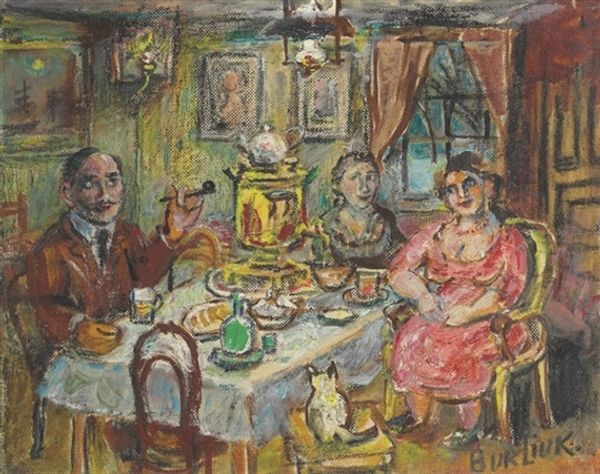
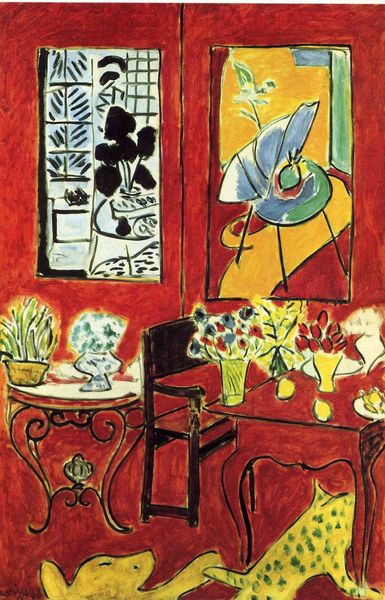
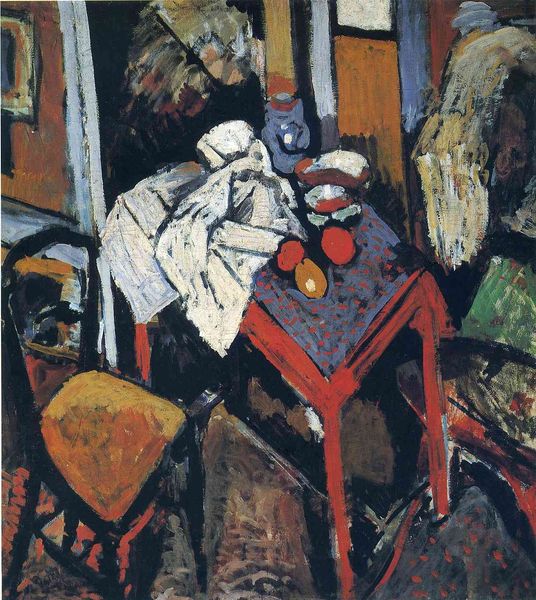
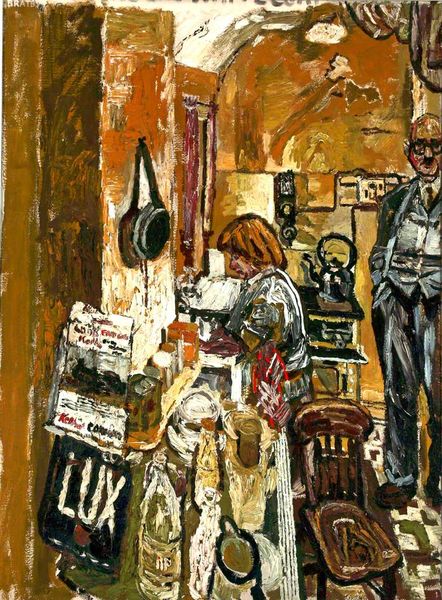
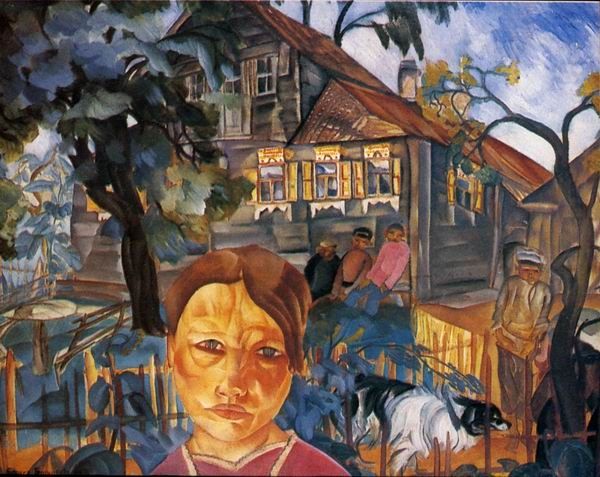
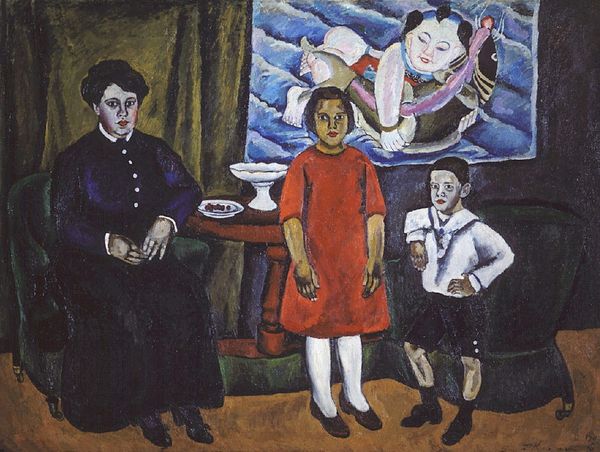
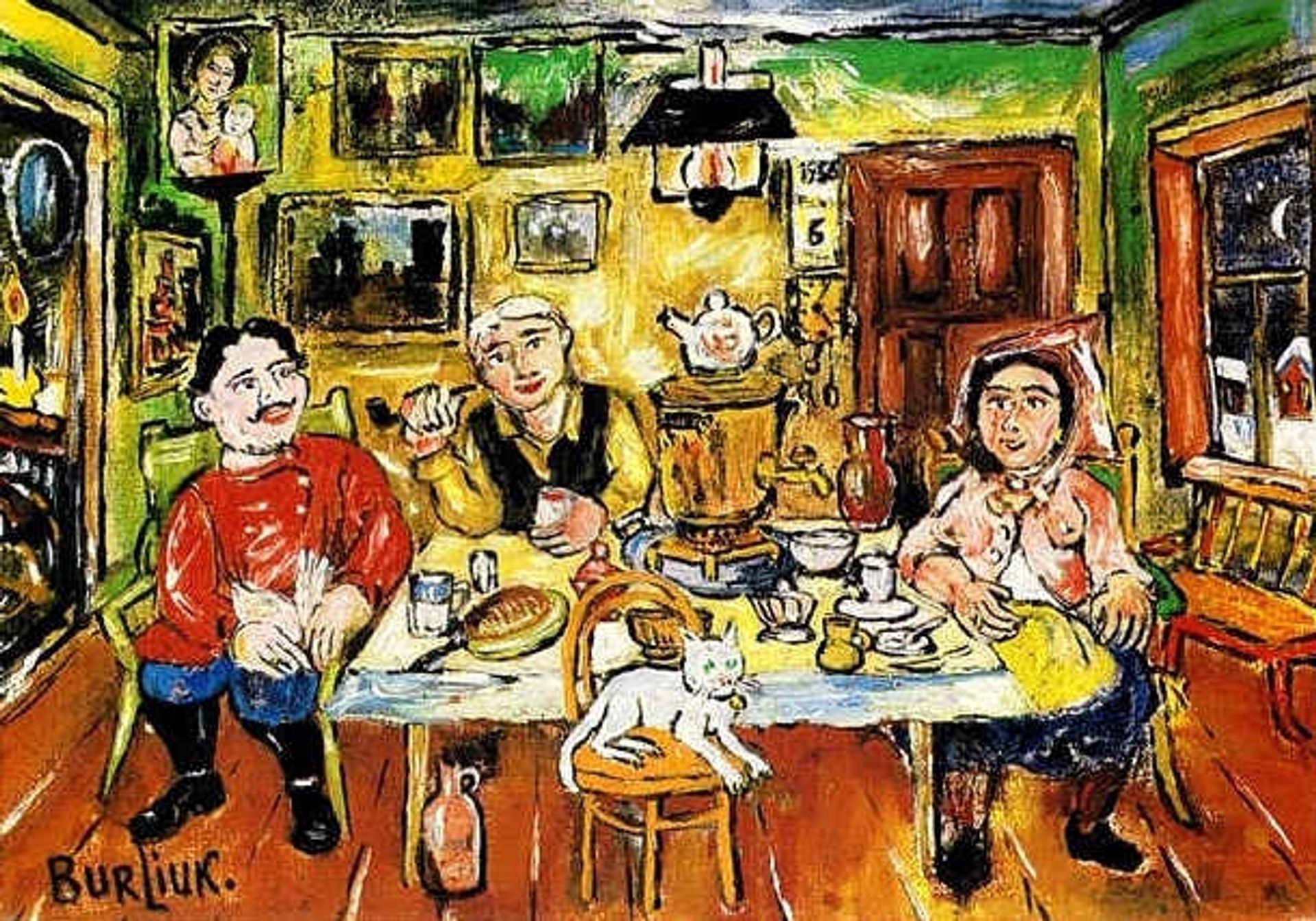
David Burliuk, painted "Tea Time with a White Cat" using oil on canvas. The domestic scene shows members of the artist's family gathered around a table for tea. The painting might seem like a simple family portrait, but it actually comments on the social structures of its time. Burliuk was a key figure in the Russian avant-garde, a movement that challenged the conservative art institutions of Tsarist Russia. The deliberately crude style and flattened perspective of this painting were intended to reject academic traditions. The samovar, a traditional Russian tea urn, suggests a connection to folk culture, an interest shared by many avant-garde artists. The painting reflects an idealized vision of peasant life, a theme that resonated with revolutionary sentiments in Russia at the beginning of the 20th century. To understand this work more fully, art historians consult manifestos, letters, and exhibition reviews from the period, to reveal the complex interplay between art and social change.

Artwork details
- Medium
- painting
- Copyright
- David Burliuk,Fair Use
Tags
portrait
animal
painting
expressionism
naive art
russian-avant-garde
genre-painting
Comments
Be the first to share your thoughts about this work.
About this artwork
David Burliuk, painted "Tea Time with a White Cat" using oil on canvas. The domestic scene shows members of the artist's family gathered around a table for tea. The painting might seem like a simple family portrait, but it actually comments on the social structures of its time. Burliuk was a key figure in the Russian avant-garde, a movement that challenged the conservative art institutions of Tsarist Russia. The deliberately crude style and flattened perspective of this painting were intended to reject academic traditions. The samovar, a traditional Russian tea urn, suggests a connection to folk culture, an interest shared by many avant-garde artists. The painting reflects an idealized vision of peasant life, a theme that resonated with revolutionary sentiments in Russia at the beginning of the 20th century. To understand this work more fully, art historians consult manifestos, letters, and exhibition reviews from the period, to reveal the complex interplay between art and social change.
Comments
Be the first to share your thoughts about this work.