About this artwork
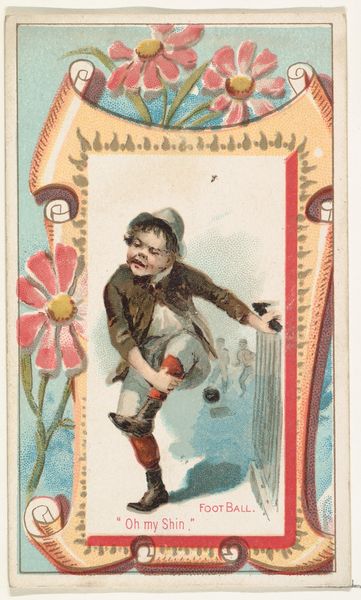
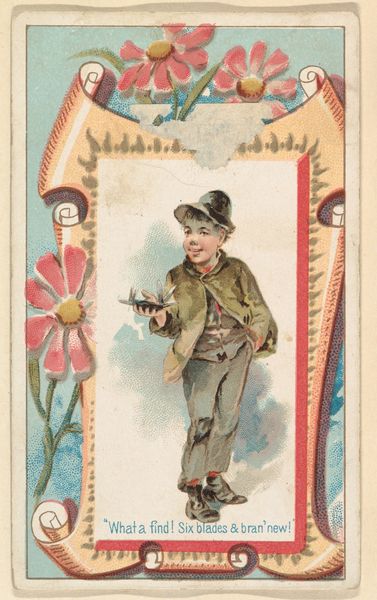
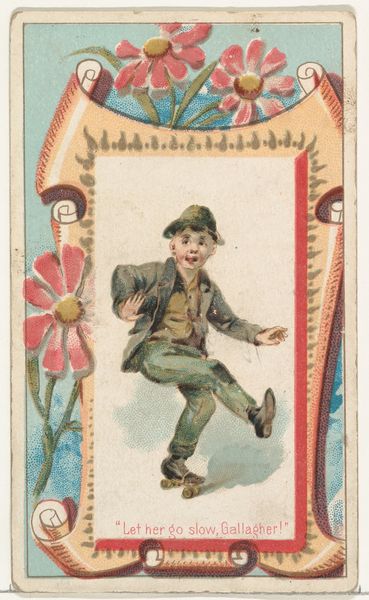
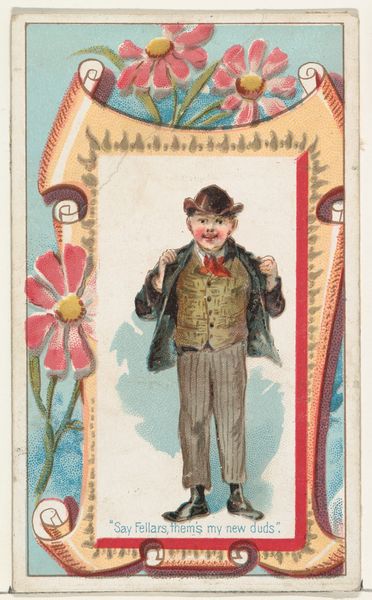
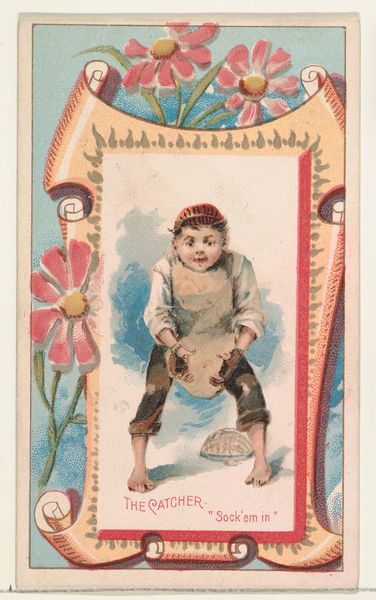
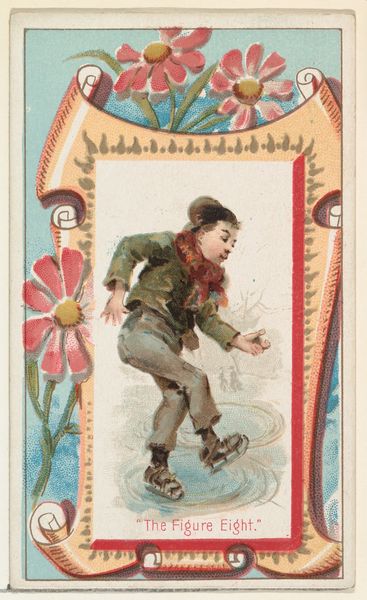
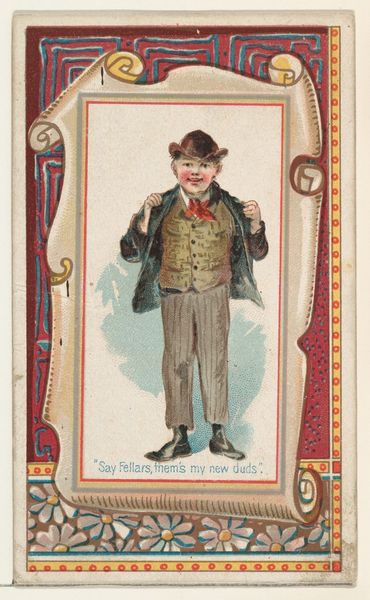
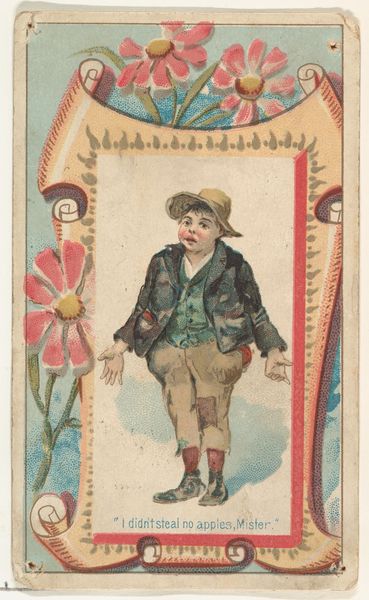
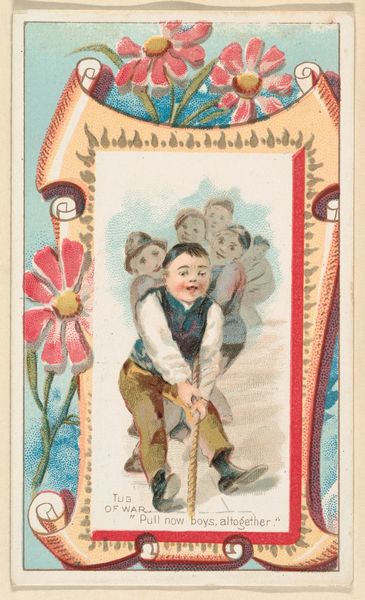
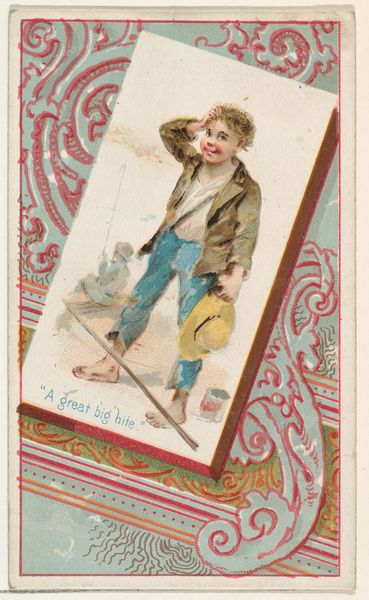
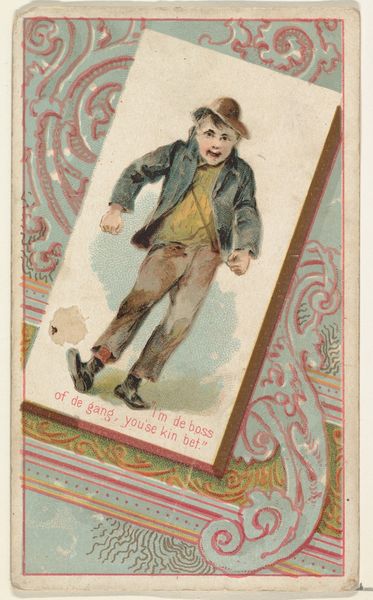
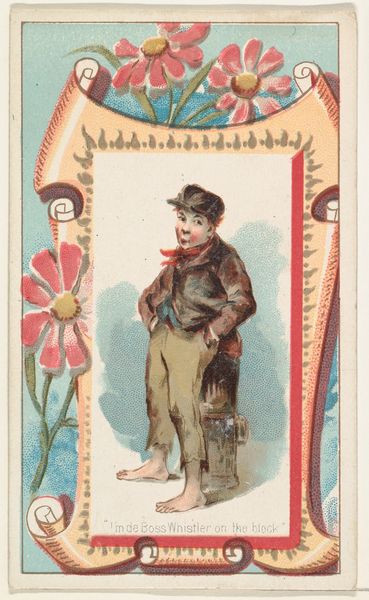
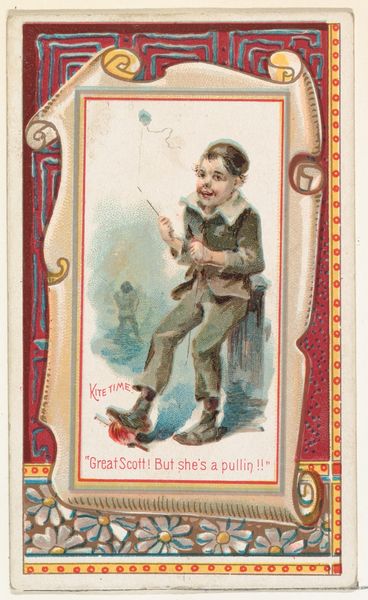
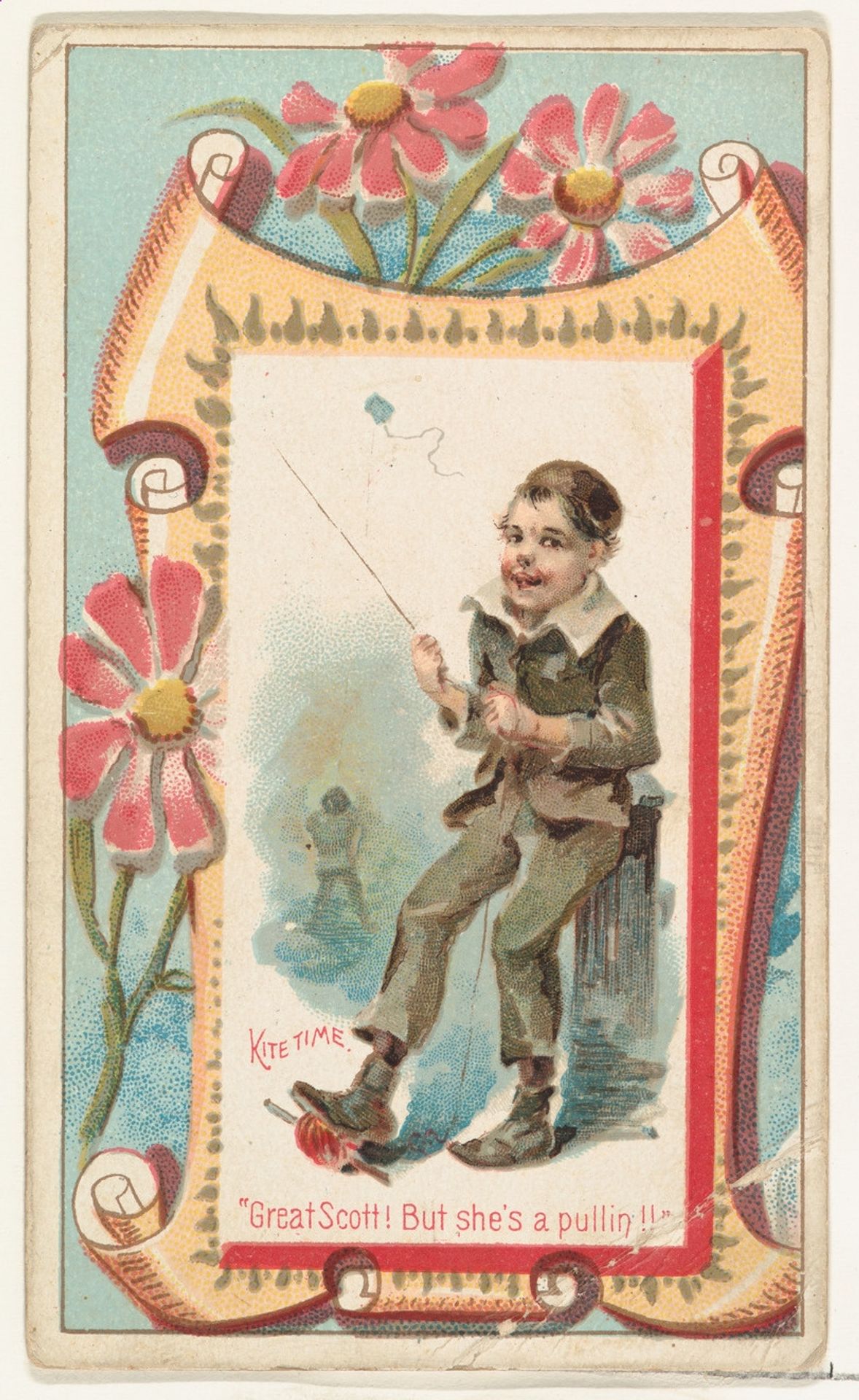
This vibrant chromolithograph, "Kite Time," was printed by W. Duke, Sons & Co. around 1888 as a promotional item for Honest Long Cut Tobacco. Chromolithography was a revolutionary process that democratized color printing. Using multiple limestone blocks, each inked with a different color, allowed for mass production of images like this one. Notice the layering of hues to create depth and detail, from the boy's rosy cheeks to the vibrant floral border. The technique demanded skilled artisans to transfer and align each color layer meticulously. These cards were essentially advertisements, slipped into tobacco products. They offered ordinary consumers an accessible form of art. The image itself presents a scene of leisure, yet its existence is deeply intertwined with the rise of industrial capitalism and mass consumption. The meticulous labor involved in its creation, however, often goes unacknowledged. Considering the context and means of production allows us to appreciate this everyday object not just as an artifact of popular culture, but as a testament to the evolving relationship between art, labor, and industry.
Kite Time, "Great Scott! But she's a pullin!!" from the Terrors of America set (N136) issued by Duke Sons & Co. to promote Honest Long Cut Tobacco 1888 - 1889

W. Duke, Sons & Co.
1870 - 1920
The Metropolitan Museum of Art
Metropolitan Museum of Art, New York, NYArtwork details
- Medium
- drawing, coloured-pencil, print, watercolor
- Dimensions
- Sheet: 2 3/4 x 1 1/2 in. (7 x 3.8 cm)
- Location
- Metropolitan Museum of Art, New York, NY
- Copyright
- Public Domain
Tags
portrait
drawing
coloured-pencil
water colours
pictorialism
boy
figuration
watercolor
coloured pencil
genre-painting
Comments
No comments
About this artwork
This vibrant chromolithograph, "Kite Time," was printed by W. Duke, Sons & Co. around 1888 as a promotional item for Honest Long Cut Tobacco. Chromolithography was a revolutionary process that democratized color printing. Using multiple limestone blocks, each inked with a different color, allowed for mass production of images like this one. Notice the layering of hues to create depth and detail, from the boy's rosy cheeks to the vibrant floral border. The technique demanded skilled artisans to transfer and align each color layer meticulously. These cards were essentially advertisements, slipped into tobacco products. They offered ordinary consumers an accessible form of art. The image itself presents a scene of leisure, yet its existence is deeply intertwined with the rise of industrial capitalism and mass consumption. The meticulous labor involved in its creation, however, often goes unacknowledged. Considering the context and means of production allows us to appreciate this everyday object not just as an artifact of popular culture, but as a testament to the evolving relationship between art, labor, and industry.
Comments
No comments