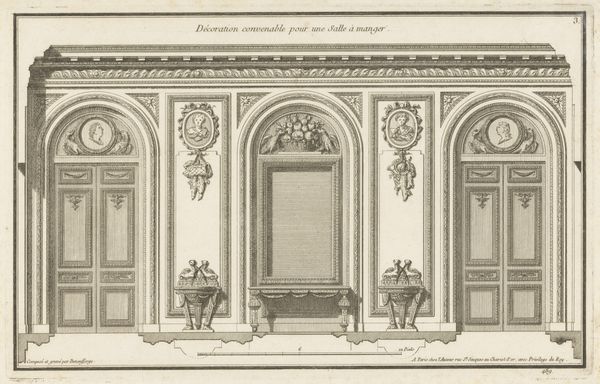
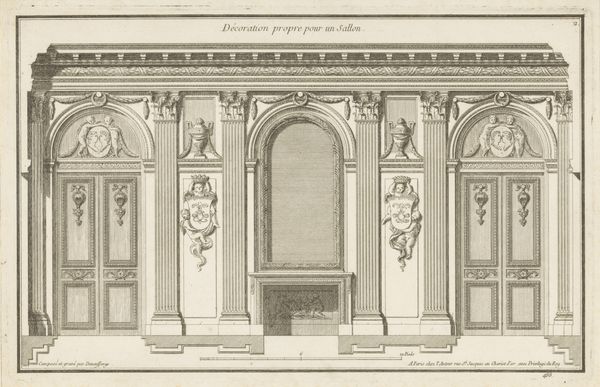
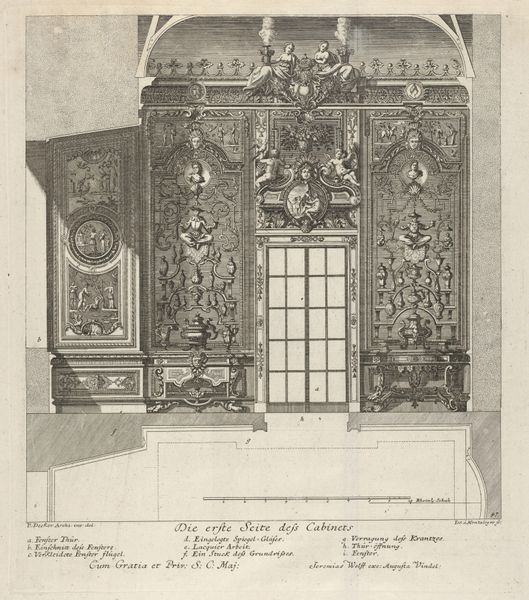
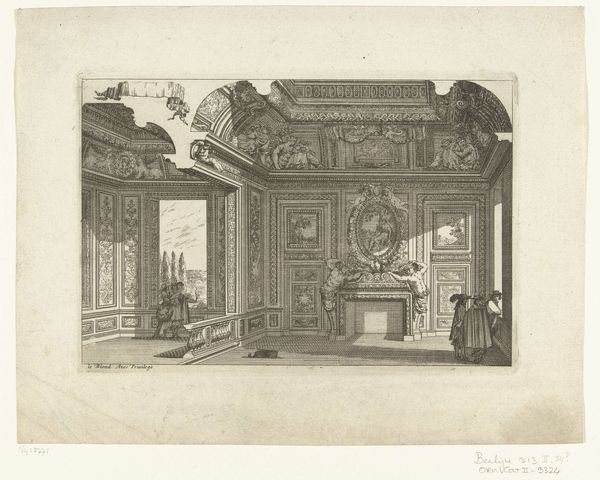
Doorsnede van de entresol en eerste verdieping van het huis van Léon Berthous in Bayonne 1738 - 1749
0:00
0:00

justeaurelemeissonnier
Rijksmuseum
drawing, etching, ink, engraving, architecture
#
drawing
#
baroque
#
etching
#
ink
#
line
#
cityscape
#
engraving
#
architecture
Dimensions: height 153 mm, width 251 mm
Copyright: Rijks Museum: Open Domain
Curator: This meticulous drawing, “Doorsnede van de entresol en eerste verdieping van het huis van Léon Berthous in Bayonne” created between 1738 and 1749 by Juste-Aurèle Meissonnier, renders the domestic space with incredible precision using etching, engraving, and ink. Editor: Yes, it's quite a detailed architectural plan. The ornamentation of the Baroque style is fascinating. It appears somewhat restrained by the practical function of the design, almost like a stage set, don’t you think? What can you tell me about it? Curator: Think about the labor involved, not just in the design and the draughtsmanship displayed in the drawing, but the physical labor needed to produce these interiors. The carving, the carpentry, the arrangement of materials… The image itself, reproduced through etching and engraving, made this design accessible. It’s about disseminating ideas related to luxury and domestic comfort. This design shows that materiality, consumption and labor meet within these walls. Do you consider the social context within which this architectural design drawing has circulated as having a historical and societal relevance today? Editor: I hadn’t considered it in terms of accessibility and labour. The ability to disseminate such ornate designs to inspire other craftspeople... I suppose that does highlight a democratization of design knowledge of sorts. But where do we draw the line between 'high art' and 'craft' in this instance, when the design itself enables both artistic inspiration and the production of functional objects? Curator: The very boundary is blurred! Meissonnier uses these reproducible mediums to demonstrate, in effect, how one can transform a simple dwelling. He's highlighting material availability, skillful craftsmanship, and ultimately shaping consumption patterns by demonstrating the lifestyle one *could* acquire. It speaks volumes about the material aspirations of the emerging middle class during that period, wouldn't you agree? Editor: Definitely. Seeing it through the lens of production and accessibility gives the drawing so much more depth than just architectural interest. It really underscores the fusion of art, craft, and consumerism in creating and promoting a particular lifestyle. Curator: Exactly. I learned by you sharing your observation that made me notice it's not merely aesthetic appeal that counts but how deeply material conditions shape artistic production and consumerist desires.
Comments
No comments
Be the first to comment and join the conversation on the ultimate creative platform.
 Collect
 React
React Comment
More like this