1870 - 1890
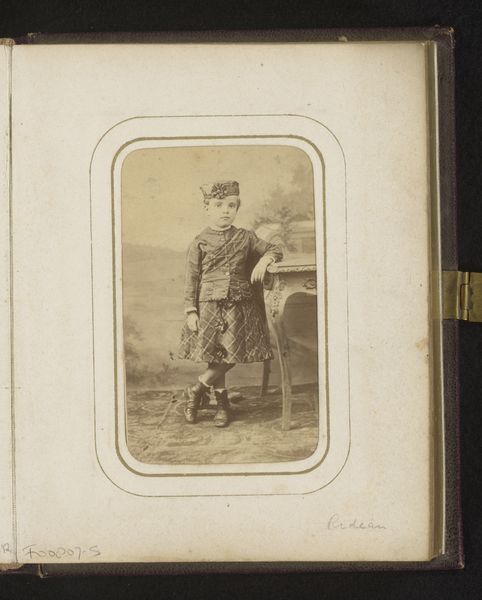
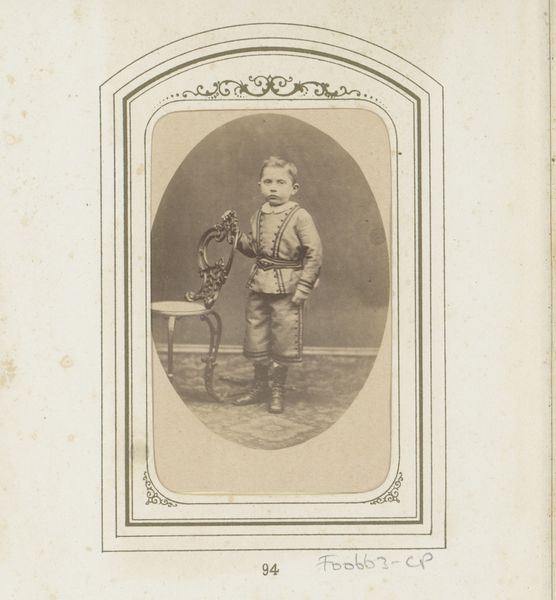
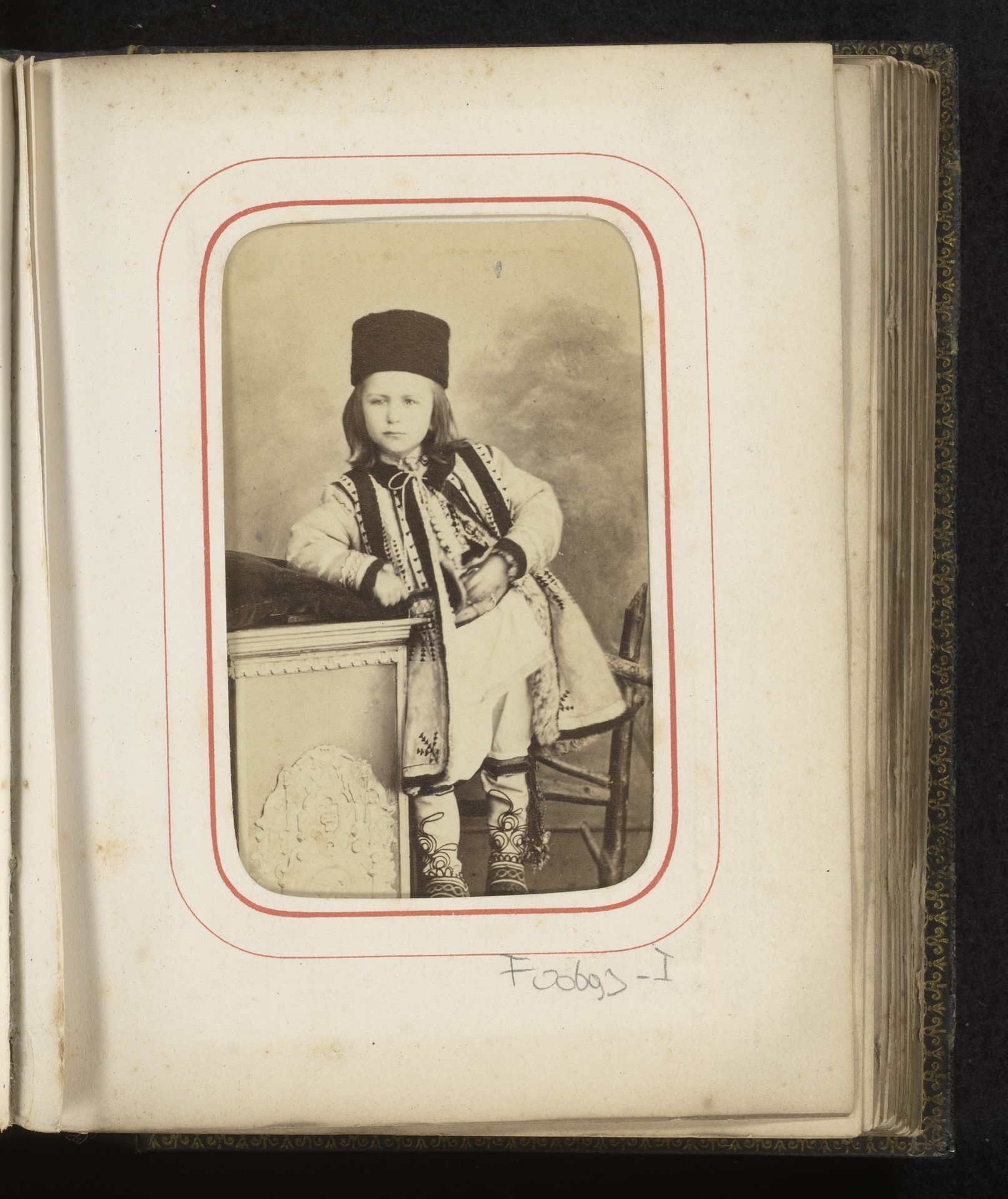
Portret van een jongen in Roemeense klederdracht, staand op een stoel

Carol Popp de Szathmari
1812 - 1887Location
RijksmuseumListen to curator's interpretation
Curatorial notes
Curator: This charming photograph, taken sometime between 1870 and 1890, is entitled "Portret van een jongen in Roemeense klederdracht, staand op een stoel," or "Portrait of a boy in Romanian costume, standing on a chair." It's the work of Carol Popp de Szathmari and resides here at the Rijksmuseum. Editor: He looks like a miniature adult! There's a gravity in his stance that's immediately striking. It feels both formal and, because he's clearly quite young, slightly humorous. Curator: The humor, I think, stems from the deliberate presentation. Consider how folk costumes were viewed then. They were not just garments but potent symbols of identity and regional pride, particularly as Romania was coalescing as a nation-state. This image served a purpose, it promoted unity. Editor: And you see it in the detailing, particularly the intricate embroidery on his vest and boots. Even the hat has a story. Beyond pure aesthetics, aren’t these motifs often coded with protective or auspicious meanings? Each line and flourish a tiny narrative of cultural beliefs and hopes? Curator: Exactly. And note how he is placed. Not on the floor, where a child might naturally be, but elevated, on a chair. It signifies not just status, but a potential, a future. A future closely aligned with the perceived ideals of Romanian identity. Editor: It’s almost a symbolic stage, isn't it? He’s not just standing, he is *performing* Romanian-ness for the camera, and by extension, for posterity. It feels staged and intentional. But it’s also worth noting the way the photograph itself contributes to the story – it's aged and preserved inside what looks like a personal sketchbook. It shows the importance that Szathmari put on capturing the folk costumes. Curator: The photograph being part of a personal sketchbook changes its role. It moves away from the traditional portrait on a wall to something much more immediate and relatable. And it helps frame Szathmari as a critical recorder of his era’s cultural landscape. Editor: Indeed. One comes away feeling there’s more than simply an ethnographic record. You get the sense of someone deeply interested in the threads that hold a culture, a people, together—even, and especially, in the clothing they wear. Curator: For me, it highlights the evolving function of portraiture. What begins as an almost documentary exercise also reveals broader socio-political undertones tied to emerging national identities.