About this artwork
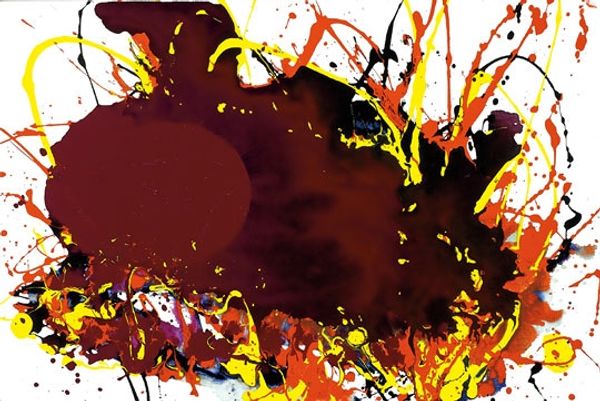
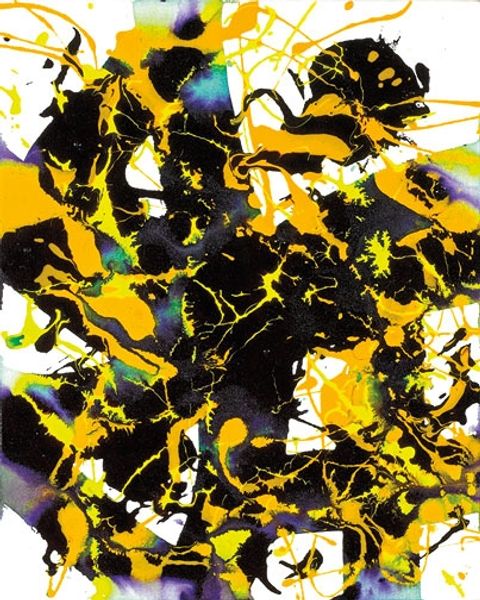
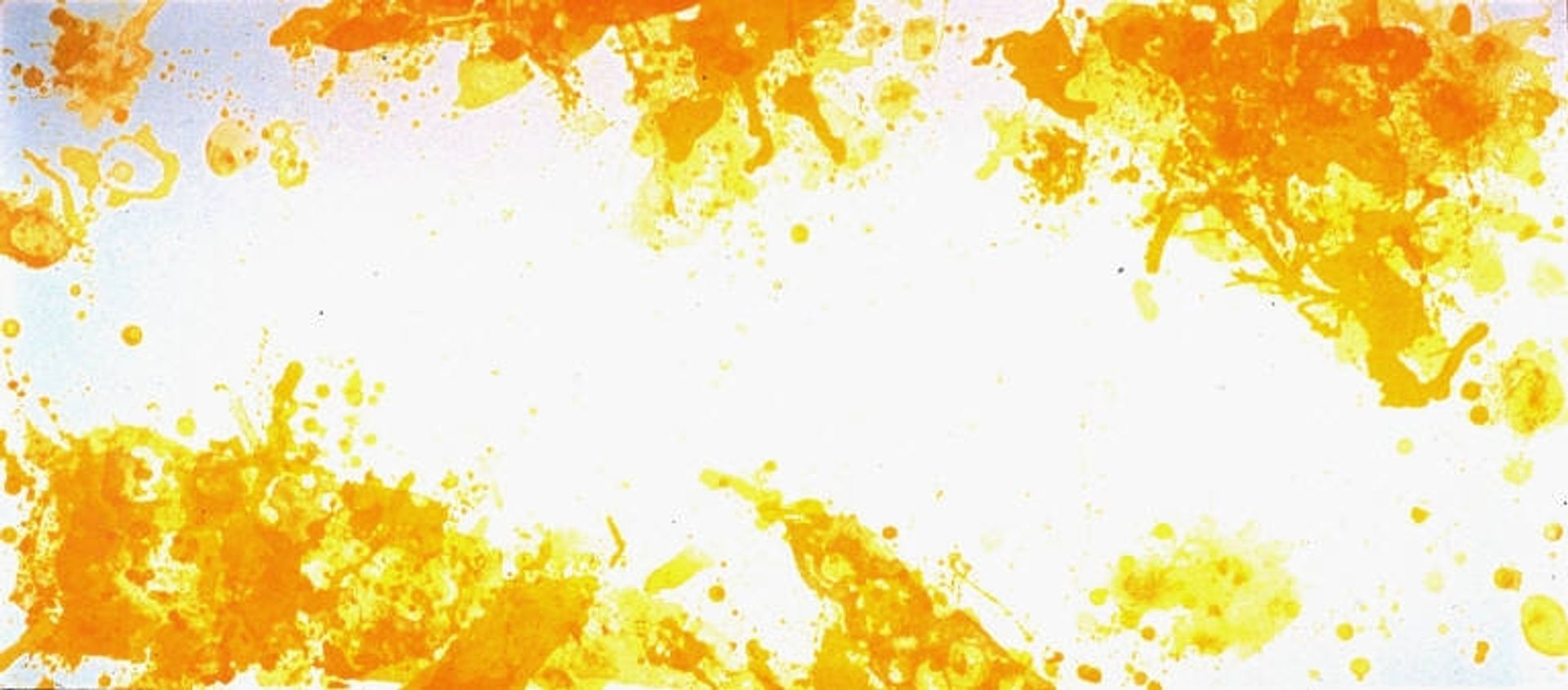
Editor: This is Sam Francis' "Spleen (Yellow)," created in 1971 using acrylic paint. I'm struck by how the vibrant yellows seem to burst outwards from the edges, leaving this bright, empty space in the center. How do you interpret this work? Curator: The "emptiness" you observe is quite generative. Considering its title, "Spleen," borrowed from Baudelaire, the painting speaks volumes about the alienation of modern life. Think about the social upheavals of the 1960s bleeding into the '70s: a deep distrust of institutions, questioning of traditional power structures. This "spleen," this ennui, is a powerful emotional undercurrent. What power dynamics might be mirrored in the asymmetry and placement of the paint itself? Editor: That's fascinating! So, the void isn't just an absence, but a representation of societal anxieties? And the vibrant yellow – would that stand in contrast, perhaps highlighting the artificiality of the "establishment" in relation to more somber or “natural” emotions? Curator: Precisely. Yellow, in some contexts, can signify optimism, but in others, caution or even cowardice. I encourage us to think about what aspects of identity and political positionality are made present or absent here through the use of color and composition. Editor: That makes me think about the way Abstract Expressionism itself was later critiqued as prioritizing a certain kind of masculine experience... Curator: Exactly! And the seeming randomness of the splatters: Could this evoke ideas about systemic injustice, where agency seems absent and effects land seemingly randomly? Editor: Wow, I didn’t think I'd be considering gender, race, and politics looking at this splashy yellow painting! Curator: Art often holds a mirror to our complex world, even in its most abstract forms. Hopefully, this helps us reflect upon ourselves and how our culture has formed us.

Artwork details
- Dimensions
- 88.9 x 200 cm
- Copyright
- 2012 Sam Francis Foundation, California / Artists Rights Society (ARS), NY
Comments
Share your thoughts
About this artwork
Editor: This is Sam Francis' "Spleen (Yellow)," created in 1971 using acrylic paint. I'm struck by how the vibrant yellows seem to burst outwards from the edges, leaving this bright, empty space in the center. How do you interpret this work? Curator: The "emptiness" you observe is quite generative. Considering its title, "Spleen," borrowed from Baudelaire, the painting speaks volumes about the alienation of modern life. Think about the social upheavals of the 1960s bleeding into the '70s: a deep distrust of institutions, questioning of traditional power structures. This "spleen," this ennui, is a powerful emotional undercurrent. What power dynamics might be mirrored in the asymmetry and placement of the paint itself? Editor: That's fascinating! So, the void isn't just an absence, but a representation of societal anxieties? And the vibrant yellow – would that stand in contrast, perhaps highlighting the artificiality of the "establishment" in relation to more somber or “natural” emotions? Curator: Precisely. Yellow, in some contexts, can signify optimism, but in others, caution or even cowardice. I encourage us to think about what aspects of identity and political positionality are made present or absent here through the use of color and composition. Editor: That makes me think about the way Abstract Expressionism itself was later critiqued as prioritizing a certain kind of masculine experience... Curator: Exactly! And the seeming randomness of the splatters: Could this evoke ideas about systemic injustice, where agency seems absent and effects land seemingly randomly? Editor: Wow, I didn’t think I'd be considering gender, race, and politics looking at this splashy yellow painting! Curator: Art often holds a mirror to our complex world, even in its most abstract forms. Hopefully, this helps us reflect upon ourselves and how our culture has formed us.
Comments
Share your thoughts