engraving
#
baroque
#
decorative-art
#
engraving
Dimensions: height 275 mm, width 175 mm
Copyright: Rijks Museum: Open Domain
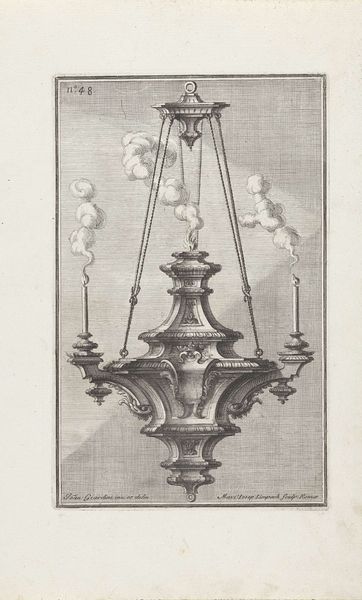
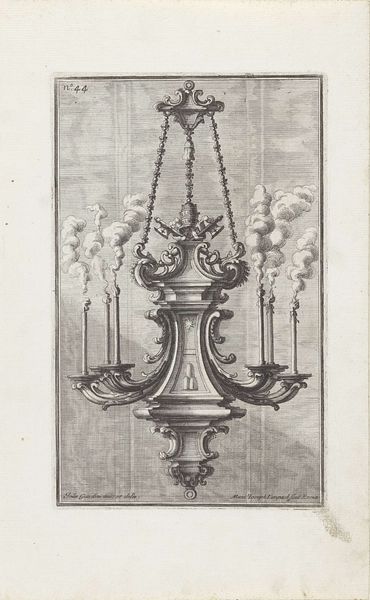
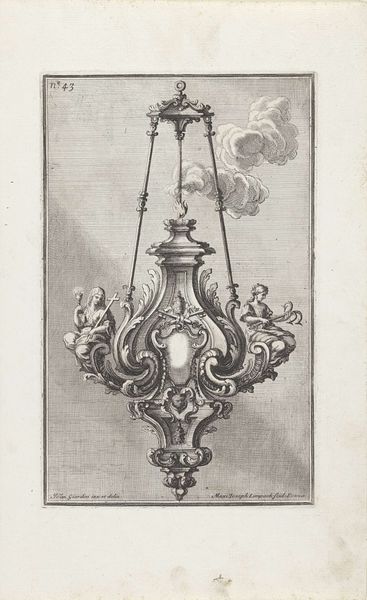
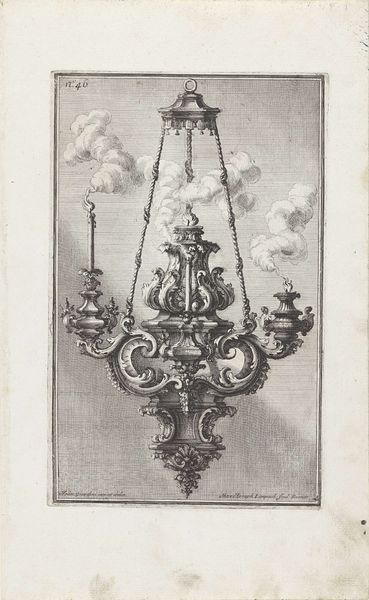
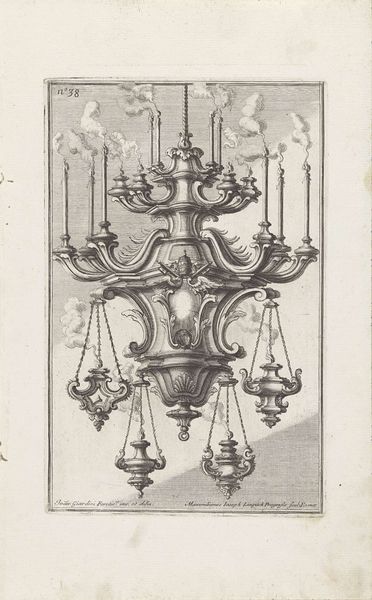
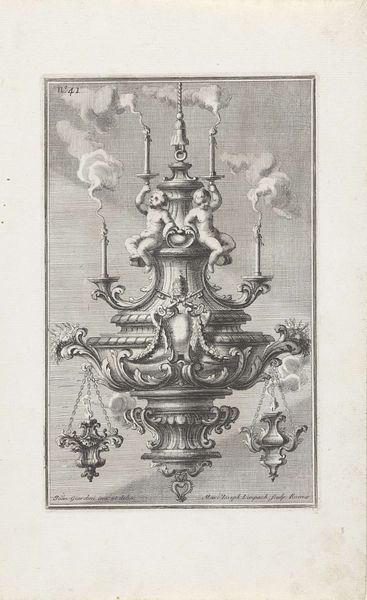
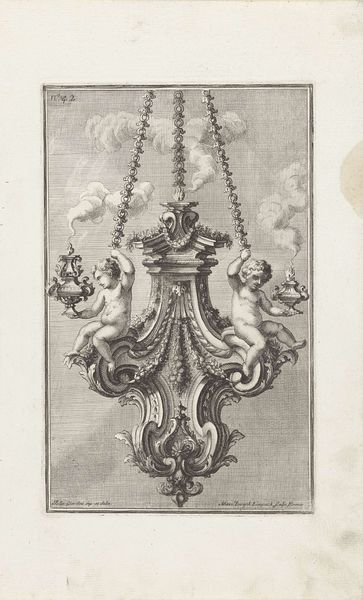
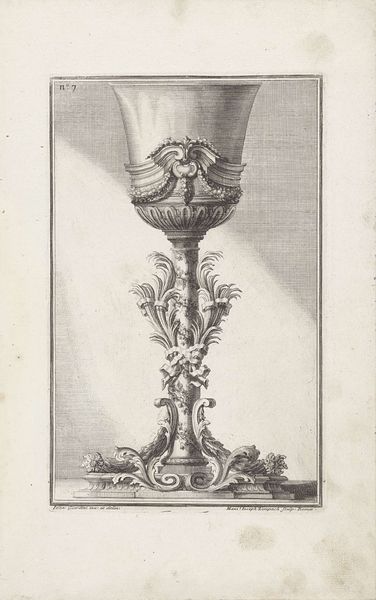
Maximilian Joseph Limpach created this print of a chandelier with rosehips and garlands. The image suggests the splendor of the domestic sphere in the Netherlands, but, as a print, it also reflects a growing culture of commodification. Looking closely, we see how the chandelier becomes a vehicle for meaning. The garlands evoke classical antiquity, while the rosehips are a vernacular, ‘Dutch’ motif. Limpach seems to be mediating between international fashion and local taste. But what was his relationship to the institutions of art? Was he commissioned by the elite to create the image, or did he do so speculatively? Did he seek to subvert the elite’s claim to taste, or did he want to reinforce existing social hierarchies? As historians, we can consult period inventories of household goods to understand whether the chandelier was fashionable among certain classes of Dutch society. By consulting Limpach’s business records, we could discover how he distributed the print. The meaning of art is always contingent on its social and institutional context!
Comments
No comments
Be the first to comment and join the conversation on the ultimate creative platform.
 Collect
 React
React Comment
More like this