drawing, graphic-art, print, engraving
drawing
graphic-art
pen drawing
line
engraving
calligraphy
Dimensions: height 305 mm, width 411 mm
Copyright: Rijks Museum: Open Domain
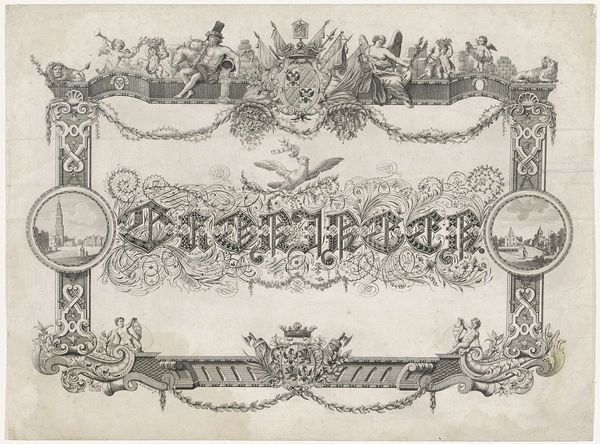
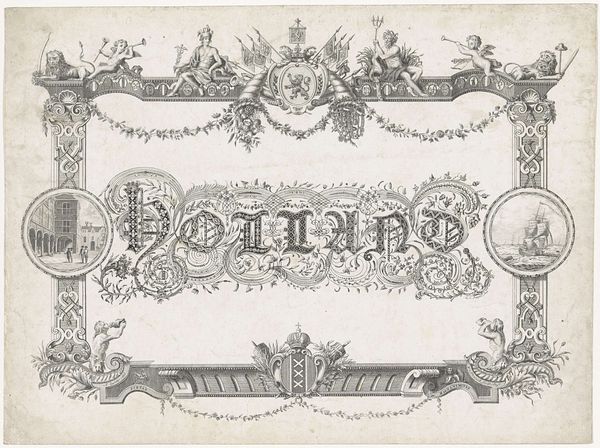
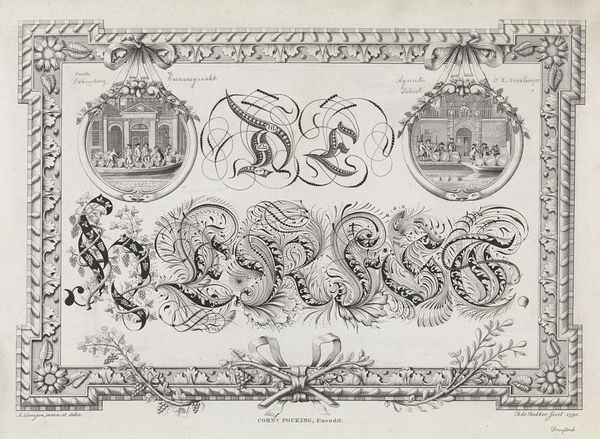
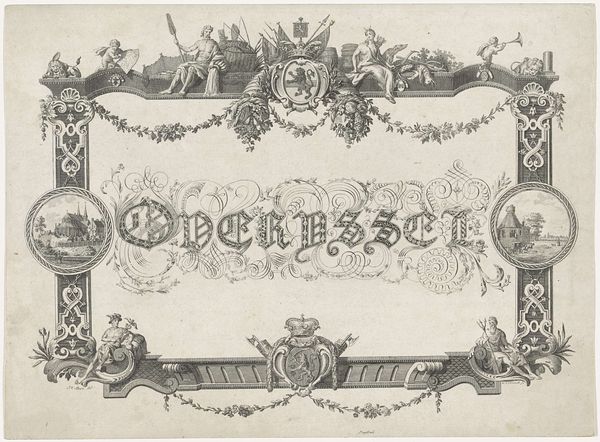
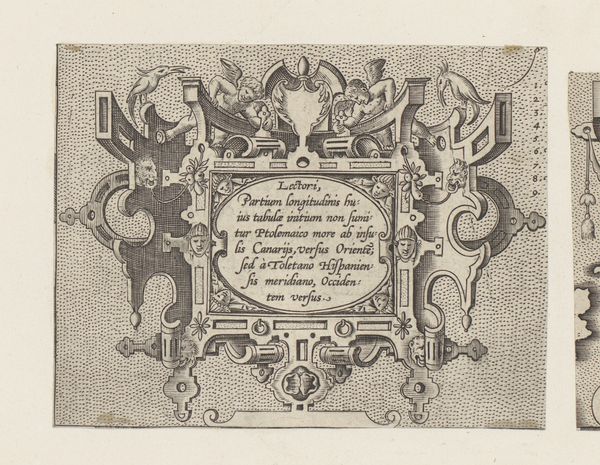
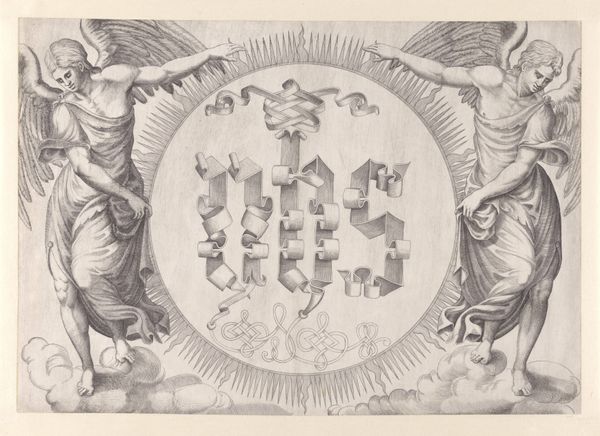
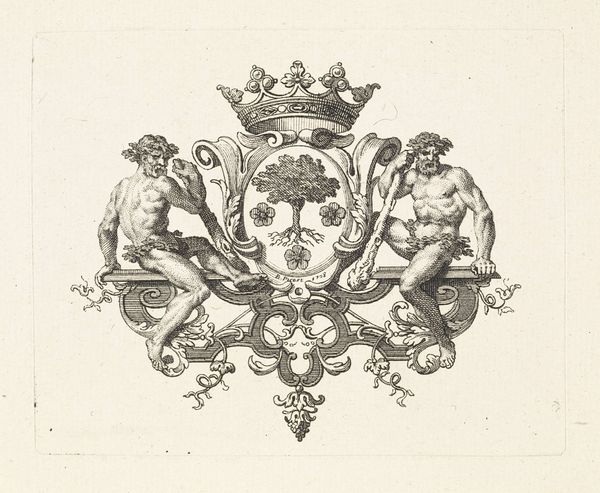
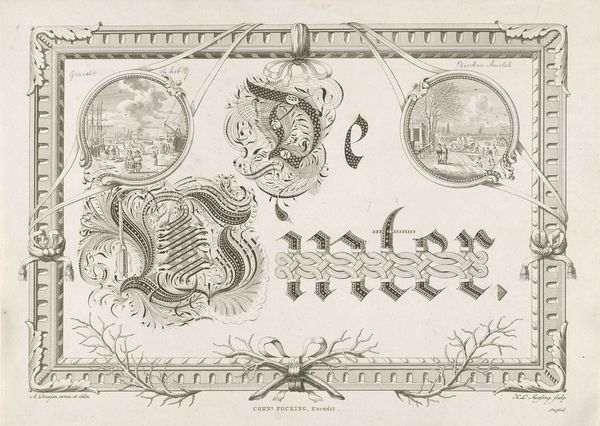
Curator: At first glance, this graphic strikes me as rigidly hierarchical, a meticulously ordered universe of visual elements. Editor: Indeed. We are looking at "Calligraphy of the Province of Zeeland," an engraving created between 1790 and 1794 by Cornelis van Baarsel. It's a fascinating intersection of pen drawing, printmaking, and the art of calligraphy. Curator: The line work is incredibly detailed, almost obsessive in its precision. Note the elaborate flourishes and ornamentation that frame the central lettering. The texture, achieved solely through line variations, provides its depth. Editor: And within those decorative flourishes, we see classical figures, nautical imagery, and symbols of the province itself. This wasn't merely decorative; it was a statement of identity and power, typical of the period’s representational strategies. Consider the lion rampant, a heraldic device, positioned prominently. Curator: I'm particularly drawn to how the word "Zeeland" is rendered. The letterforms themselves are dense and intricate, becoming almost abstract designs, a far cry from legible script, defying legibility even. Editor: But within that abstraction lies meaning. Zeeland was, and still is, a maritime province. Note how maritime power and civic pride is reinforced by this kind of carefully constructed public imagery. Curator: Absolutely. The circles on either side, depicting coastal scenes, and the allegorical figures above, complete the impression of a self-contained, formally balanced composition. But look closely and there is dynamism here; see Neptune brandishing his trident, adding narrative energy despite the rigid structure. Editor: It certainly encapsulates the artistic and political currents of the late 18th century. An era where art served not only aesthetic purposes, but also communicated political aspirations and regional identities. Curator: A dense tapestry of visual coding and masterful printmaking. It offers a captivating glimpse into how form and function intersected within that time. Editor: Yes, a reminder that even what appears purely ornamental often carries a complex message rooted in its specific historical and cultural moment.
Comments
No comments
Be the first to comment and join the conversation on the ultimate creative platform.
 React
React Comment