About this artwork
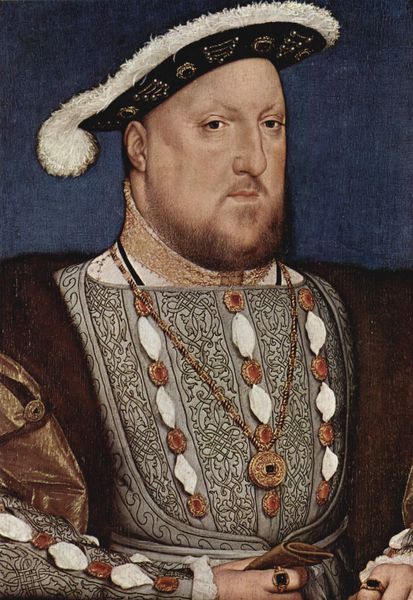
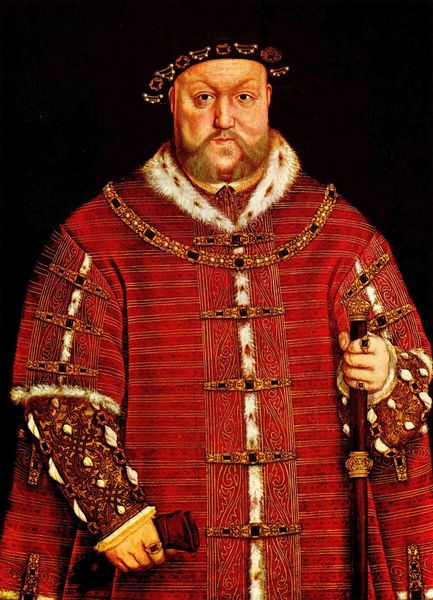
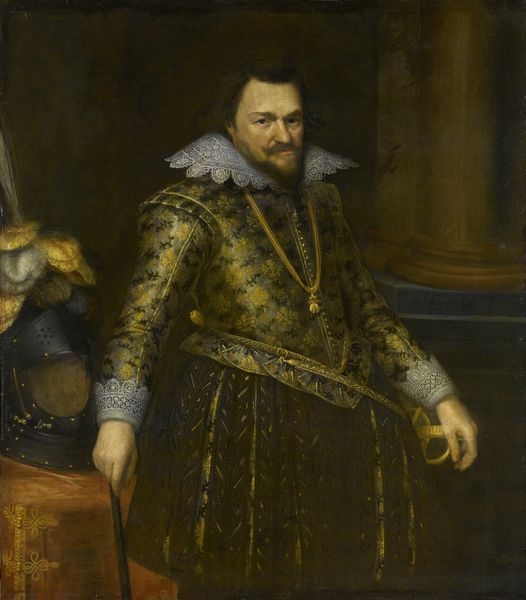
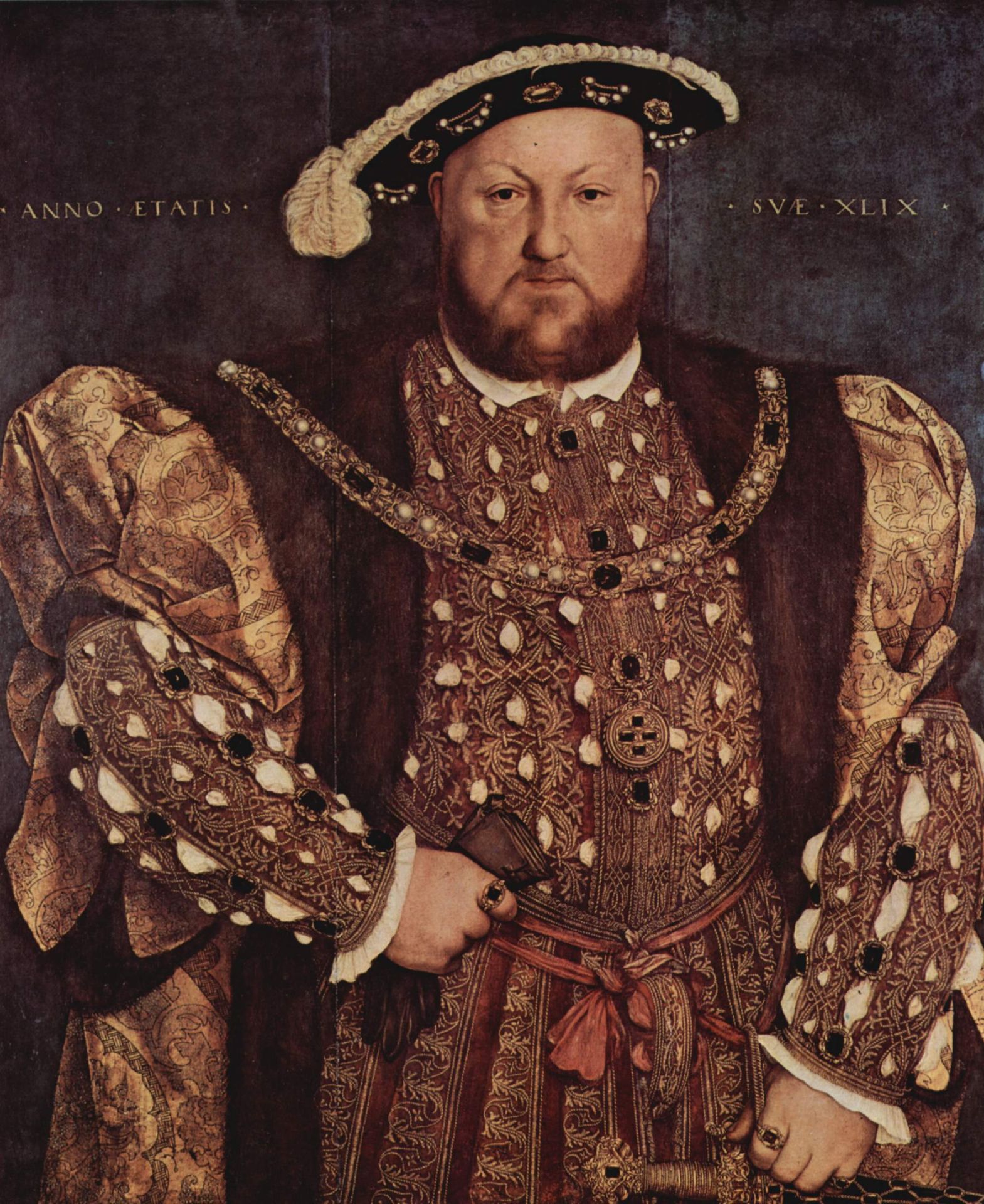
Editor: Here we have Hans Holbein the Younger's "Portrait of Henry VIII," painted in 1540 with oil paint. The sheer opulence of the attire is striking, but there’s also an undeniable sense of... menace, would you agree? What social and historical statements do you think Holbein is trying to make? Curator: I do agree, there is an element of the ominous in this imposing figure! To really engage with this piece, we need to see it as situated within the complex sociopolitical context of Henry VIII’s reign. Consider this: Holbein wasn’t just painting a likeness; he was constructing an image of power. How does the king's stance, his clothing, and the overall composition work to project this power? Editor: It’s interesting you mention "constructing an image." He looks larger than life, like a symbol more than a person. Curator: Precisely! Think about the Reformation, and Henry's break from the Catholic Church. He essentially declared himself the head of the Church of England. In that context, how might this portrait be interpreted as an assertion of his absolute authority, both spiritual and temporal? Editor: So, it's less about capturing his actual appearance and more about conveying his authority and justifying his actions through visual rhetoric? Curator: Exactly. Consider the gaze; the rich colors against the dark background. It speaks volumes about the construction of identity through the visual language of power. Understanding those choices helps us dissect the very foundations upon which authority was, and arguably still is, projected. Editor: That definitely reframes how I see the portrait, and the layers of meaning beneath the surface. Thanks, that was very helpful. Curator: My pleasure.
Portrait of Henry VIII
1540

Hans Holbein the Younger
1497 - 1543Location
Palazzo Barberini, Rome, ItalyArtwork details
- Medium
- oil-paint
- Dimensions
- 74.5 x 88.5 cm
- Location
- Palazzo Barberini, Rome, Italy
- Copyright
- Public domain
Tags
Comments
Share your thoughts
About this artwork
Editor: Here we have Hans Holbein the Younger's "Portrait of Henry VIII," painted in 1540 with oil paint. The sheer opulence of the attire is striking, but there’s also an undeniable sense of... menace, would you agree? What social and historical statements do you think Holbein is trying to make? Curator: I do agree, there is an element of the ominous in this imposing figure! To really engage with this piece, we need to see it as situated within the complex sociopolitical context of Henry VIII’s reign. Consider this: Holbein wasn’t just painting a likeness; he was constructing an image of power. How does the king's stance, his clothing, and the overall composition work to project this power? Editor: It’s interesting you mention "constructing an image." He looks larger than life, like a symbol more than a person. Curator: Precisely! Think about the Reformation, and Henry's break from the Catholic Church. He essentially declared himself the head of the Church of England. In that context, how might this portrait be interpreted as an assertion of his absolute authority, both spiritual and temporal? Editor: So, it's less about capturing his actual appearance and more about conveying his authority and justifying his actions through visual rhetoric? Curator: Exactly. Consider the gaze; the rich colors against the dark background. It speaks volumes about the construction of identity through the visual language of power. Understanding those choices helps us dissect the very foundations upon which authority was, and arguably still is, projected. Editor: That definitely reframes how I see the portrait, and the layers of meaning beneath the surface. Thanks, that was very helpful. Curator: My pleasure.
Comments
Share your thoughts