About this artwork
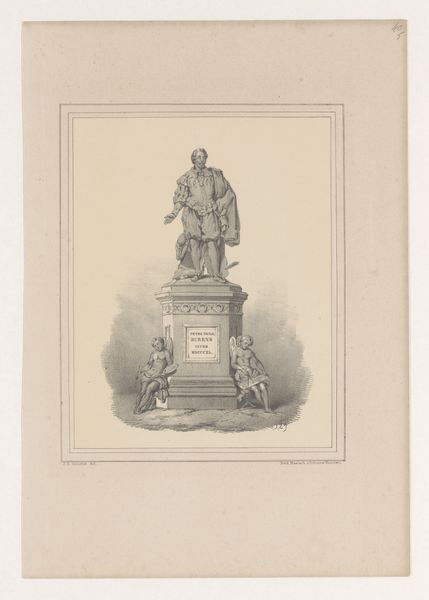
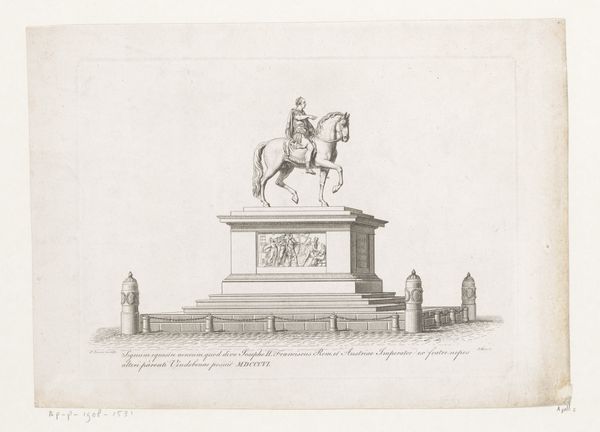
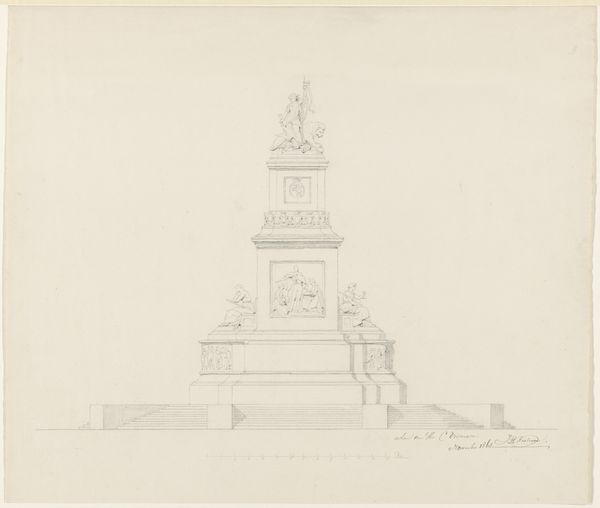
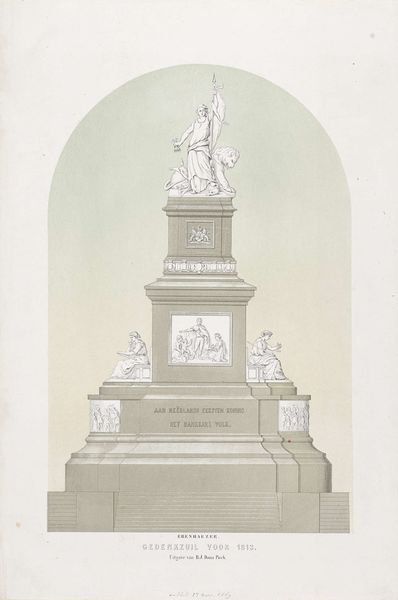
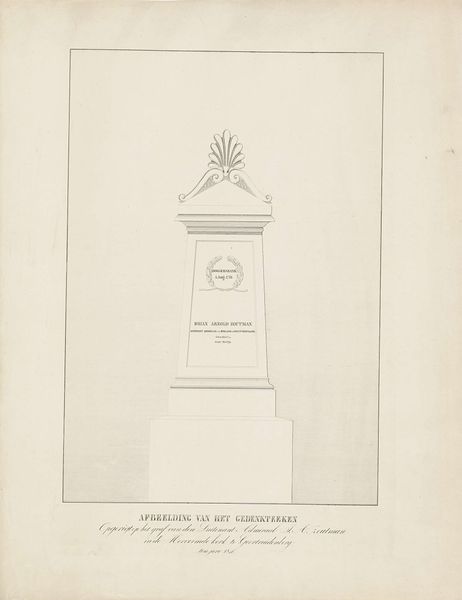
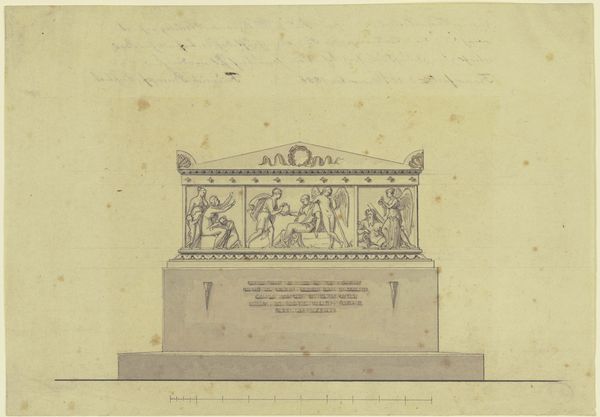
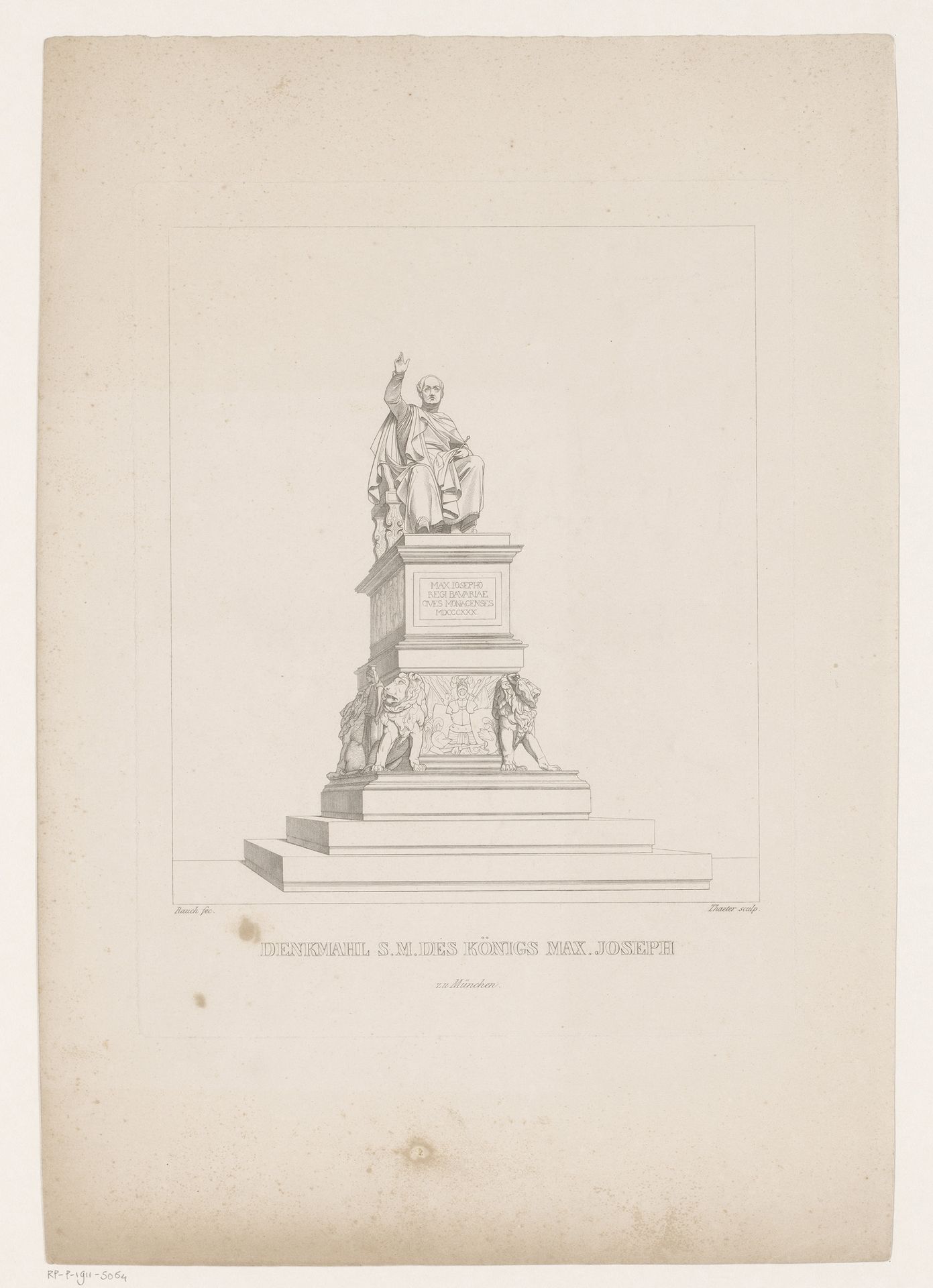
Julius Cäsar Thäter created this print of a monument to Maximiliaan I Jozef, King of Bavaria. Monuments such as this were often erected to solidify historical narratives. The monument depicts the King in a way that seeks to legitimize and celebrate his rule. It is important to consider how the monument presents a carefully crafted image of power. The figure of the King is elevated above the viewer, literally and symbolically, as a demonstration of authority. What does it mean to immortalize a ruler in stone? And what does it mean to reproduce that monument as a print? These are questions worth considering. The print democratizes the image of the monument. While the monument served as a local display of power, the print could circulate and reach far more people. As you reflect on this artwork, consider the complex interplay between power, representation, and memory. The image asks us to think about the stories we tell about our leaders.
Monument voor Maximiliaan I Jozef, koning van Beieren 1835 - 1870

Julius Cäsar Thäter
1804 - 1870Location
RijksmuseumArtwork details
- Medium
- drawing, print, metal, sculpture, engraving
- Dimensions
- height 267 mm, width 207 mm
- Location
- Rijksmuseum
- Copyright
- Rijks Museum: Open Domain
Tags
portrait
drawing
neoclacissism
metal
sculpture
history-painting
engraving
Comments
No comments
About this artwork
Julius Cäsar Thäter created this print of a monument to Maximiliaan I Jozef, King of Bavaria. Monuments such as this were often erected to solidify historical narratives. The monument depicts the King in a way that seeks to legitimize and celebrate his rule. It is important to consider how the monument presents a carefully crafted image of power. The figure of the King is elevated above the viewer, literally and symbolically, as a demonstration of authority. What does it mean to immortalize a ruler in stone? And what does it mean to reproduce that monument as a print? These are questions worth considering. The print democratizes the image of the monument. While the monument served as a local display of power, the print could circulate and reach far more people. As you reflect on this artwork, consider the complex interplay between power, representation, and memory. The image asks us to think about the stories we tell about our leaders.
Comments
No comments