1730 - 1736
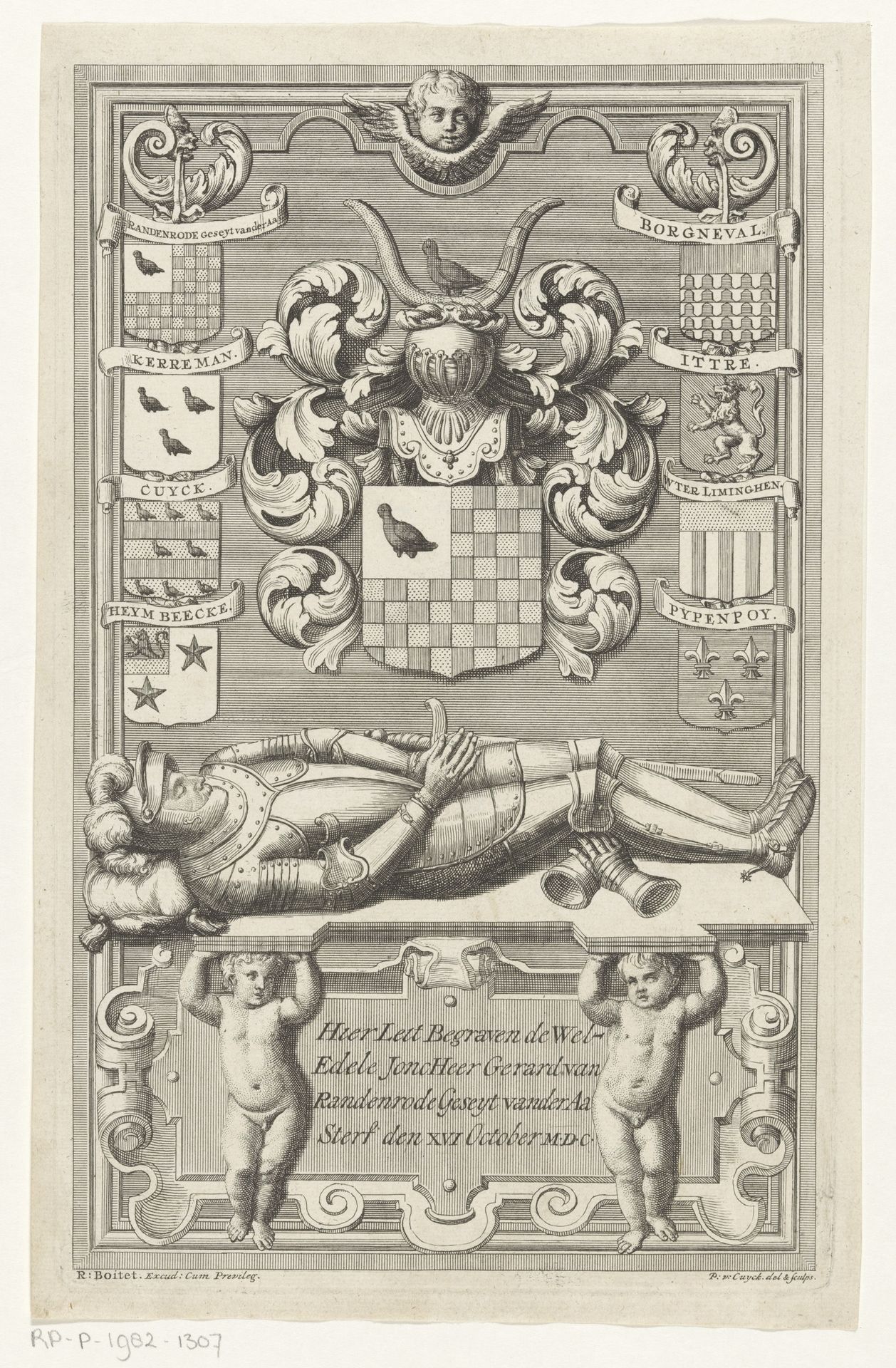
Graftombe van Gerard van Randenrode van der Aa

Pieter van (I) Cuyck
1689 - 1765Location
RijksmuseumListen to curator's interpretation
Curatorial notes
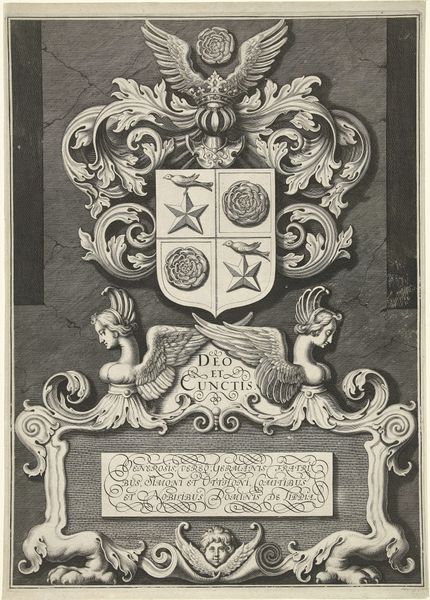
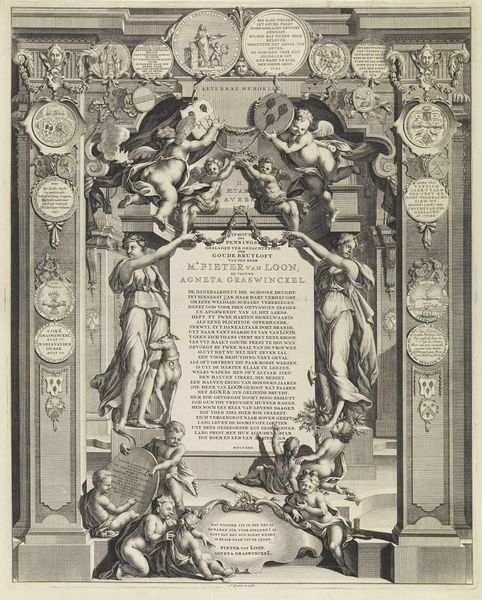
Curator: This engraving, "Graftombe van Gerard van Randenrode van der Aa," created by Pieter van (I) Cuyck between 1730 and 1736, presents a fascinating memorial image. Editor: My initial reaction is one of solemnity. The rigid figure, clad in full armor, immediately evokes a sense of loss and bygone eras, but with that Renaissance precision of line and symbolic elements that somehow transcends grief. Curator: Precisely. Consider the social and political implications. This work immortalizes a member of the nobility, and reinforces the power dynamics inherent in commemorating the elite. We can decode this image as an assertion of dynastic and aristocratic privilege, not just a simple funerary monument. Editor: Absolutely. Notice how the coats of arms, meticulously rendered, establish lineage and familial power. The figure's pose, recumbent with a sword, also speaks volumes about his station – perhaps military service was involved. The symbols become a form of continuous cultural memory. It almost certainly reflects their values, beliefs, and identity. Curator: And we must acknowledge the cultural context within which it was produced. The Baroque frame itself is rife with symbolism; cherubs and ornamental details elevate the figure and emphasize both the grandiosity of grief and the power of familial identity. I am thinking of power relations at play here, even in this scene. Editor: Look closely, it looks like he is reclining, like the artist is showing respect but creating more of an inviting scene to explore with our eyes rather than intimidating or too upsetting of an image to look at. It is rather soft in its delivery, rather than stiff with fear of death, if I am describing this effectively. Curator: I see your point. However, it seems the work also invites questions about what kind of narrative van Cuyck crafted with respect to class and privilege, given how carefully constructed the symbols are, and how effectively a sense of timeless sorrow is imbued. This opens our perception to class identity and the use of artwork to explore class values during that period. Editor: I concur. This piece is clearly less about the fear of death and grief than about remembering Gerard as powerful, even in the grave. To view this imagery in those social and philosophical lenses is key to unlocking how impactful symbolic depictions can be on a larger cultural or societal context. Curator: Yes. It serves to remind us that representations, especially within funerary art, are never neutral, but carry layers of ideology, privilege, and perhaps also serve as a narrative crafted to solidify societal hierarchy. Editor: What’s truly engaging is witnessing these interwoven meanings come alive within what appears, at first glance, a static historical object. Each detail adds greater depths of symbolism, both on individual and societal scales.