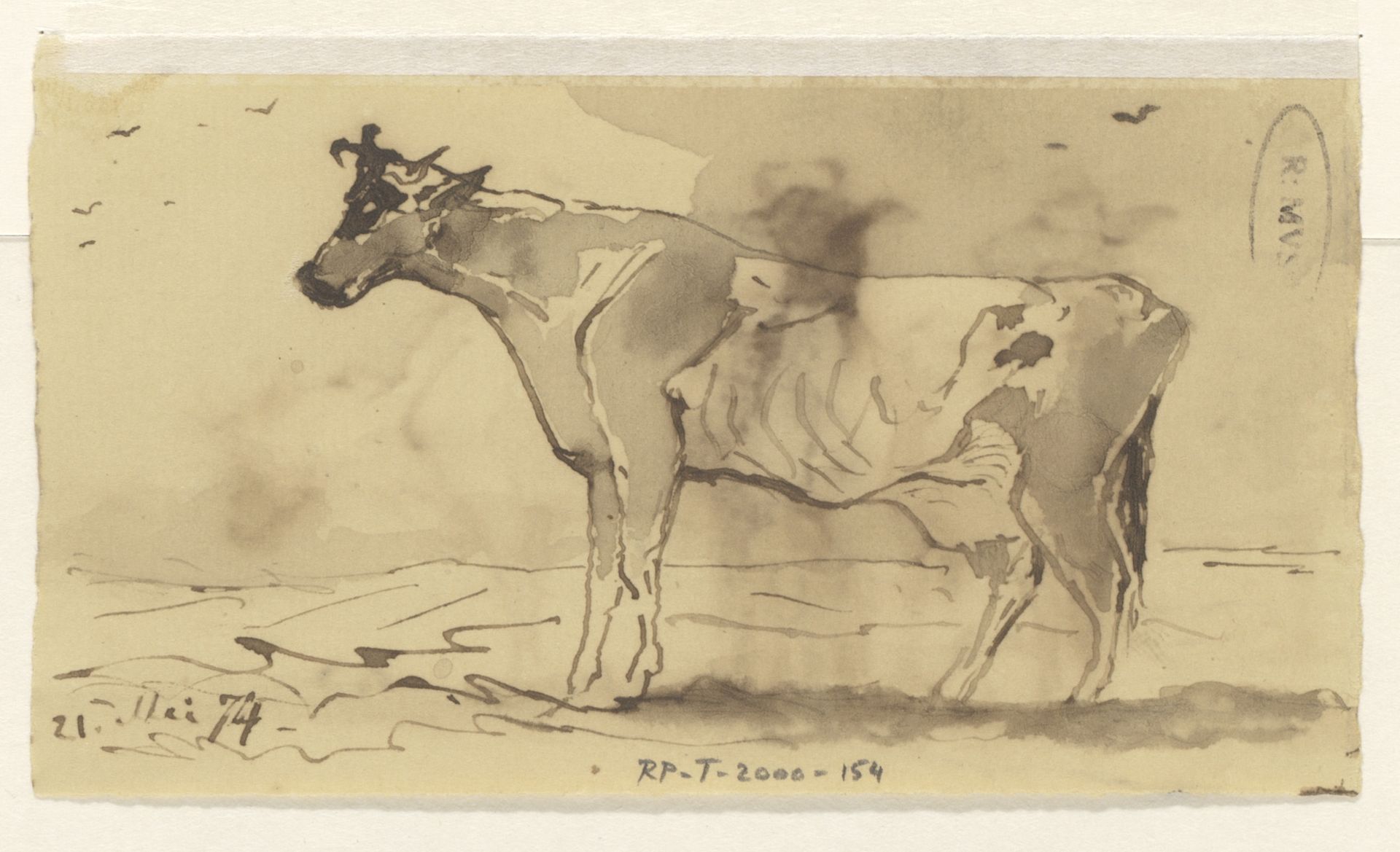
Possibly 1874 - 1875
Koe

Johannes Tavenraat
1809 - 1881Location
RijksmuseumListen to curator's interpretation
Curatorial notes
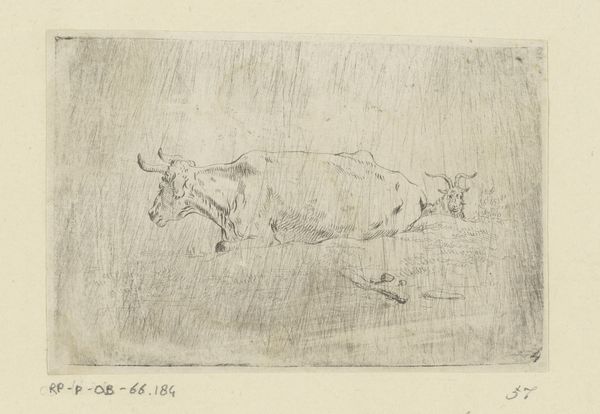
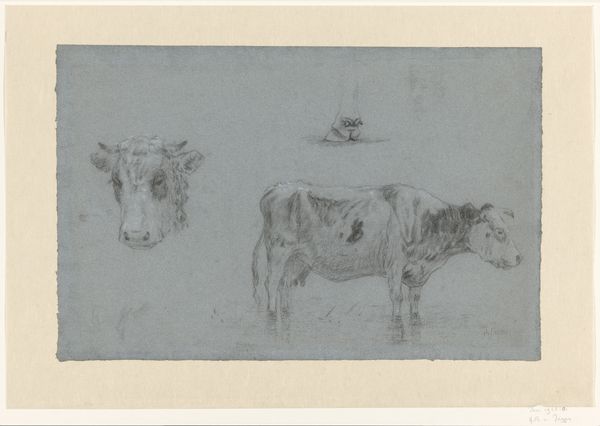
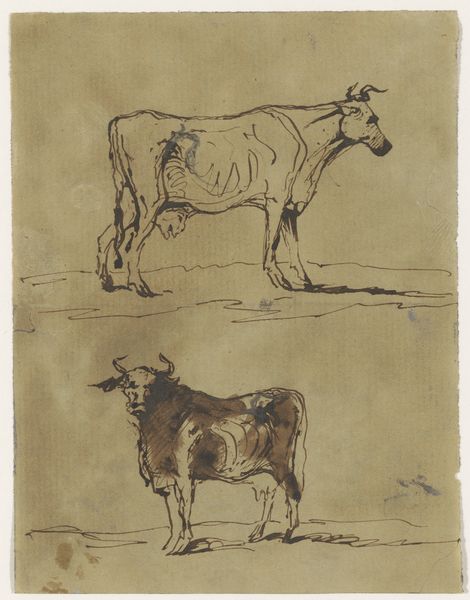
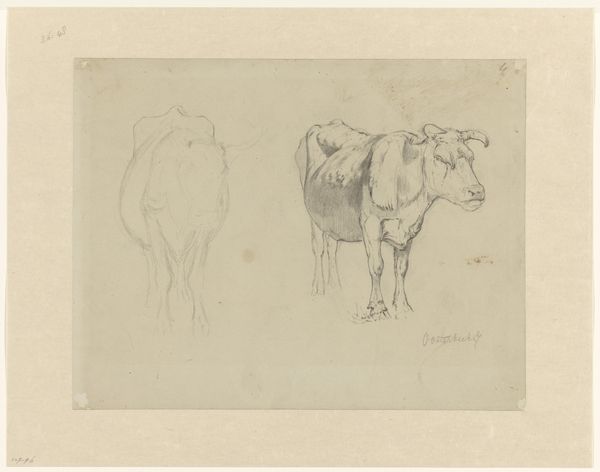
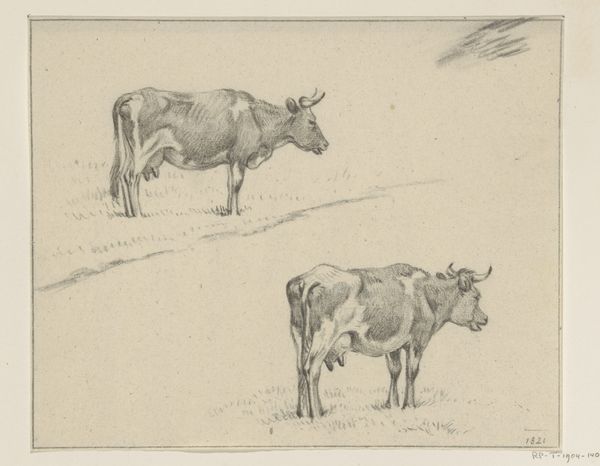
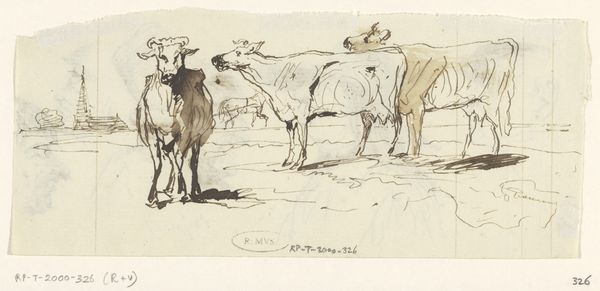
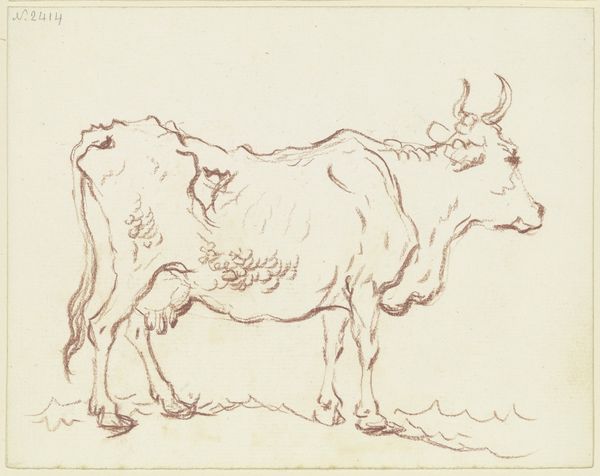
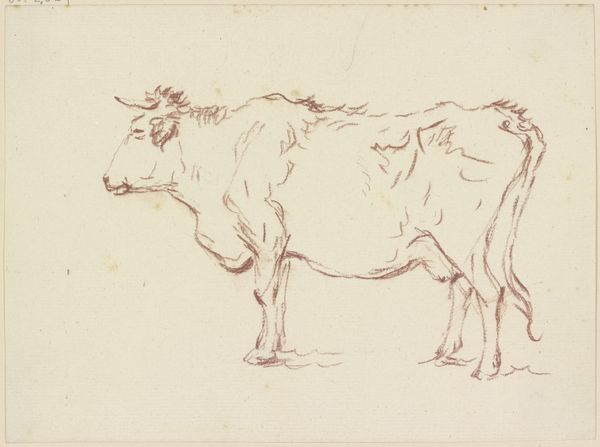
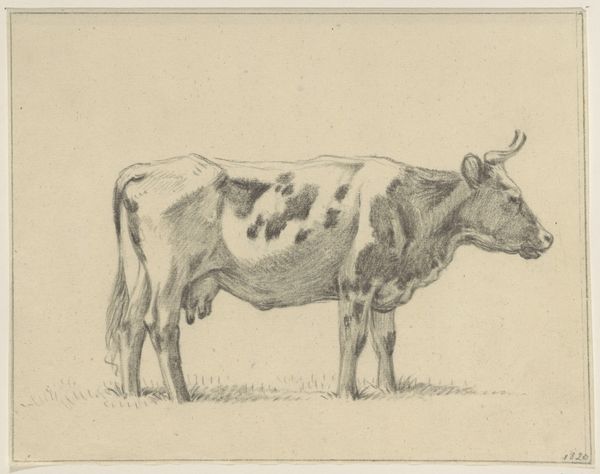
Editor: This is "Koe," possibly from 1874 or 1875, by Johannes Tavenraat, currently held in the Rijksmuseum. It’s rendered in ink and watercolor, depicting a cow standing in what appears to be a field. The monochrome palette gives it a rather somber, perhaps even a bleak mood. What do you see when you look at this piece? Curator: I see a study of labor, really. Think about the social context of this image – the Netherlands in the late 19th century. Agriculture was changing, becoming more industrialized, and animals like this cow were central to the means of production. The ink and watercolor – these materials were readily available, cheap even. It speaks to a democratization of art making. Editor: Democratization? Interesting. So, the accessibility of the materials influences how we interpret the work? Curator: Precisely! Look at the quick, almost gestural quality of the strokes. This wasn't some precious oil painting taking months to complete. This was a more immediate response to the animal, its environment, perhaps even the artist's own labor. And the subject! Cows weren’t exactly high art, but essential to agricultural labor, a form of industry. How does this emphasis on production reshape traditional boundaries? Editor: I suppose it shifts our focus. Instead of just seeing a cow, we see the cow as part of a system. The art isn’t about the idyllic pastoral scene, it's reflecting the hard labor of a nation's industry and potentially challenging what is deemed art and craft. Curator: Exactly. It forces us to consider the conditions of its creation. The materials, the labor involved, the cow's role in the 19th-century Netherlands' economy – these are all material realities informing our experience of the image. How might Tavenraat's consumers have received such a rendering? Editor: I hadn't thought about it that way before. I was so caught up in the atmosphere that I completely missed the layers of social and economic commentary embedded in the materials and subject. Curator: Understanding art means questioning those boundaries! We’ve hopefully started you down the path of materialist art criticism!