oil-paint
#
portrait
#
figurative
#
portrait
#
oil-paint
#
male portrait
#
portrait reference
#
portrait head and shoulder
#
romanticism
#
animal drawing portrait
#
portrait drawing
#
facial portrait
#
portrait art
#
fine art portrait
#
realism
#
digital portrait
Copyright: Public Domain: Artvee
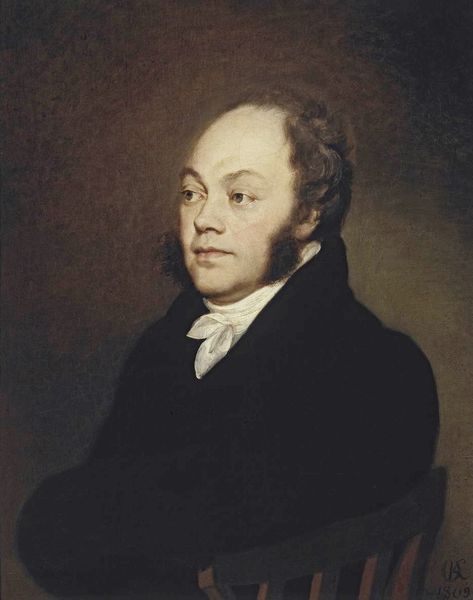
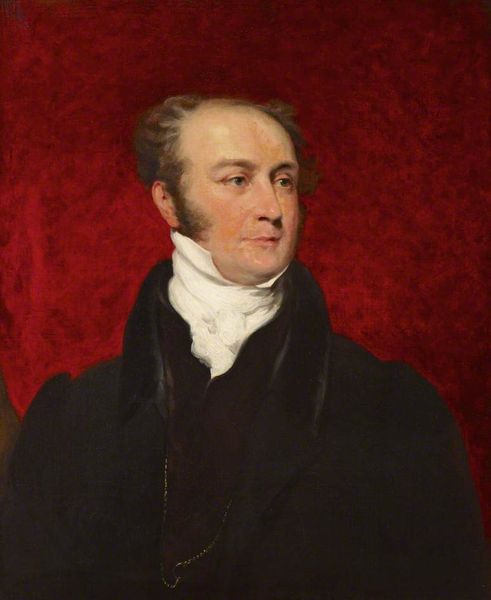
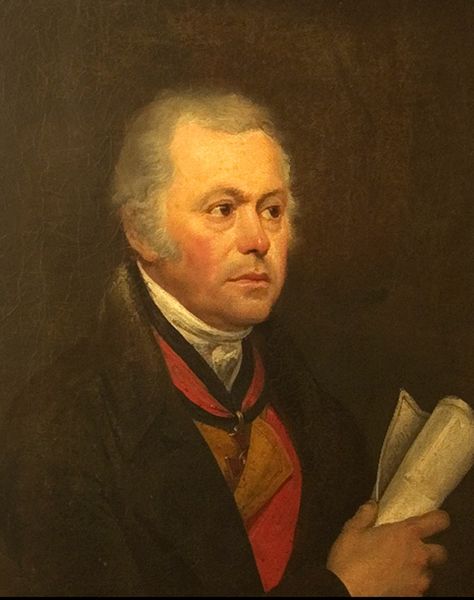
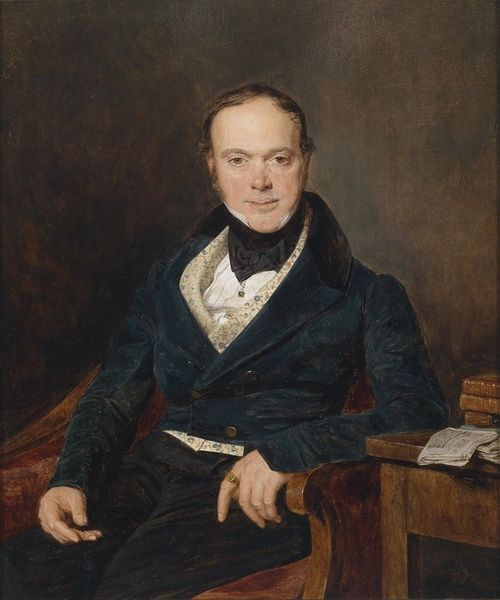
Curator: Here we have Ary Scheffer's "Portrait de Pierre-Jean de Béranger," painted in 1828. It's an oil on canvas, showcasing the artist's deft hand in capturing likeness and mood. Editor: What strikes me immediately is the sitter’s gaze. He's got this incredibly knowing look, almost melancholic. It’s like he’s seen a thing or two. The muted palette adds to the sense of introspection. Curator: Absolutely. Béranger was a very popular songwriter and poet, known for his politically charged verses that often challenged the established order. Scheffer was clearly commissioned to portray him not just as a man, but as a figure of cultural significance. The relative simplicity of the setting focuses our attention. Editor: There’s something slightly…unfinished about it, though, don't you think? The background fades almost to nothing. I find that captivating! The face emerges from the darkness. It emphasizes Béranger's inner life rather than any sort of material trappings of status. Curator: Precisely. By simplifying the setting, Scheffer creates a powerful representation of intellectual and artistic engagement during a period of considerable social and political change. It underscores the rising importance of the artist as a social commentator. The style aligns with Romanticism's ideals, championing individualism. Editor: Do you think that’s why the collar is so…exaggerated? It's like this defiant burst of white against the dark jacket. Curator: One could interpret it that way. Perhaps it’s a nod to Béranger's rebelliousness. Scheffer subtly suggests the sitter’s independent spirit and challenge of societal norms. This rebellion, channeled through creative expression, resonated deeply. Editor: You know, looking at him, I can almost hear the echoes of his songs. Thank you, Ary, for allowing me to see so clearly beyond the veil! Curator: Indeed. And in considering Scheffer's painting today, we see how art can be an act of bearing witness and interpreting the temperaments of influential times and voices.
Comments
No comments
Be the first to comment and join the conversation on the ultimate creative platform.
 Collect
 React
React Comment
More like this