1600 - 1700
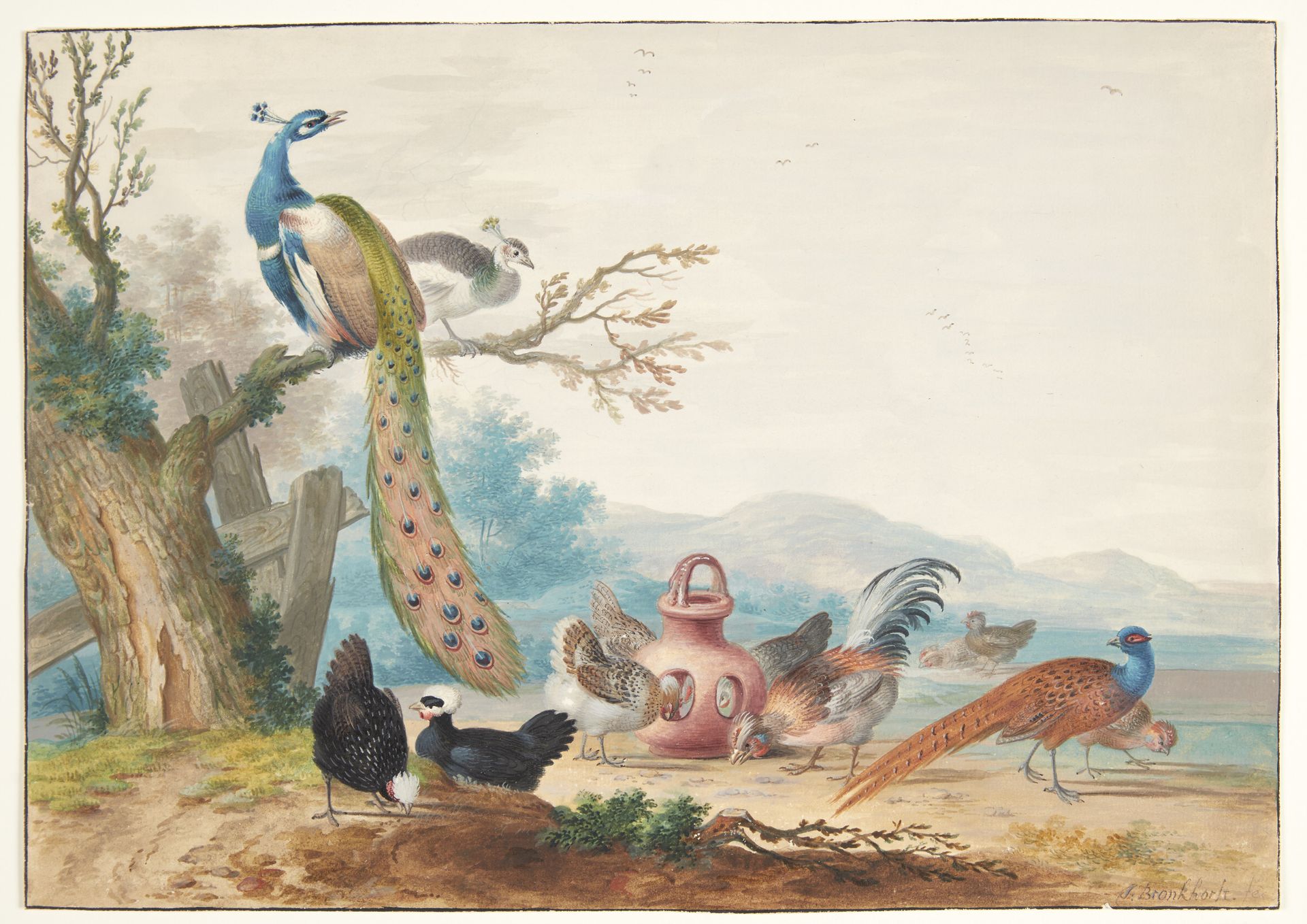
Landskab med fugle


Listen to curator's interpretation
Curatorial notes
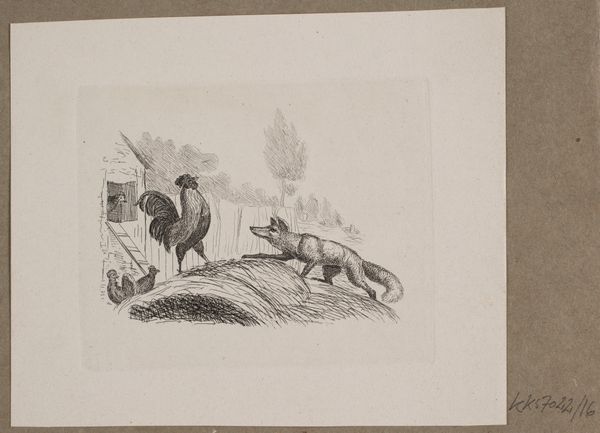
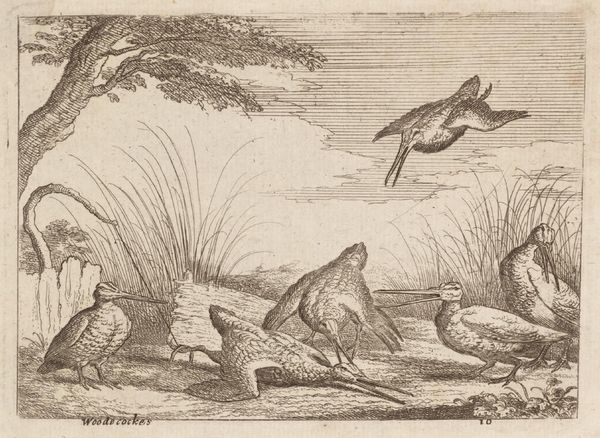
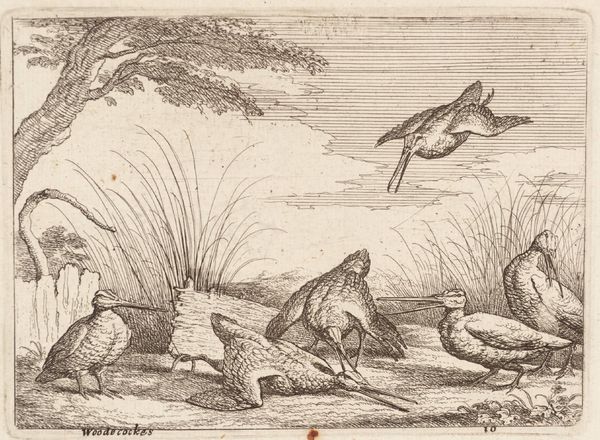
Editor: Here we have Johannes Bronckhorst’s “Landskab med fugle,” dating somewhere between 1600 and 1700. It’s a watercolor drawing, and I’m struck by the variety of birds depicted. What do you see in this piece? Curator: Beyond the literal depiction, I see a subtle commentary on societal hierarchies. The proud peacock perched above, the common fowl at the bottom… It invites questions. Were these different species intended to represent social classes, perhaps the landed gentry versus the working class? What do you make of the fence seemingly cutting off the birds? Editor: It's interesting that you interpret it in that way, considering the arrangement of the figures. I hadn't thought about a link to the era’s social structure, only seeing a landscape. What kind of symbolism do birds carry within this cultural context? Curator: Birds in the 17th century, like many other natural forms, were heavily laden with symbolic meaning. Think about how often we use bird metaphors even today! Freedom, aspiration, but also fragility. This piece also showcases early applications of watercolor—an accessible medium. Bronckhorst, through this piece, invites us to reflect on the art historical context as well as question existing societal norms, particularly our relationships to the natural world, don’t you think? Editor: It certainly shifts my perception, adding layers to what seemed like just an innocent landscape. Thinking about it in terms of class structure changes my perspective of Bronckhorst as an artist too. Curator: Indeed, and by considering these elements, we arrive at a deeper appreciation of the piece and the society that created it.