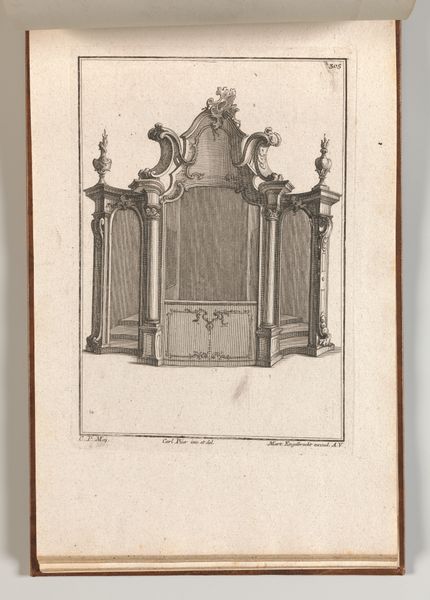
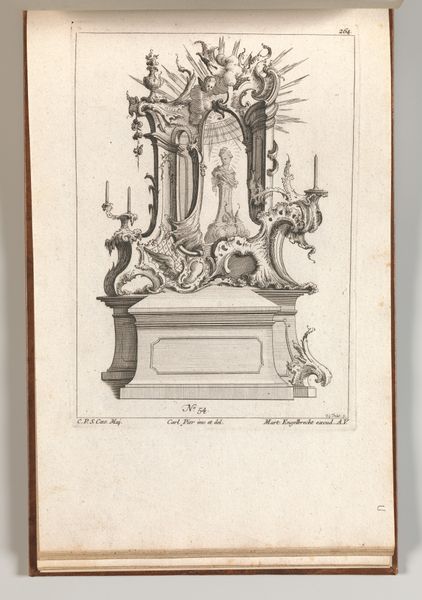
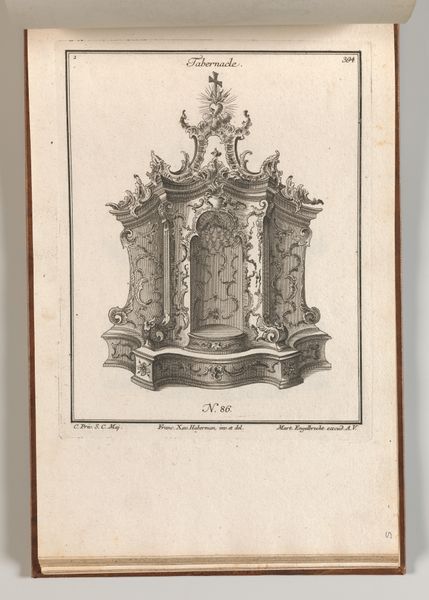
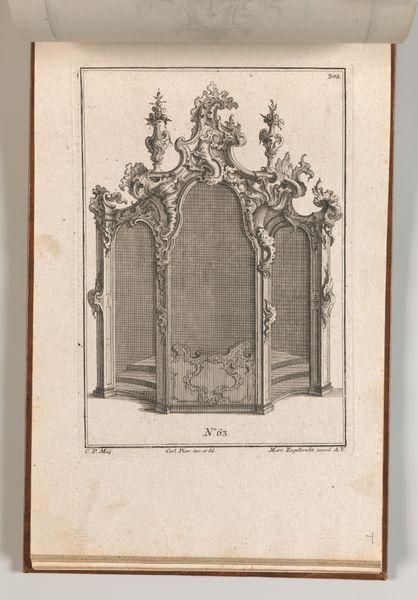
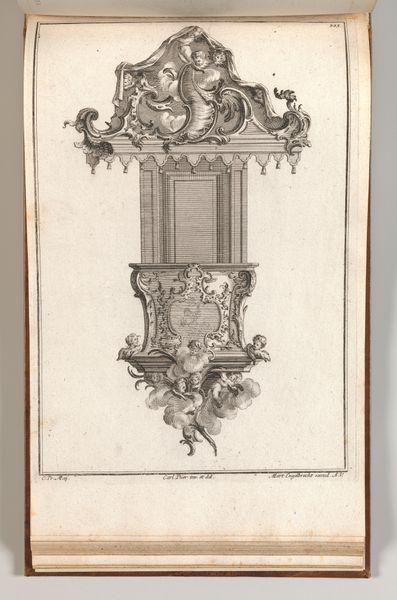
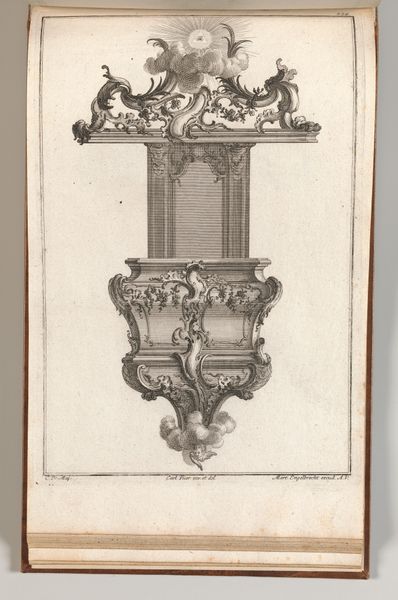
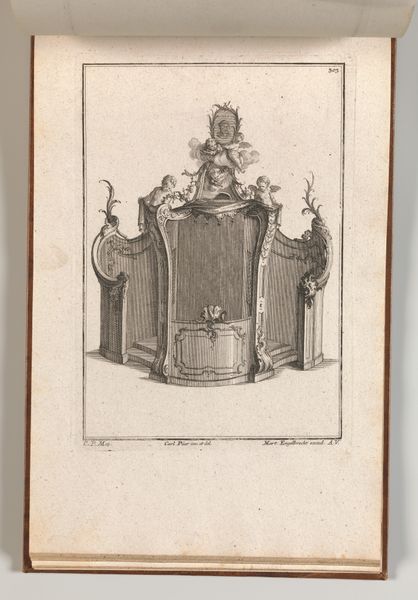
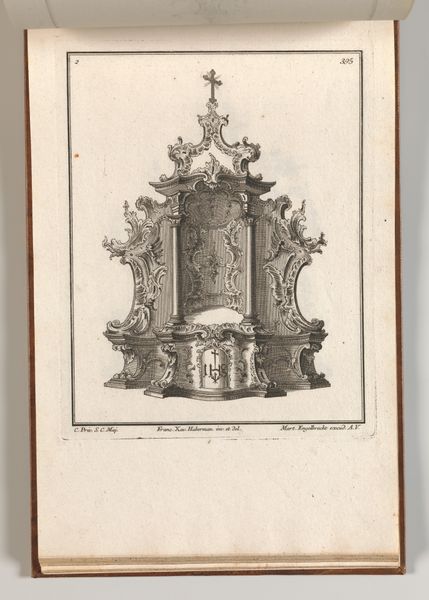
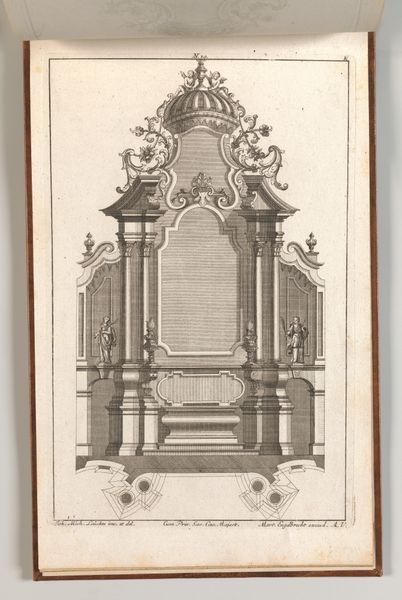
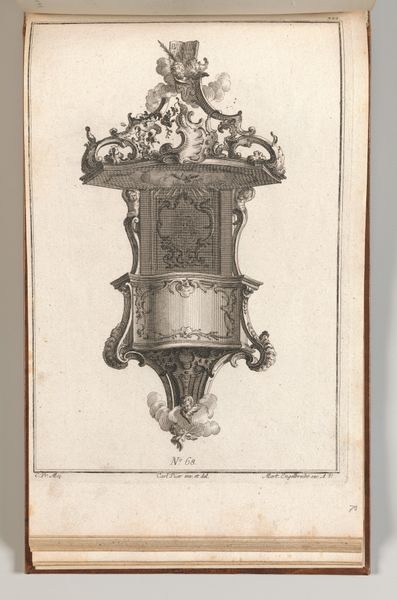
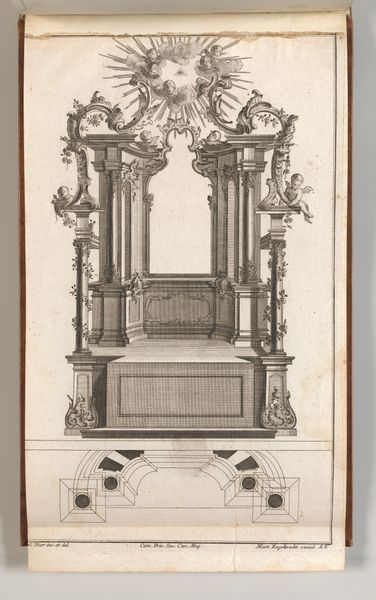
Design for a Confessional, Plate 3 from an Untitled Series of Designs for Confessionals 1745 - 1755
0:00
0:00


drawing, print, engraving
#
drawing
#
baroque
# print
#
furniture
#
engraving
Dimensions: Overall: 8 7/16 × 13 3/4 in. (21.5 × 35 cm)
Copyright: Public Domain
This drawing of a confessional, created by Carl Pier in the 18th century, is rich in symbolism. The very structure invites introspection, a space for confronting one's inner self, and the cherubic figures adorning it link to divine forgiveness. Consider the arch, a motif stretching back to ancient Roman triumphal arches, symbolizing victory and passage. Here, it marks the passage from sin to absolution, a psychological triumph over guilt. The confessional, in essence, is a stage for catharsis. Throughout art history, similar architectural forms appear in depictions of sacred spaces, each echoing a human desire for order and redemption. The play of light and shadow further emphasizes this emotional depth, engaging viewers on a deep, subconscious level, triggering shared feelings of vulnerability and hope. The confessional, like the symbols adorning it, represents a cyclical journey. Sins confessed, forgiveness granted, and the soul reborn, only to grapple with temptation once more, ad infinitum.
Comments
No comments
Be the first to comment and join the conversation on the ultimate creative platform.
 Collect
 React
React Comment
More like this