drawing, pencil
#
portrait
#
drawing
#
self-portrait
#
baroque
#
pencil drawing
#
pencil
#
portrait drawing
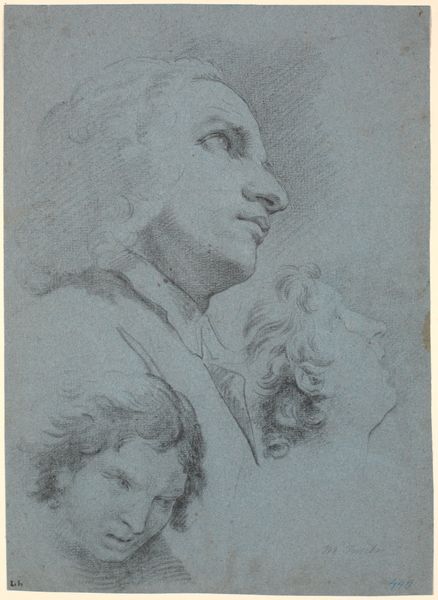
Dimensions: 230 mm (height) x 182 mm (width) (bladmaal)
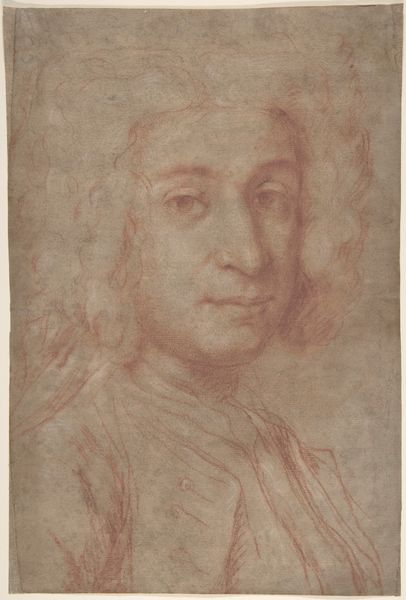
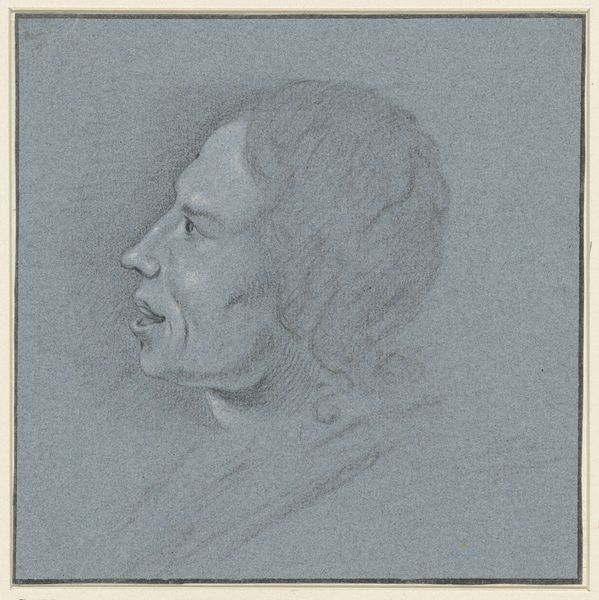
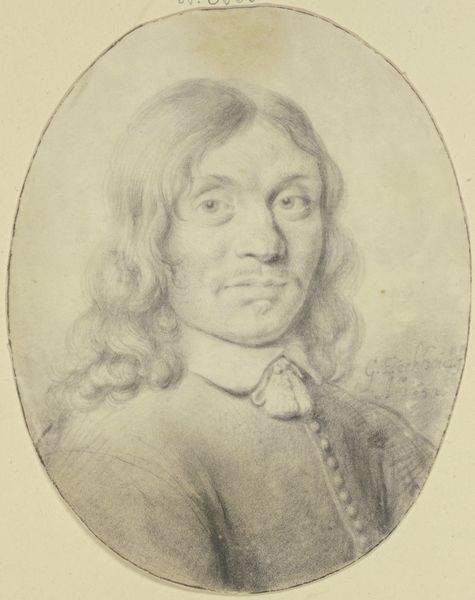
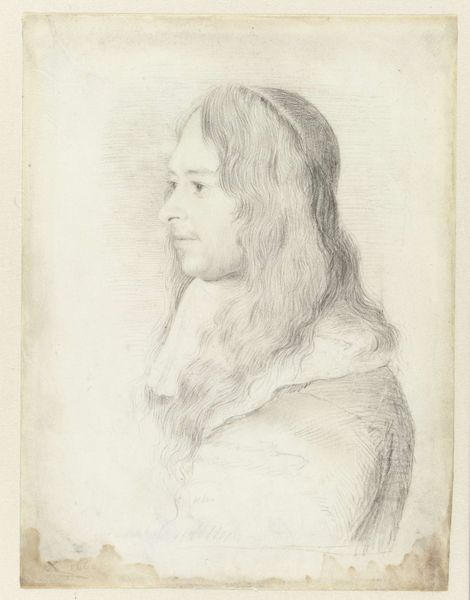
Editor: Here we have Marcus Tuscher's "Portrait of a Younger Man," a pencil drawing from around 1728-1731. The cool blue paper lends the piece a serene, almost melancholic feel. What strikes you about this self-portrait? Curator: The averted gaze holds such significance, doesn’t it? It creates a sense of internal reflection, almost a reluctance to fully reveal oneself. In iconographic terms, this obliqueness can suggest contemplation, a turning inward to the psyche. Are you familiar with physiognomy? Editor: I’ve heard of it, the idea that facial features reflect inner character? Curator: Precisely! Consider the long, elegant nose. A feature often associated with refinement and intellect, yet rendered with a soft, almost vulnerable touch here. The curl of the hair mirrors this ambiguity, signifying both style and a loosening of social constraint. I find myself pondering his inner world: what stories do those eyes conceal? Editor: It's interesting how those little details contribute to an overall sense of him. I guess the 'Baroque' tag is more subtle here. The emotion and self-awareness feel pretty modern. Curator: Modern in sentiment, perhaps, but still tethered to its time. Consider how a contemporary viewer may have interpreted such imagery. What societal expectations of appearance might have been subverted? Editor: That’s a great point. So even in its perceived “modernity,” it’s embedded in a specific historical and social context. Curator: Precisely! And in appreciating such artworks, we engage in an act of cultural retrieval, uncovering not only the visual artistry, but also the embedded narratives they carry. Editor: I hadn't considered how actively we are deciphering clues left behind. I’ll definitely look at portraits differently from now on.
Comments
No comments
Be the first to comment and join the conversation on the ultimate creative platform.
 Collect
 React
React Comment
More like this