c. 1770 - 1783
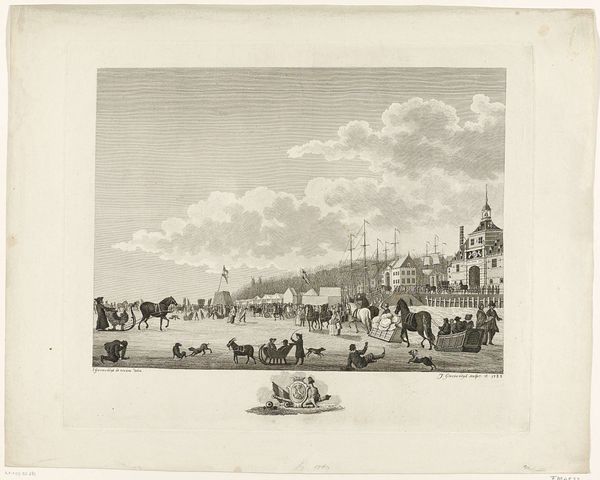
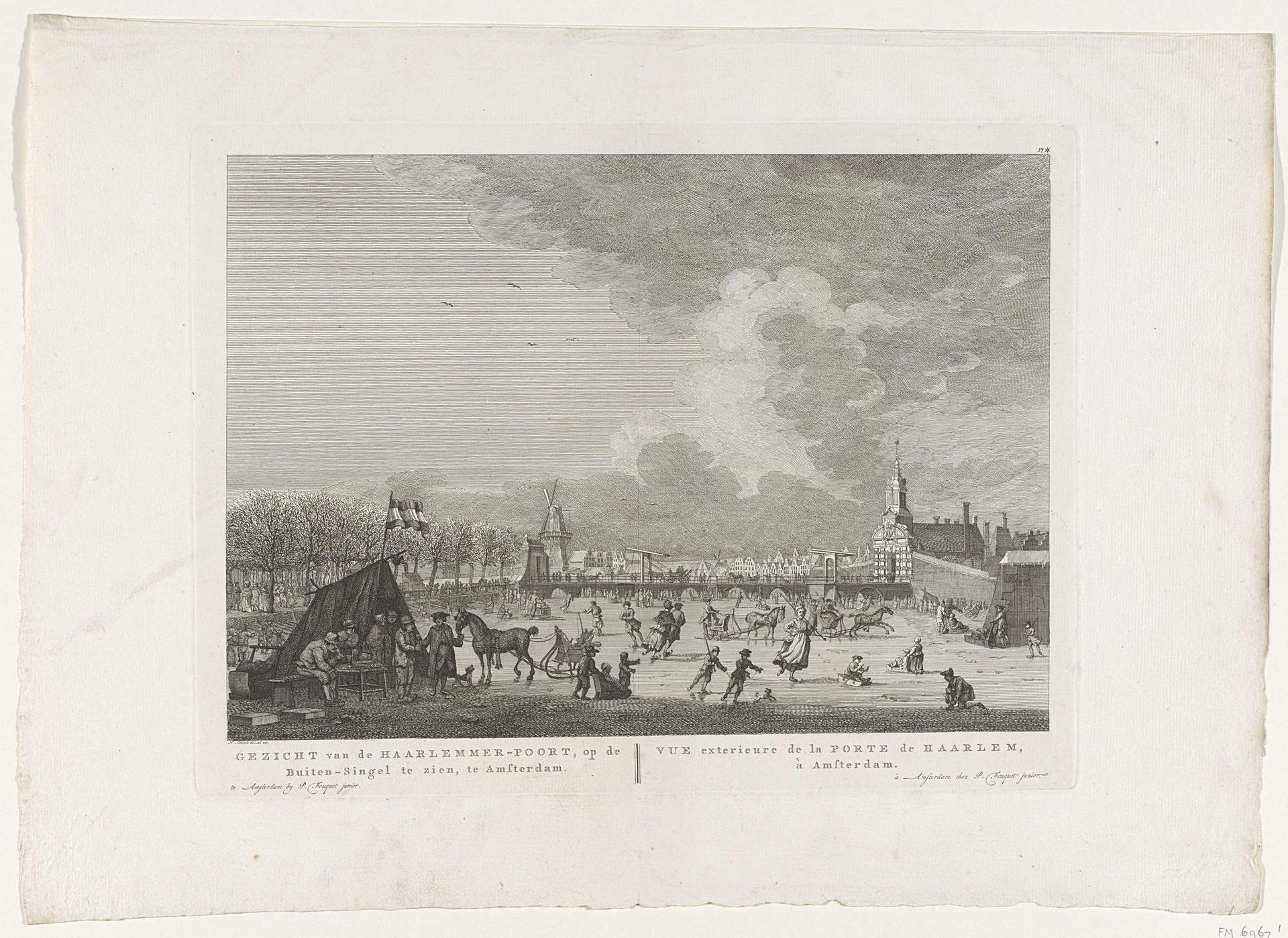
IJspret op de Buitensingel bij de Haarlemmerpoort te Amsterdam, ca. 1770 (1837)

Hermanus Petrus Schouten
1747 - 1822Location
RijksmuseumListen to curator's interpretation
Curatorial notes
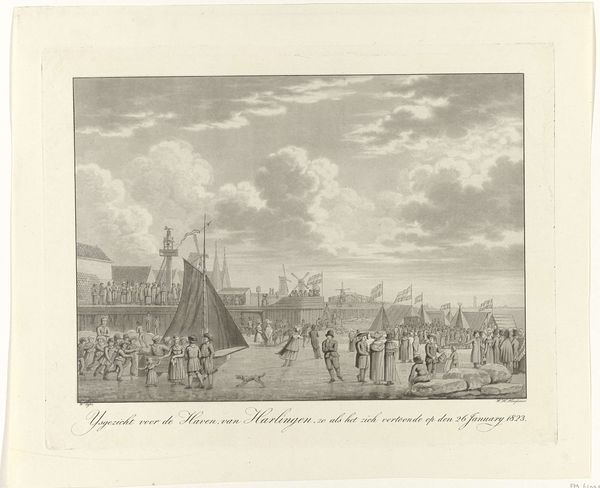
Hermanus Petrus Schouten created this print around 1770, a time when the Dutch Republic was experiencing both economic prosperity and growing social inequality. Here, on the frozen canal by the Haarlemmerpoort in Amsterdam, we see a lively scene of winter leisure. Yet, this depiction of communal joy is carefully constructed. Note the stark class distinctions: the wealthy, with their horses and sledges, occupy the foreground, while the working class and the poor are relegated to the periphery. Even the children at play reflect the social hierarchy, their clothing and activities indicative of their family's status. Schouten, as an artist, navigates a complex social landscape. The print invites us to reflect on who has access to leisure and public space. It subtly underscores the socio-economic realities beneath the veneer of everyday life in 18th-century Amsterdam. It encourages us to consider whose stories are visible and whose are marginalized in the historical record.