1867 - 1931
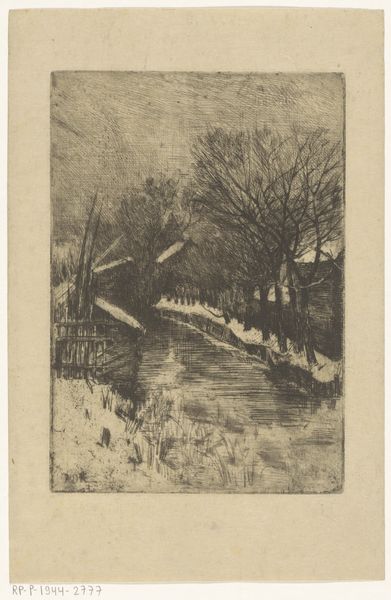
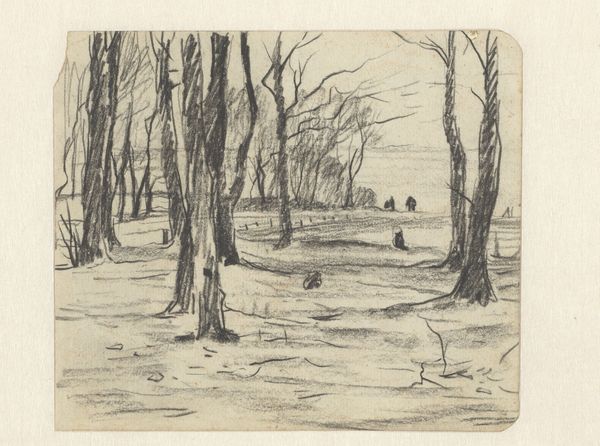
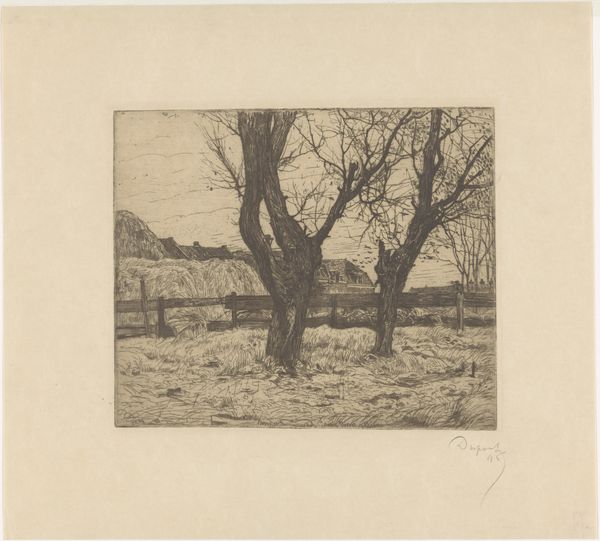
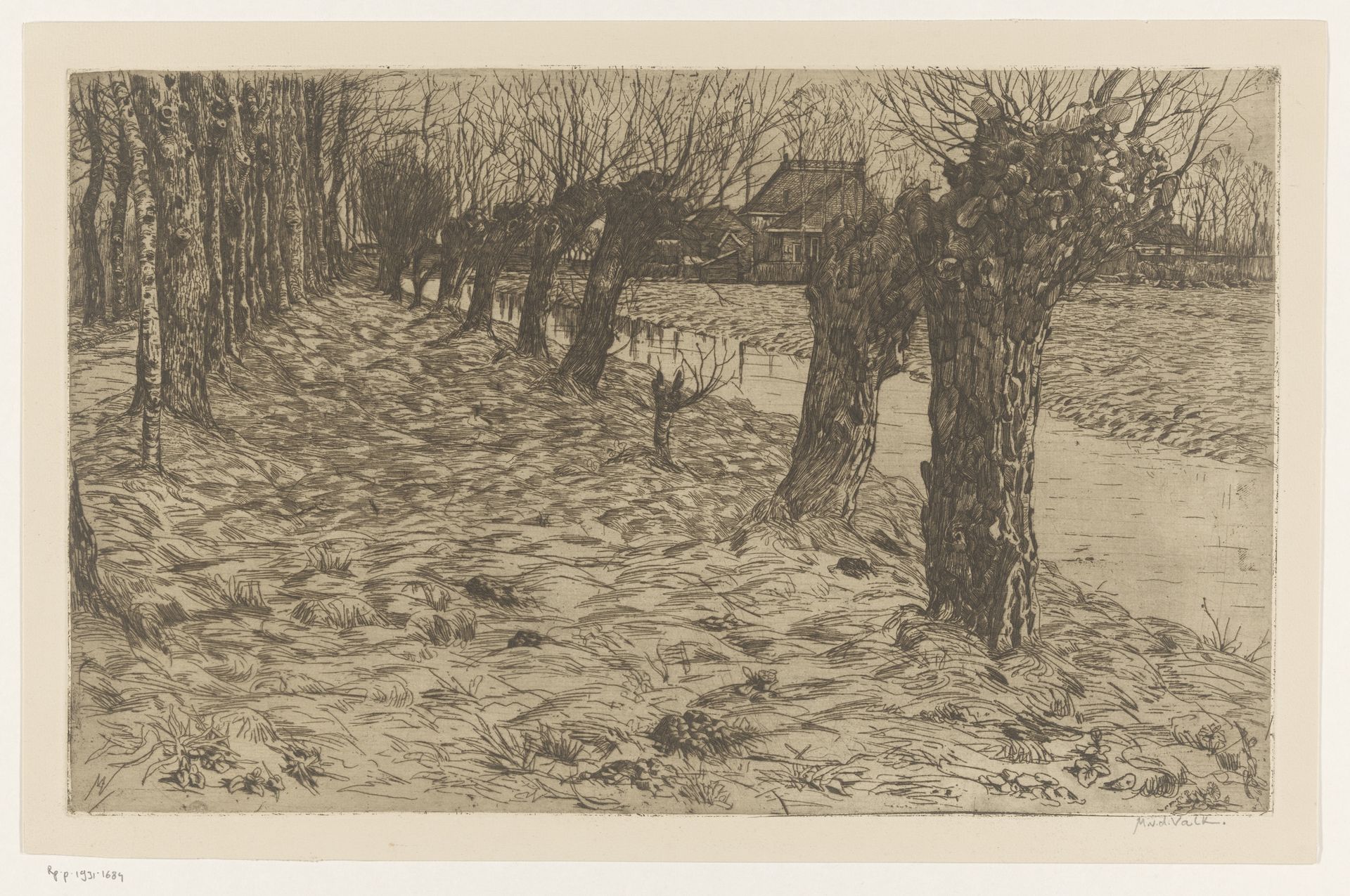
Weg en wilgen langs een sloot

Maurits van der Valk
1857 - 1935Location
RijksmuseumListen to curator's interpretation
Curatorial notes
Maurits van der Valk created this drawing, “Road and willows along a ditch”, using black chalk. The stark trees, lining a cold canal, evoke the melancholy of the Dutch countryside. These pollard willows carry deep symbolism. Far from mere decorative elements, they represent a profound connection to the land and its cycles of renewal. Consider their presence throughout art history, from ancient Roman agrarian scenes to the backgrounds of Renaissance paintings. The weeping willow, with its sorrowful posture, often symbolized grief and mourning in Victorian art, emotions deeply rooted in the human psyche. Here, these willows, stripped bare, might evoke feelings of starkness. They possess a psychological weight, touching upon our collective memories of winter's desolation and the anticipation of spring. This connection transcends time, engaging us on a subconscious level, reminding us of the enduring power of nature's motifs.