1914 - 1916
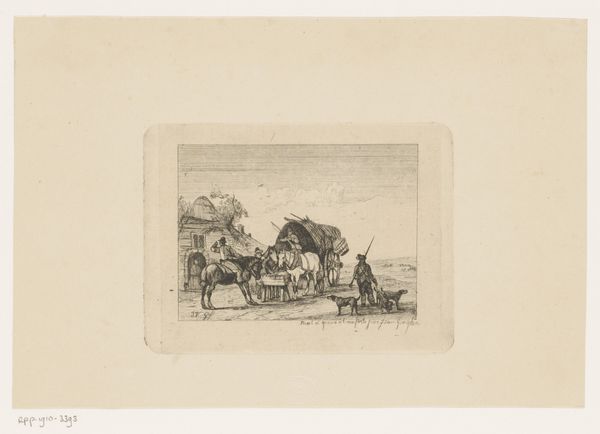
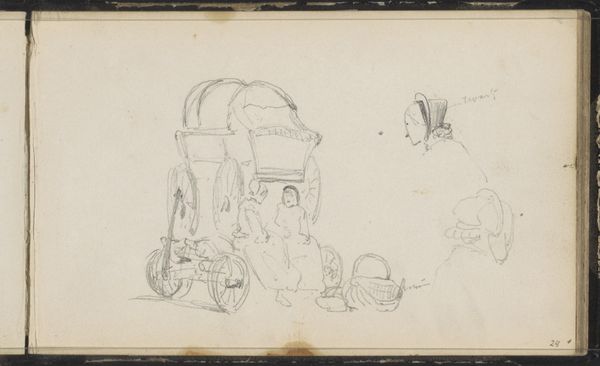
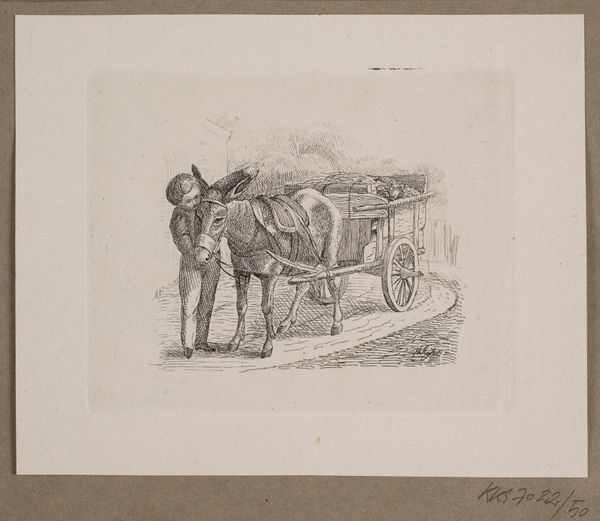
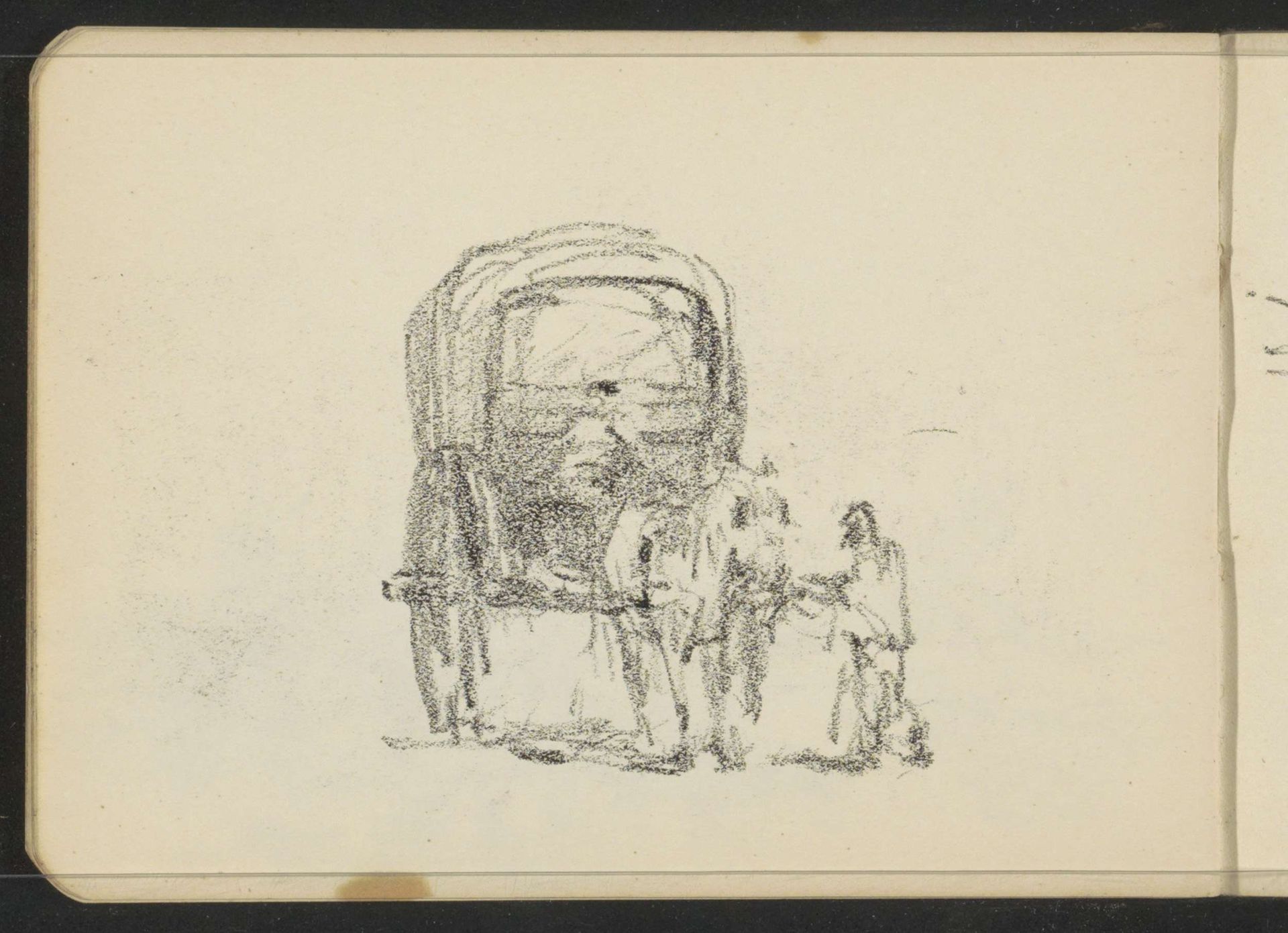
Man naast een paard voor een huifkar

Listen to curator's interpretation
Curatorial notes
This is Willem Cornelis Rip’s sketch of a man next to a horse drawn covered wagon. Though undated, Rip worked in the late 19th and early 20th century at a time when industrialization was rapidly reshaping European society. With a few quick strokes Rip captures a scene of rural life that was fast disappearing. The covered wagon evokes ideas of travel, of a more itinerant existence than that of the emerging middle class. It’s intriguing that the artist includes not one but two human figures in the composition. Perhaps these figures suggest the bonds of family or community which are so often necessary when living a life on the margins. In this way, the drawing isn't just an observation of changing times but also a reflection on the human need for connection amidst societal shifts.