About this artwork
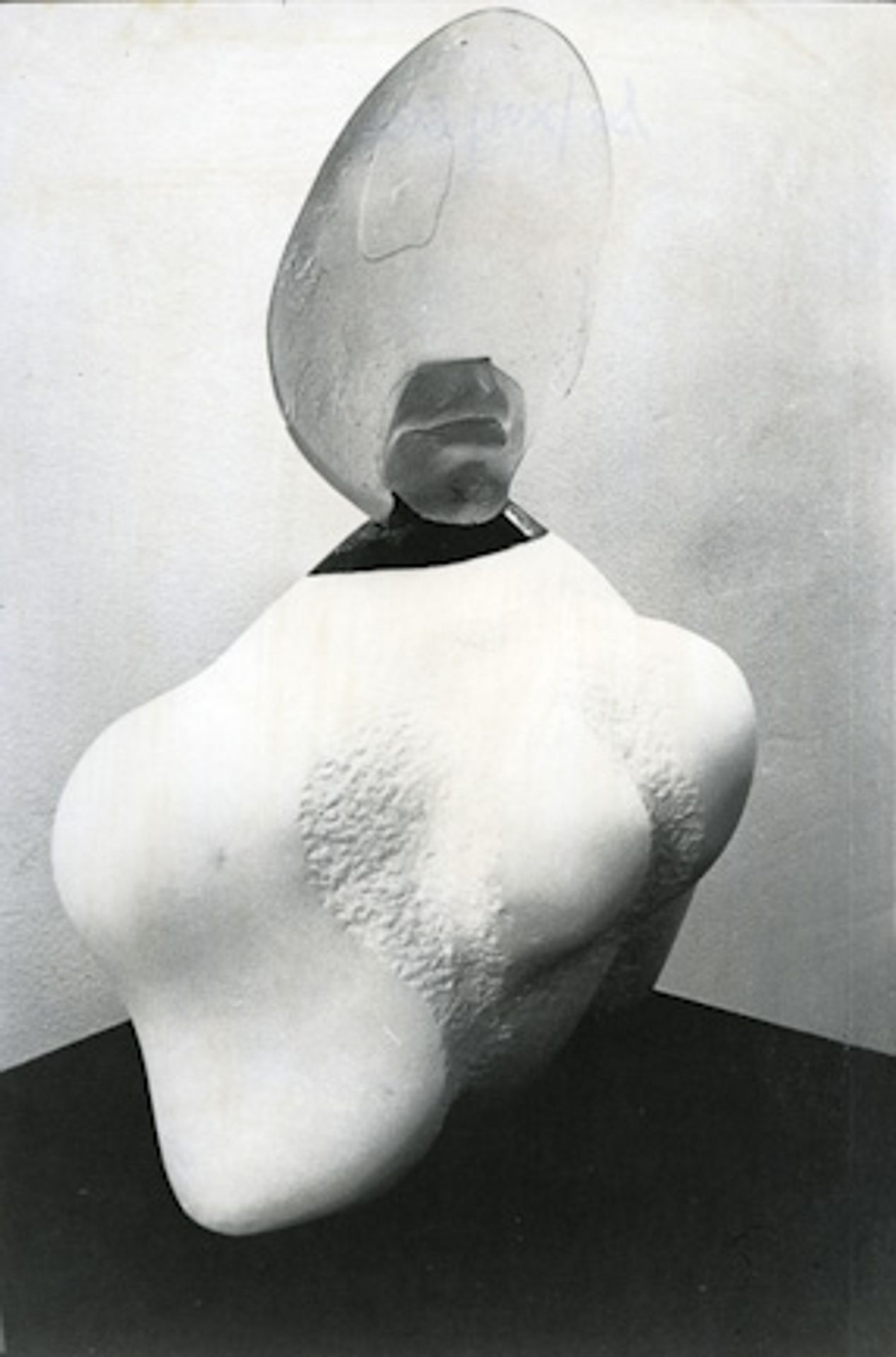
Alina Szapocznikow's "Self Portrait I" is a sculpture that mixes the soft curves of the body with the hard edges of synthetic materials. The smooth, rounded forms of the torso are so tactile they make you want to reach out and feel the texture. Szapocznikow was interested in how art could be a process of transformation, and in this piece, that's really evident. You can see how she built up the form, layering material to create this almost cloud-like structure, and then placed this smooth, ethereal head on top. There's this tension between the earthly and the otherworldly, the solid and the transparent. It's a contrast that really draws you in, asking you to consider what's hidden beneath the surface. You might look at Louise Bourgeois, who was working with similar themes of body and memory around the same time. They both were interested in using sculpture as a way to explore inner landscapes, leaving us with more questions than answers. And isn't that what art is all about?

Artwork details
- Copyright
- Alina Szapocznikow,Fair Use
Comments
Share your thoughts
About this artwork
Alina Szapocznikow's "Self Portrait I" is a sculpture that mixes the soft curves of the body with the hard edges of synthetic materials. The smooth, rounded forms of the torso are so tactile they make you want to reach out and feel the texture. Szapocznikow was interested in how art could be a process of transformation, and in this piece, that's really evident. You can see how she built up the form, layering material to create this almost cloud-like structure, and then placed this smooth, ethereal head on top. There's this tension between the earthly and the otherworldly, the solid and the transparent. It's a contrast that really draws you in, asking you to consider what's hidden beneath the surface. You might look at Louise Bourgeois, who was working with similar themes of body and memory around the same time. They both were interested in using sculpture as a way to explore inner landscapes, leaving us with more questions than answers. And isn't that what art is all about?
Comments
Share your thoughts