

17th century
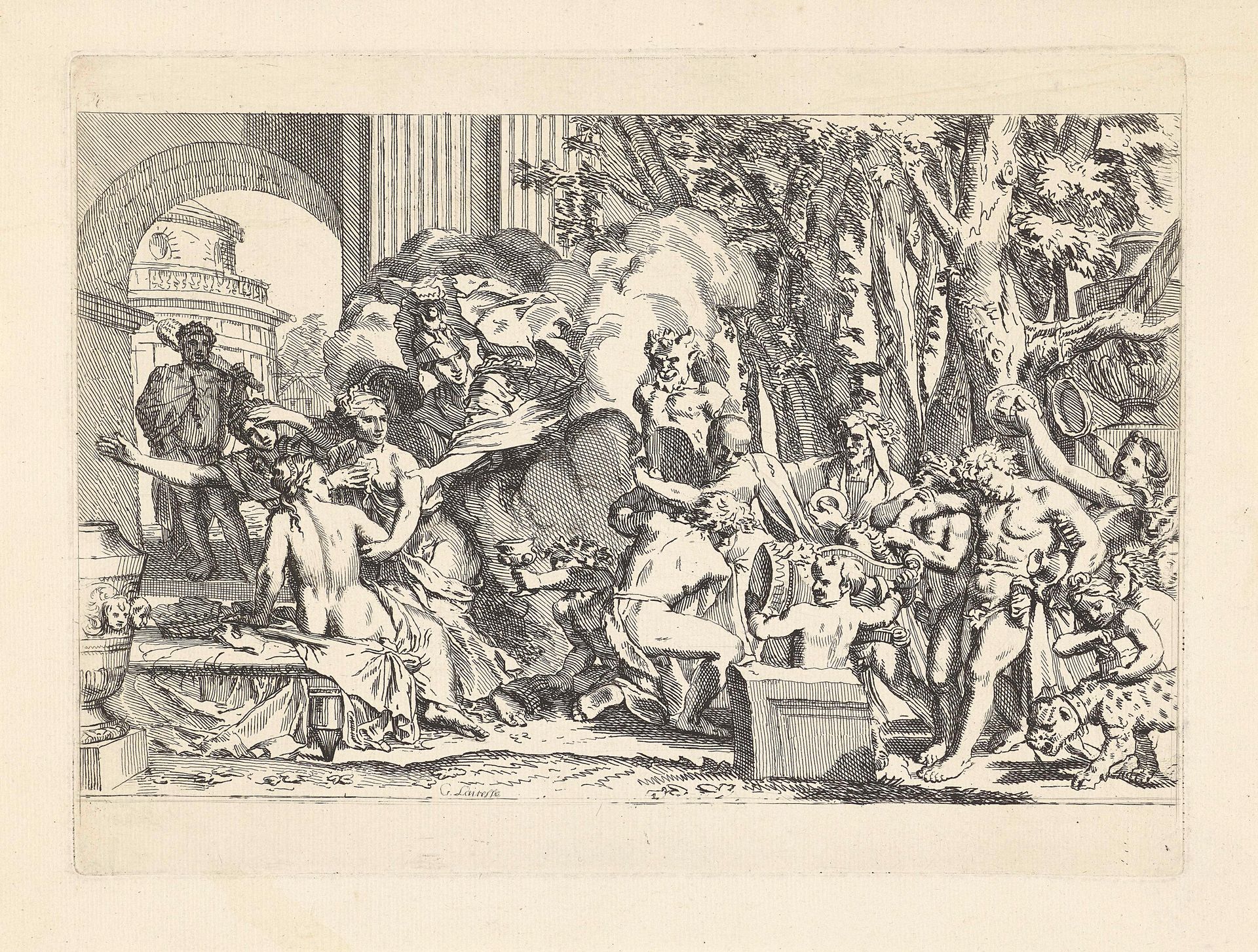
Minerva beschermt de onschuld tegen de verleiding

Gerard de Lairesse
1641 - 1711Location
RijksmuseumListen to curator's interpretation
Curatorial notes
This etching, "Minerva beschermt de onschuld tegen de verleiding" was created by Gerard de Lairesse. Here, Minerva, the Roman goddess of wisdom, shields innocence from the clutches of temptation. This powerful image speaks to the eternal struggle between virtue and vice. The figures representing temptation, with their Bacchic revelry and unrestrained gestures, echo motifs found in ancient Roman festivals, where Dionysian frenzy challenged societal norms. Consider, for instance, the recurring image of the blindfolded Cupid—a symbol of irrational desire—which can be traced back to Hellenistic sculptures. Over time, this symbol has resurfaced, evolving from a representation of playful affection to a darker emblem of impulsive, often destructive, love. Such imagery taps into our collective memory, stirring subconscious associations with chaos and moral peril. The artist evokes an emotional state of anxiety, engaging us in a deep, psychological battle between our higher and lower selves. The cyclical nature of this moral conflict, resurfacing in various guises throughout art history, reflects humanity's ongoing struggle for self-mastery.