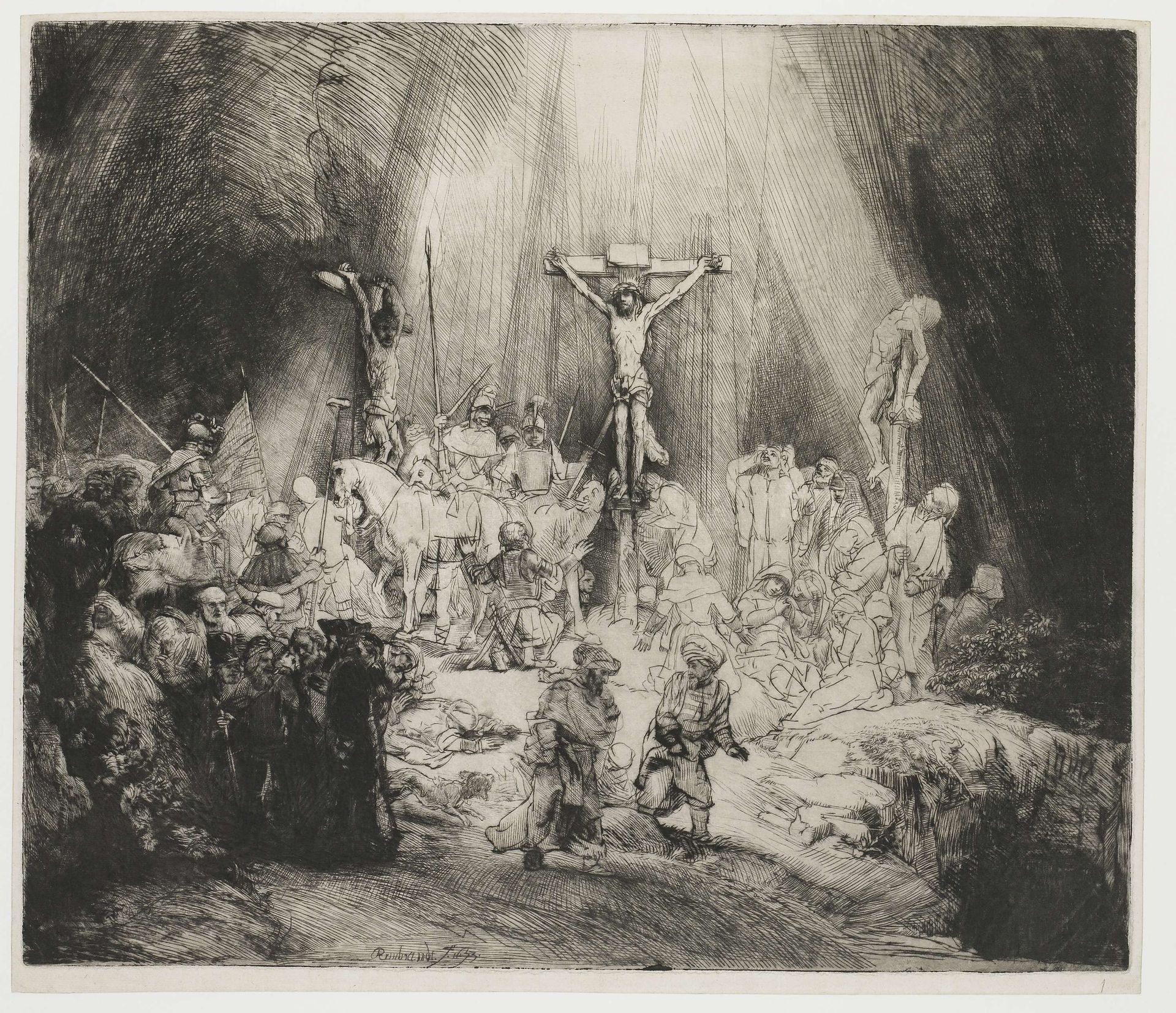
1653
The Three Crosses

Rembrandt van Rijn
1606 - 1669Location
RijksmuseumListen to curator's interpretation
Curatorial notes
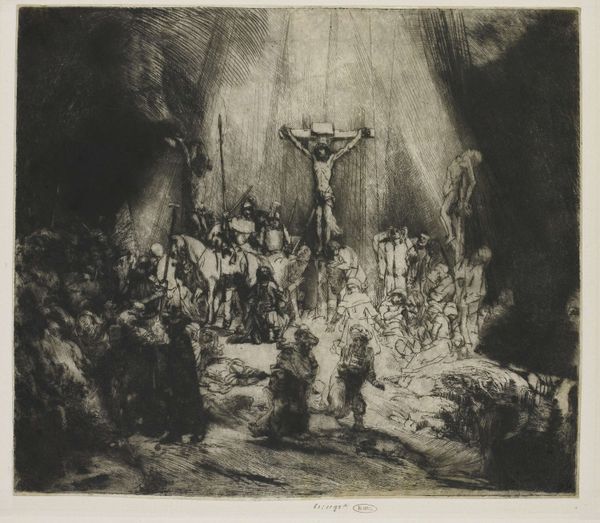
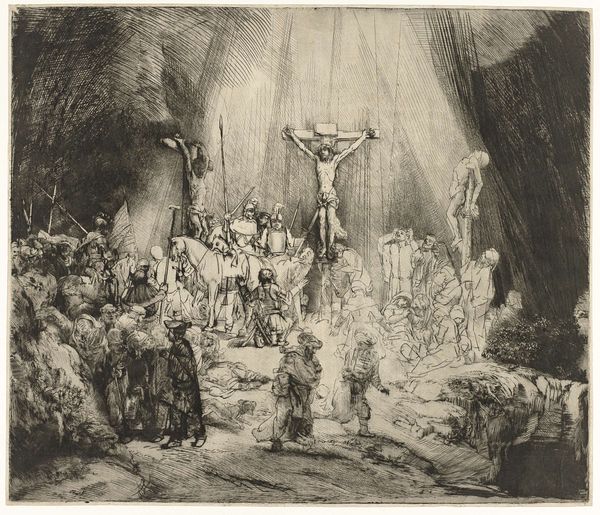
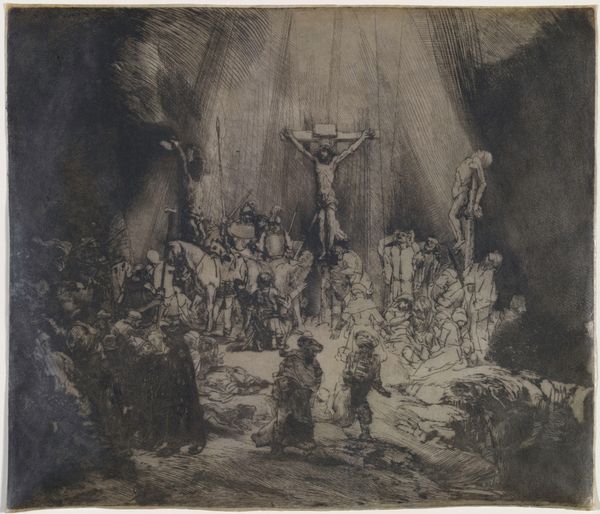
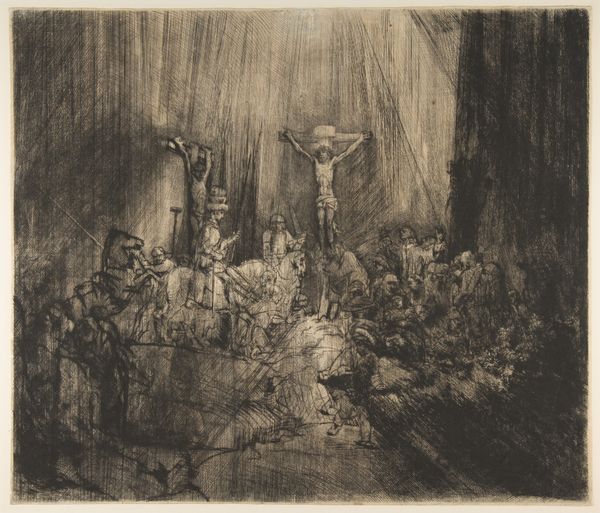
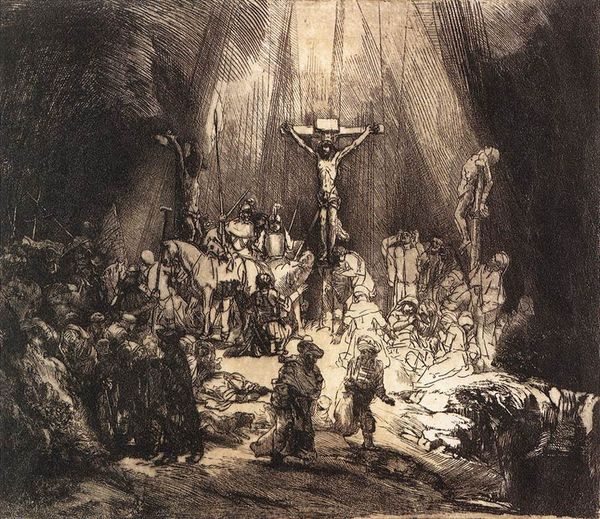
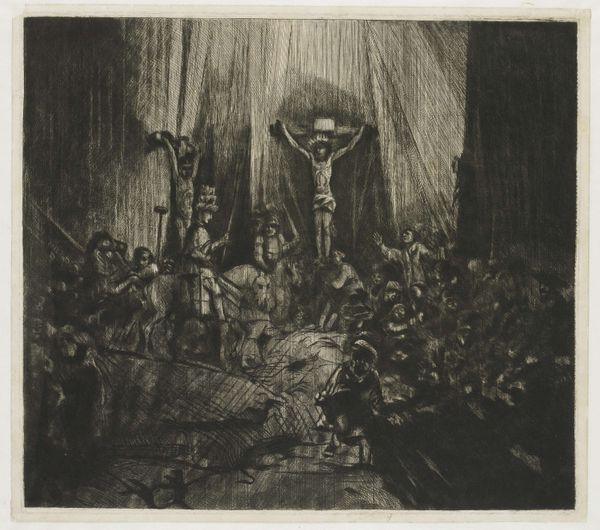
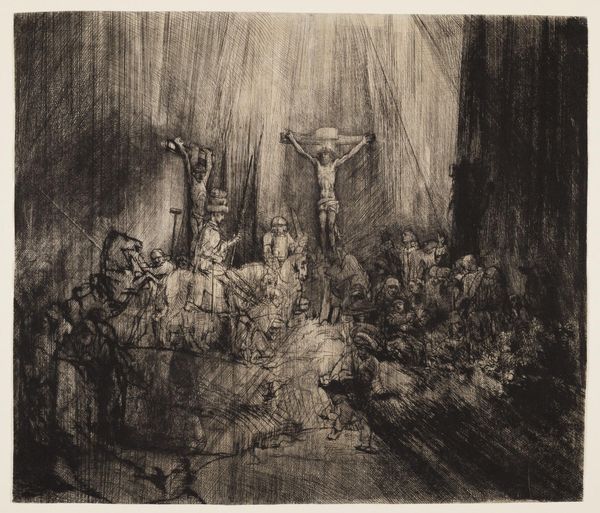
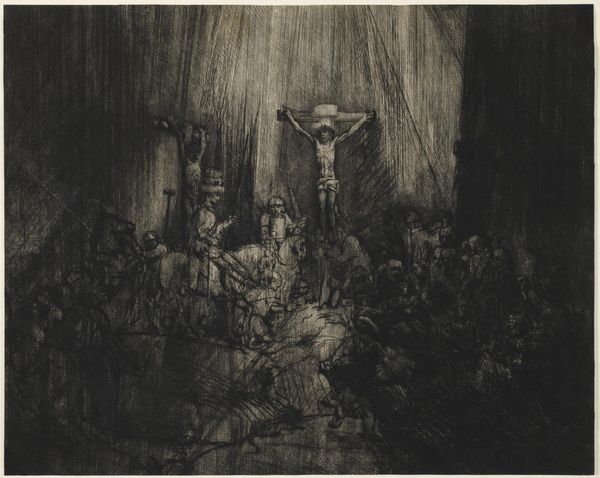
Rembrandt van Rijn rendered “The Three Crosses” using drypoint, a printmaking technique, to capture a somber crucifixion scene. The three crosses themselves dominate the composition, serving as stark symbols of sacrifice, each figure impaled is an icon of despair. Throughout history, we see the cross emerge in various forms—the ankh in ancient Egypt, the solar cross predating Christianity—always representing a meeting point, a convergence. Here, the convergence is one of immense suffering. Note the interplay of light and shadow; Rembrandt employs darkness to amplify the emotional weight of the scene. This echoes the chiaroscuro of Caravaggio, who also understood how light could carve out emotion. Consider how this image resonates with our collective memory of loss and redemption. The cross, an instrument of torture, transformed into a symbol of hope. It is a cyclical progression, resurfacing through time, its emotional power enduring.