About this artwork
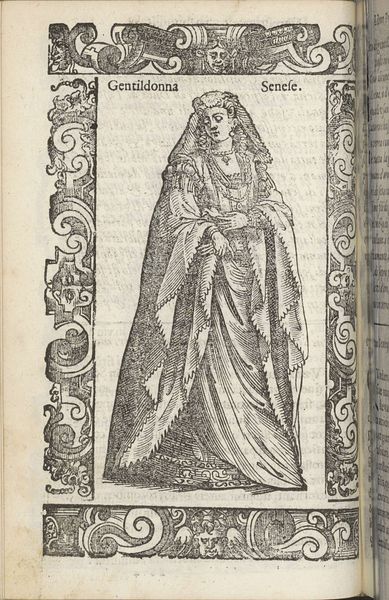
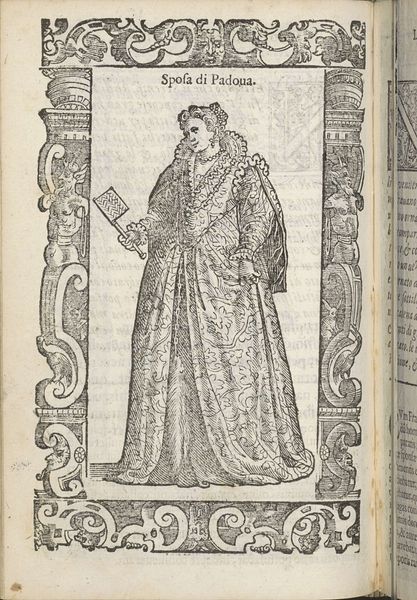
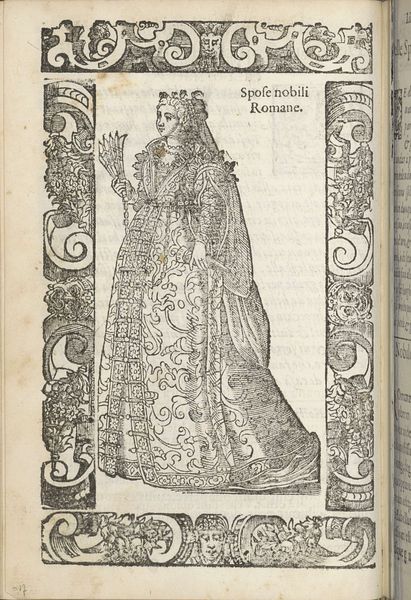
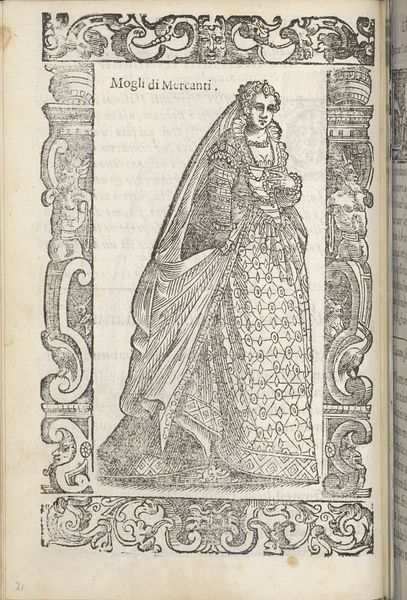
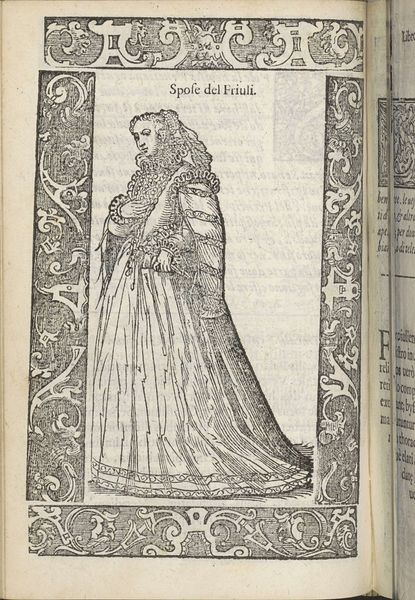
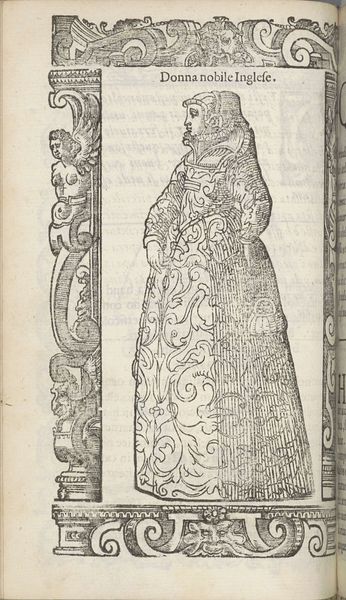
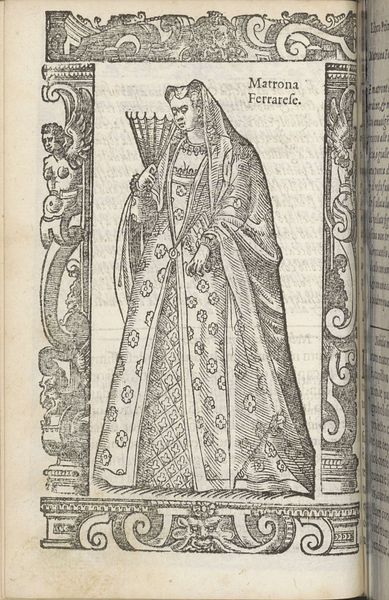
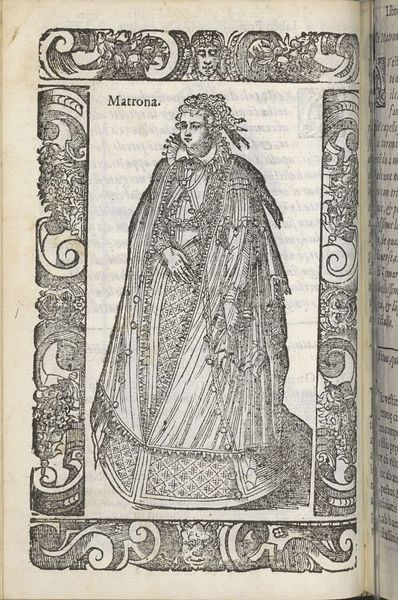
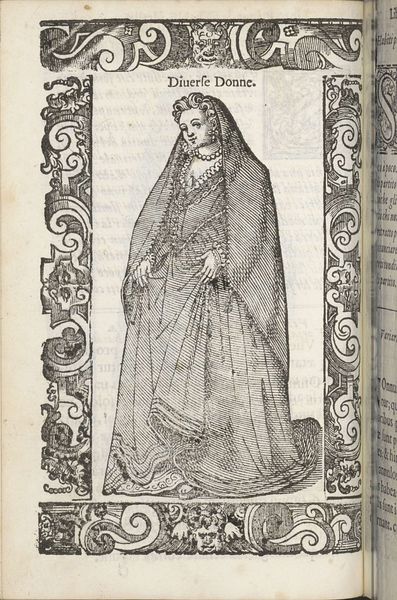
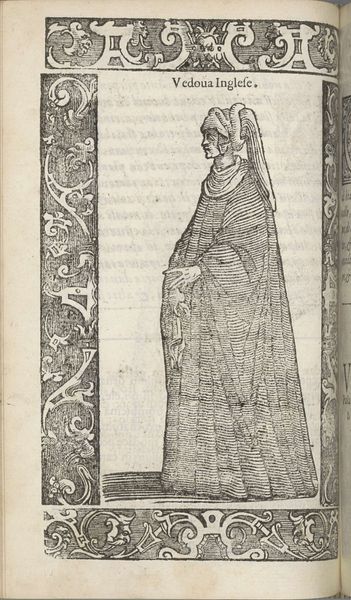
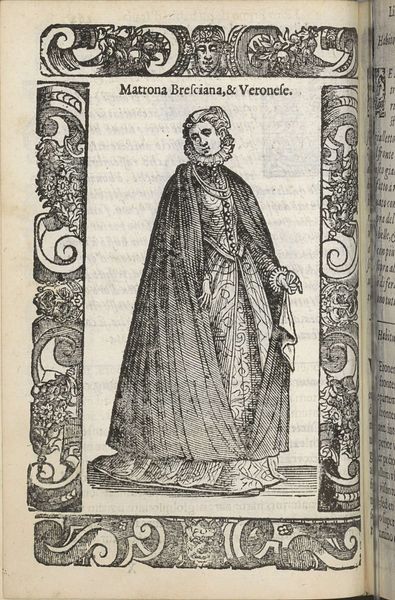
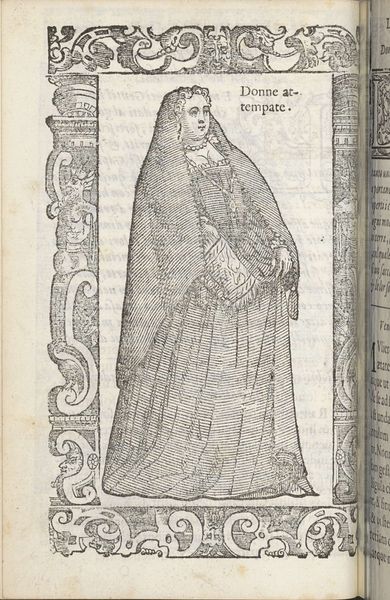
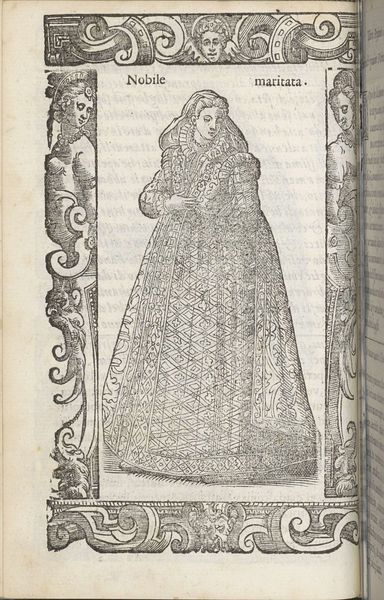
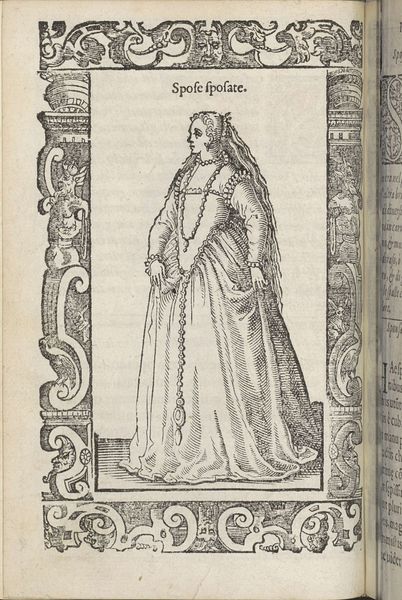
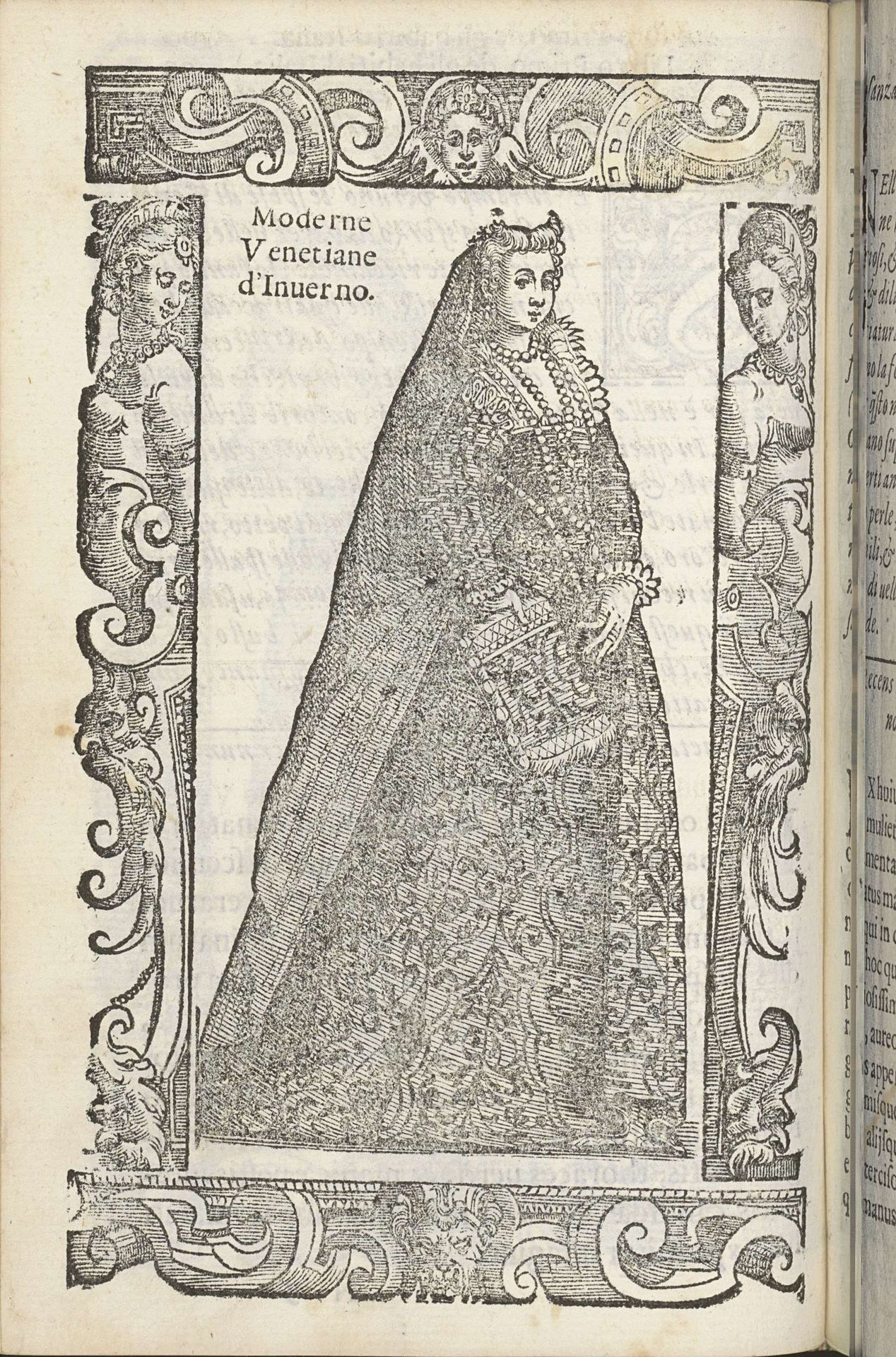
This is a woodcut print by Christoph Krieger depicting a Venetian noblewoman in winter attire. The elaborate patterns on the woman's dress and the heavy fabric are visual signifiers of wealth. The image creates meaning through cultural references such as the ornate frame, a common feature of portraiture at the time, reflecting the sitter’s high status. The artwork likely dates from the 17th century, a period when Venice was an important center for trade and culture, but also a society marked by strict class divisions. The noble class enjoyed privileges and power that were denied to the rest of the population. These portraits could be interpreted as commentaries on social hierarchy. They are self-consciously conservative, affirming traditional social roles and norms. To better understand the social context of this image, we might research the history of costume in Venice, the economy and trade, and the structure of Venetian society. Only with this historical context can the meaning of the image be revealed.

Artwork details
- Medium
- print, engraving
- Dimensions
- height 167 mm, width 125 mm
- Copyright
- Rijks Museum: Open Domain
Tags
portrait
figuration
line
genre-painting
italian-renaissance
engraving
Comments
Be the first to share your thoughts about this work.
About this artwork
This is a woodcut print by Christoph Krieger depicting a Venetian noblewoman in winter attire. The elaborate patterns on the woman's dress and the heavy fabric are visual signifiers of wealth. The image creates meaning through cultural references such as the ornate frame, a common feature of portraiture at the time, reflecting the sitter’s high status. The artwork likely dates from the 17th century, a period when Venice was an important center for trade and culture, but also a society marked by strict class divisions. The noble class enjoyed privileges and power that were denied to the rest of the population. These portraits could be interpreted as commentaries on social hierarchy. They are self-consciously conservative, affirming traditional social roles and norms. To better understand the social context of this image, we might research the history of costume in Venice, the economy and trade, and the structure of Venetian society. Only with this historical context can the meaning of the image be revealed.
Comments
Be the first to share your thoughts about this work.