1780
The Wedding Night


Listen to curator's interpretation
Curatorial notes
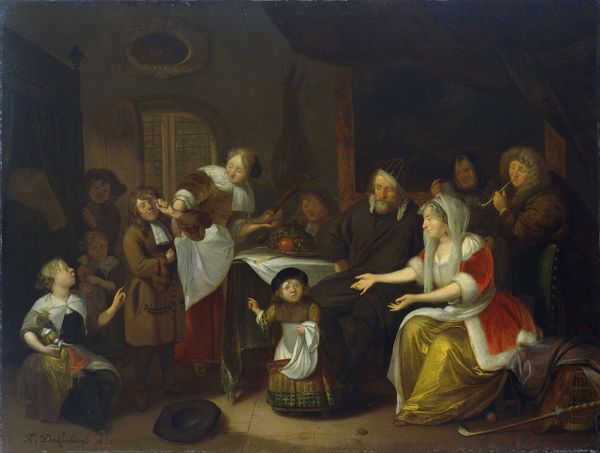
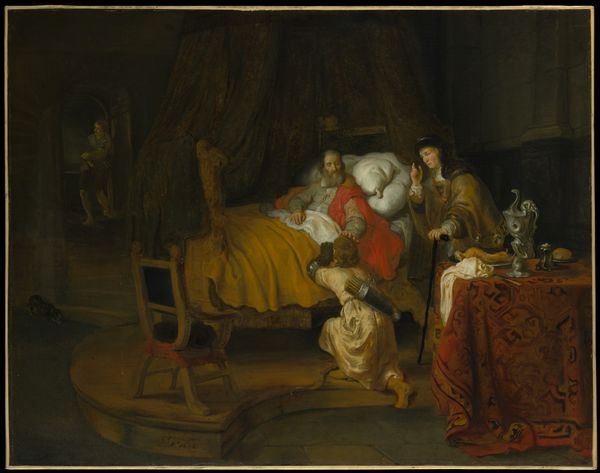
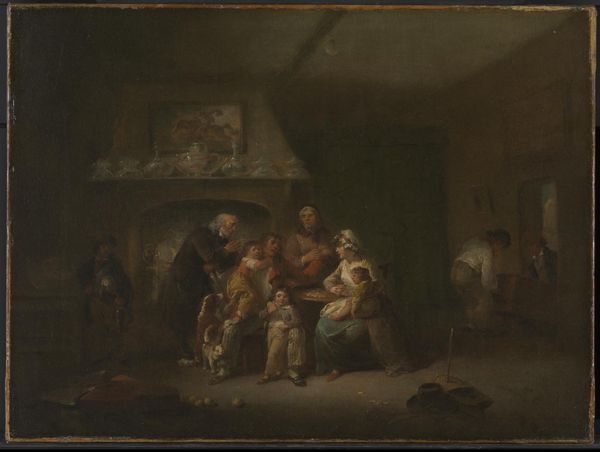
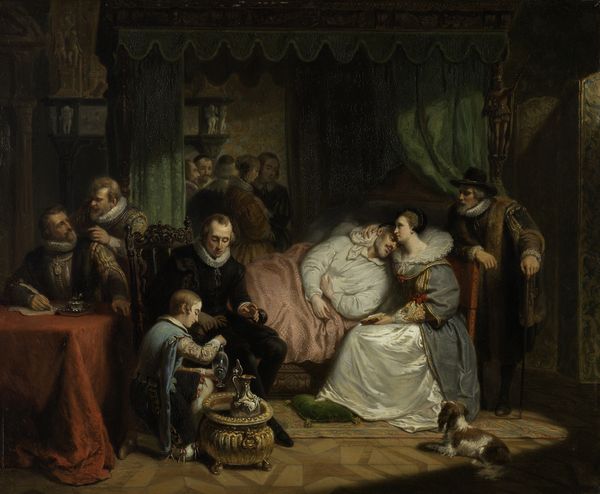
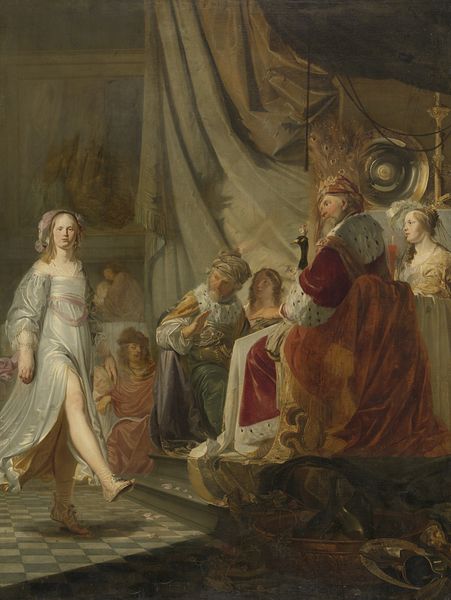
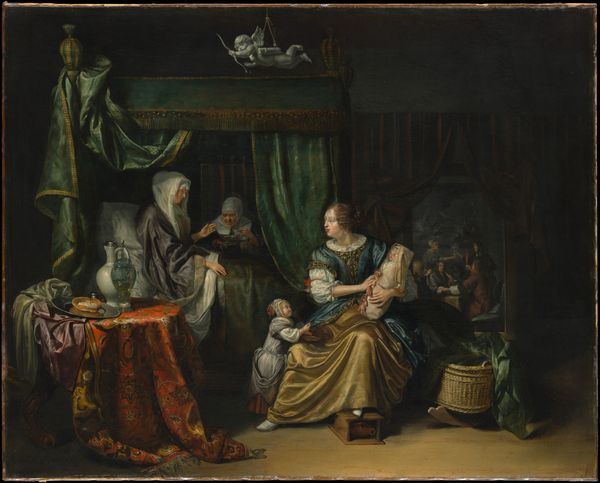
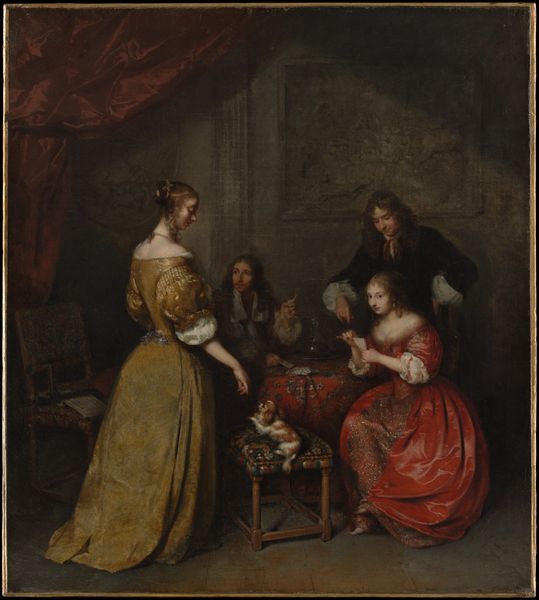
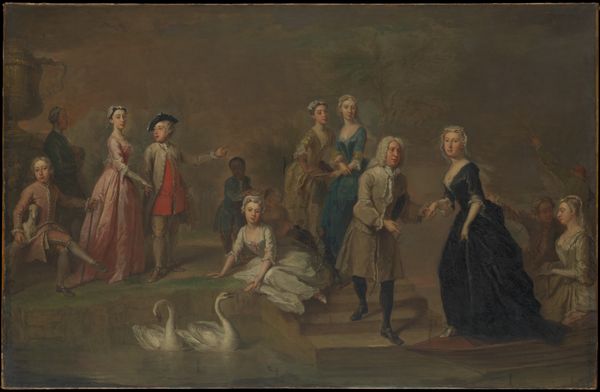
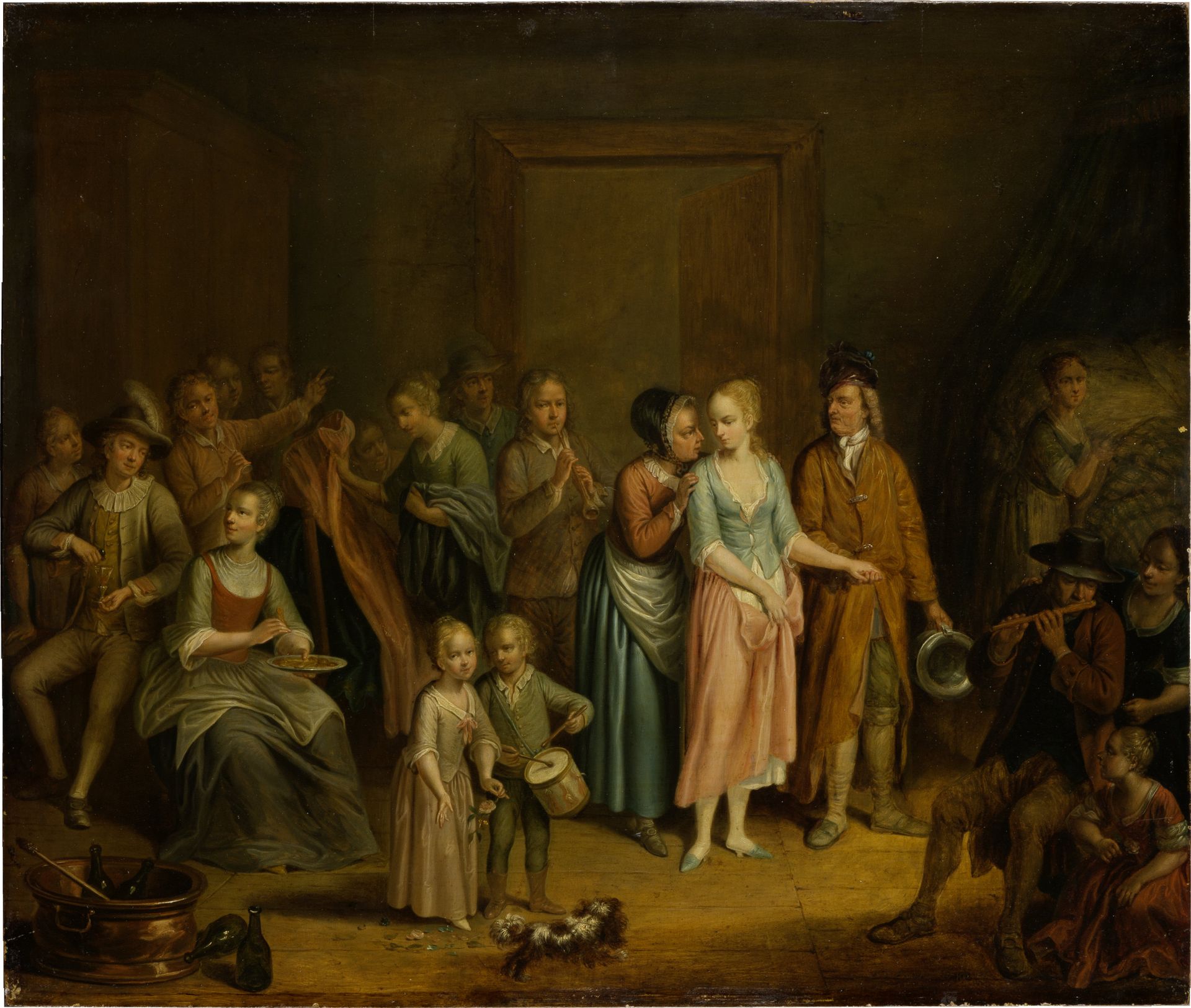
Curator: It has the hazy atmosphere of a dream, wouldn’t you say? Editor: Yes, there’s a slightly unsettling feeling despite all the festivity. Johann Daniel Bager completed “The Wedding Night” in 1780. Oil on canvas, typical for genre paintings of the time, offering us a glimpse into 18th-century social customs. Curator: Customs observed perhaps through a critical lens? The scene isn’t as joyous as one might expect for a wedding night. The hushed whispers and averted gazes tell their own story. The central grouping almost recalls depictions of the Presentation at the Temple, a feeling emphasized by the somber palette. Editor: I agree. There's a tangible sense of staged formality. Look at the figures – observe their arrangement around the central couple. They are stiff and self-conscious, reflecting the social and economic implications of marriage at the time. It was about solidifying social structures, more a business deal than romance. The visual codes are so clearly defined by societal expectation, it almost appears like theater. Curator: Consider also the persistent, almost oppressive symbolism. The children enacting rituals, the musicians their traditions; what do they tell us about generational continuity and enforced expectations? There is something ominous there too, as we see a compression of traditions upon the individual within the space. Editor: The dark setting amplifies this, framing the space to make the group even more staged. And this theatrical framing highlights the wedding not as a personal choice but a public performance. The open doorway to what I imagine is the nuptial chamber seems almost ominous—what sort of space are they being forced into, collectively and individually? Curator: Precisely. Bager, through this work, captures that delicate, awkward balance between public celebration and private trepidation, something that lingers across centuries. Editor: Absolutely. "The Wedding Night" continues to spark discussions around societal expectations, personal freedom, and the complicated rituals that define human experience.