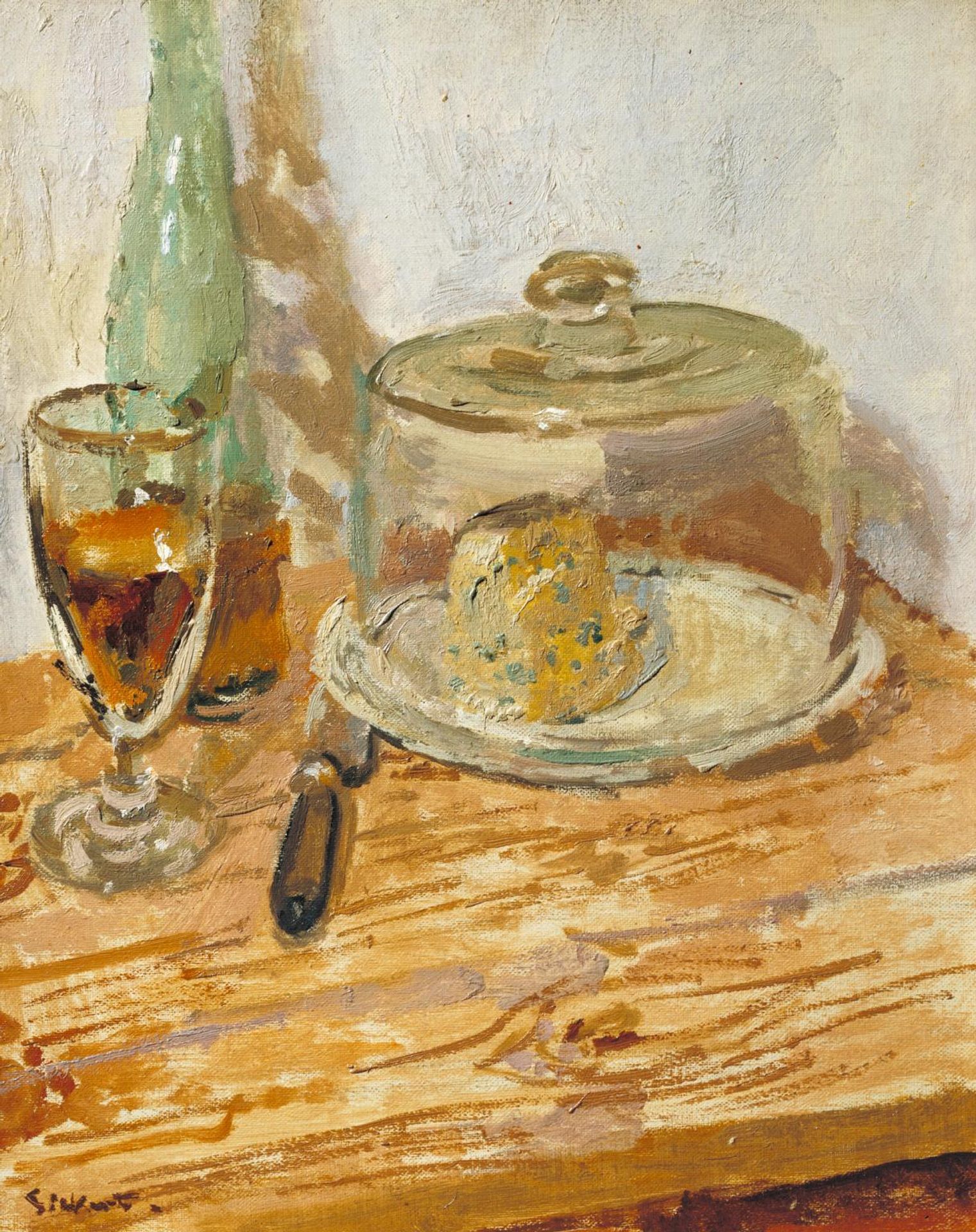
c. 1919 - 1920
Roquefort


Listen to curator's interpretation
Curatorial notes
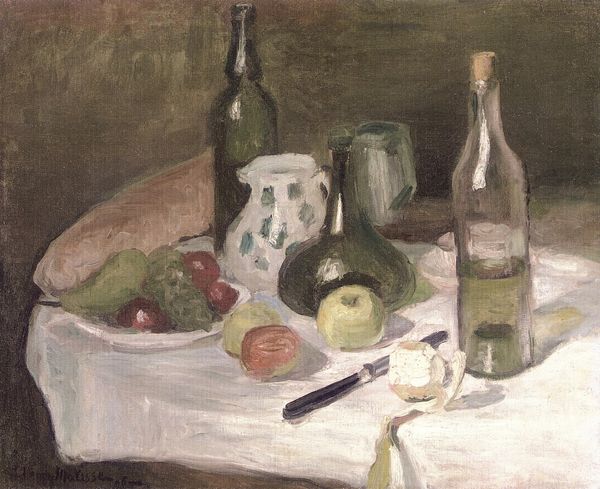
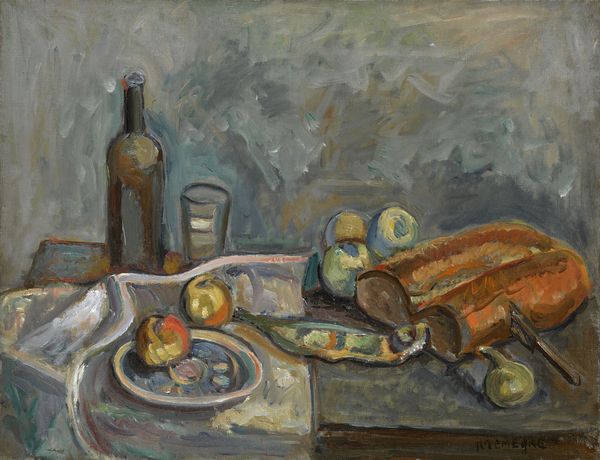
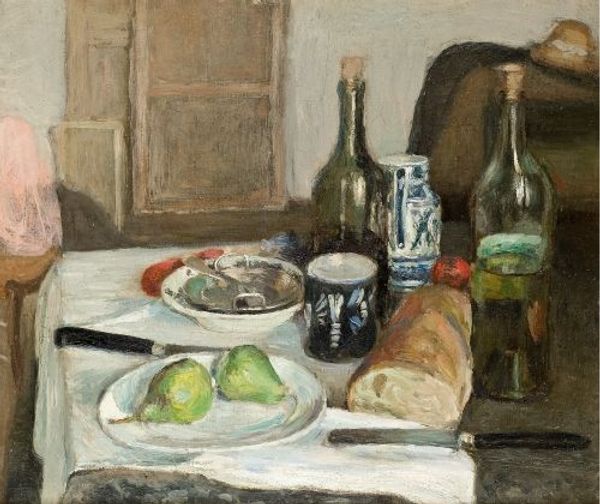
Editor: Here we have Walter Sickert's 'Roquefort'. It's a still life, intimate in scale, depicting cheese, wine, and bread. I find it intriguing, almost like a stage setting. What do you see in this piece, beyond the obvious domestic scene? Curator: Sickert's 'Roquefort' isn't just about food; it's about class and consumption in late 19th, early 20th-century Britain. The cheese, a luxury, hints at bourgeois indulgence, while the muted palette speaks to the grittiness of urban life. Does the framing draw your eye in any particular direction? Editor: Now that you mention it, the angle seems to focus on the cheese itself, almost making it the central figure. Curator: Exactly! Is he celebrating it, or critiquing the societal values it represents? Think about the social unrest of the time. Food becomes a loaded symbol. Editor: So it’s not just a simple still life, but a commentary on wealth and privilege? That gives me a lot to think about. Curator: Precisely. Art often holds a mirror to society, prompting us to question what's on the table—literally and figuratively.