About this artwork
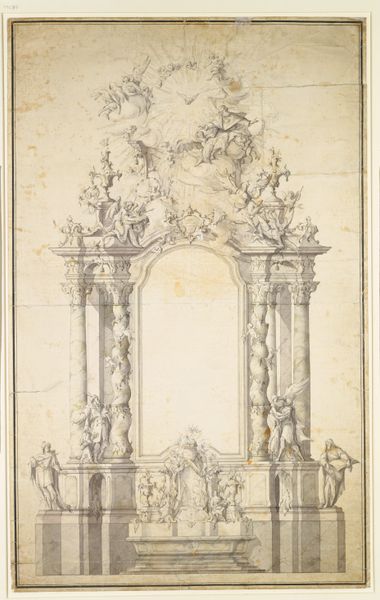
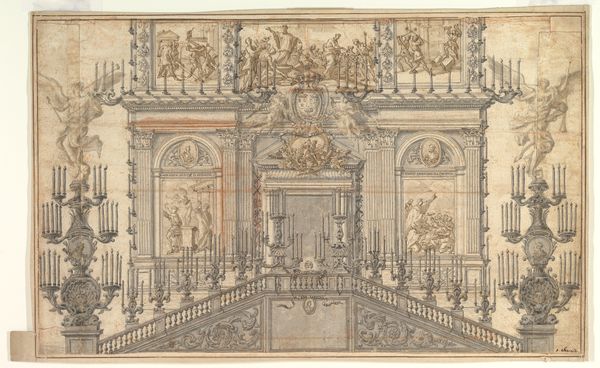
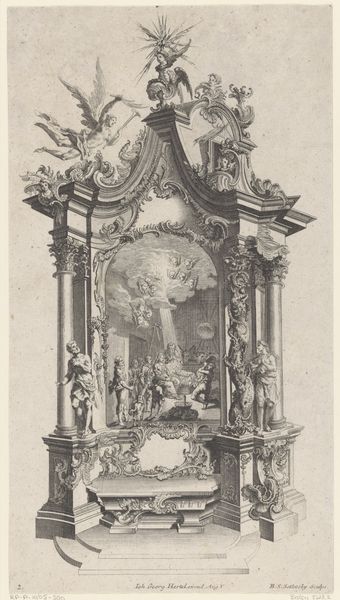
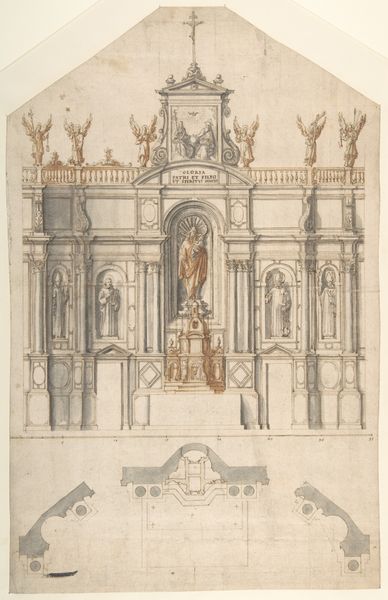
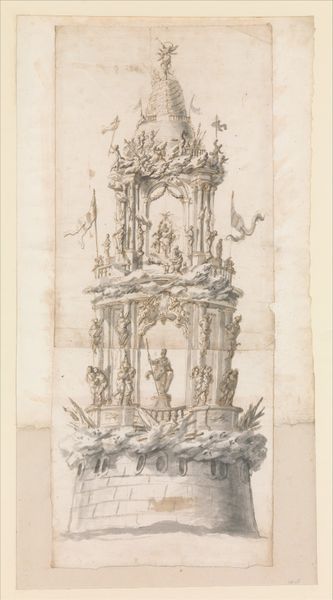
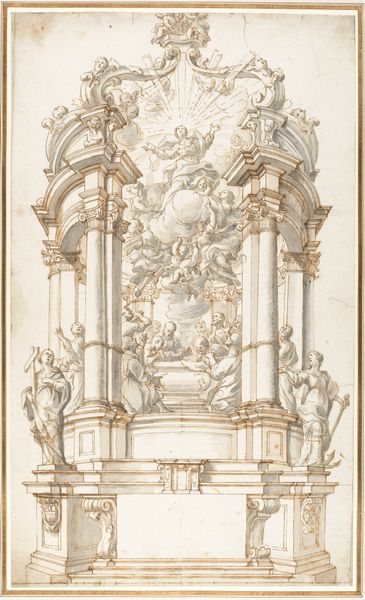
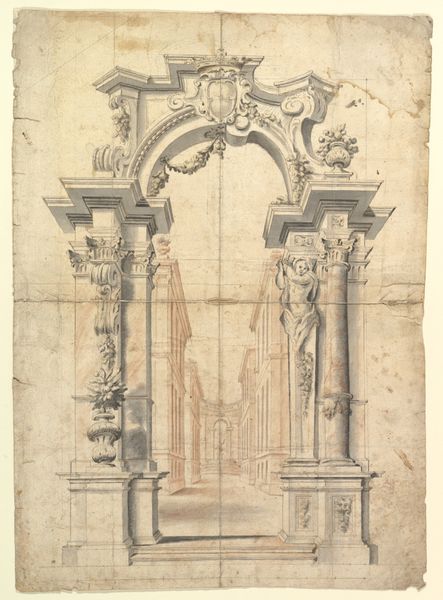
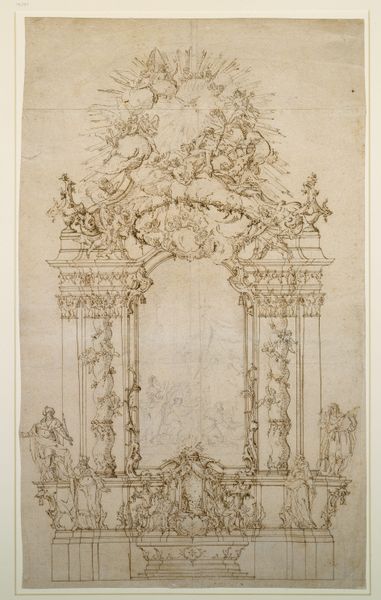
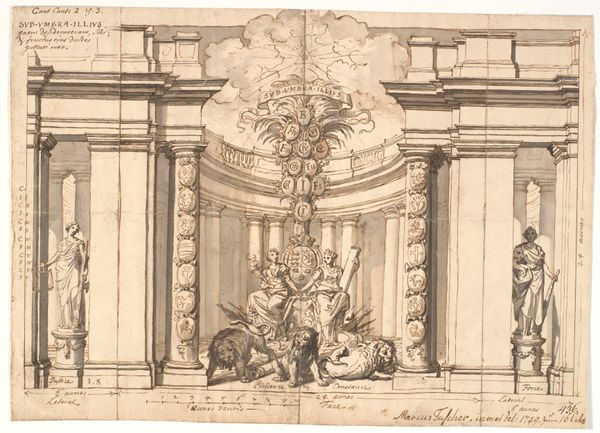
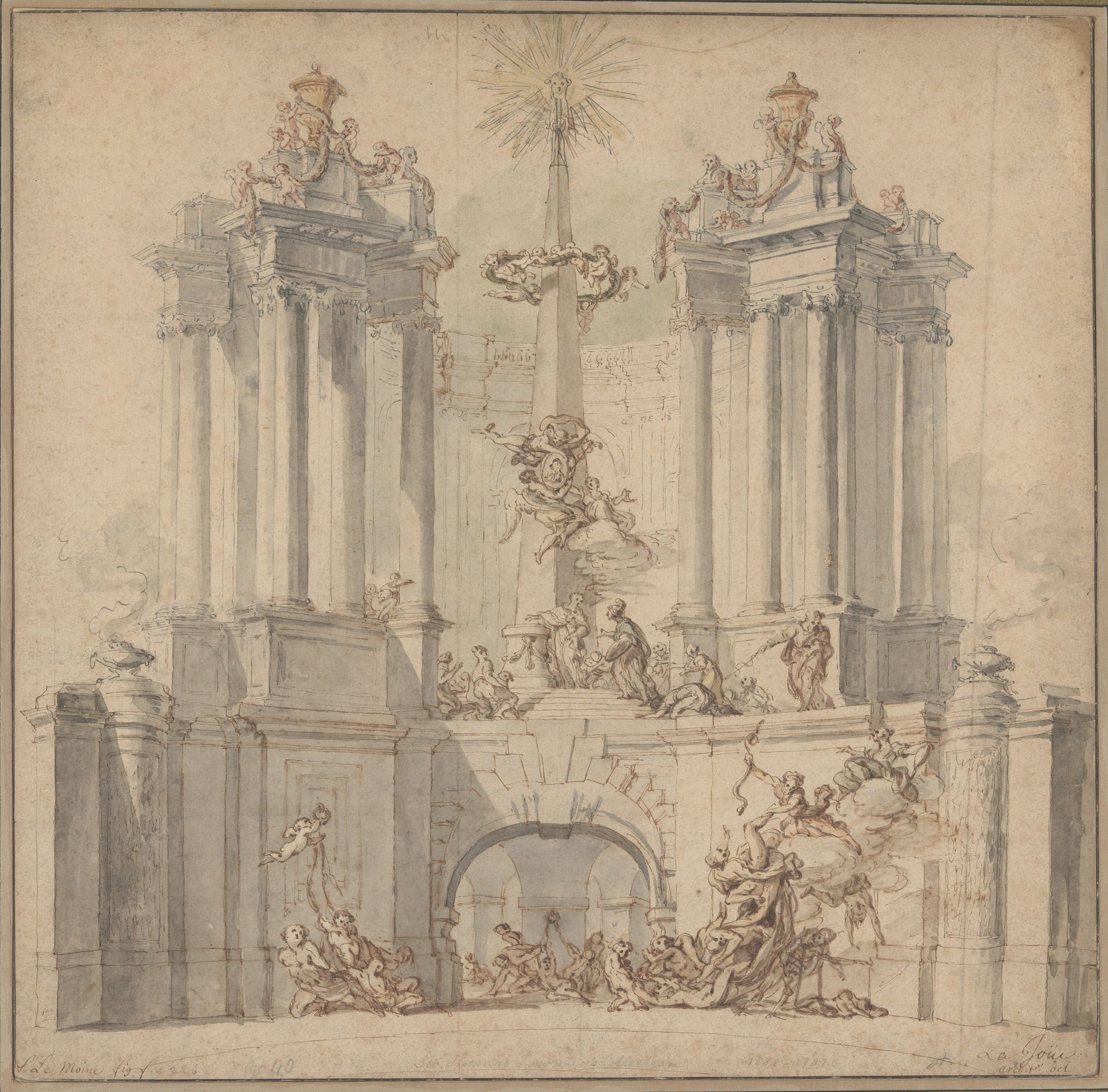
Jacques de Lajoüe created "Fireworks Display for the Convalescence of Louis XV," a drawing now held at the Metropolitan Museum of Art. The architecture in this drawing is both monumental and ephemeral. The linear precision of the ink and wash creates a world of imposing structures and transient spectacles. Lajoüe uses classical elements like columns, arches, and sculptural figures, but arranges them in a way that defies traditional architectural logic. The monument seems to be in a state of becoming or unbecoming, as if the solid structure is in flux. This instability reflects the Baroque era’s fascination with dynamism and illusion, a play between the real and the represented. The drawing questions fixed meanings. Is this a celebration of recovery, or a commentary on the fleeting nature of power and health? This piece remains a site of inquiry, where each viewer brings their own interpretation to Lajoüe's visually rich and conceptually open work.
Fireworks Display for the Convalescence of Louis XV
1726


Artwork details
- Medium
- drawing, print, paper, watercolor, ink
- Dimensions
- 14 3/4 x 14 7/8 in. (37.5 x 37.8 cm)
- Location
- Metropolitan Museum of Art, New York, NY
- Copyright
- Public Domain
Tags
Comments
Share your thoughts
About this artwork
Jacques de Lajoüe created "Fireworks Display for the Convalescence of Louis XV," a drawing now held at the Metropolitan Museum of Art. The architecture in this drawing is both monumental and ephemeral. The linear precision of the ink and wash creates a world of imposing structures and transient spectacles. Lajoüe uses classical elements like columns, arches, and sculptural figures, but arranges them in a way that defies traditional architectural logic. The monument seems to be in a state of becoming or unbecoming, as if the solid structure is in flux. This instability reflects the Baroque era’s fascination with dynamism and illusion, a play between the real and the represented. The drawing questions fixed meanings. Is this a celebration of recovery, or a commentary on the fleeting nature of power and health? This piece remains a site of inquiry, where each viewer brings their own interpretation to Lajoüe's visually rich and conceptually open work.
Comments
Share your thoughts