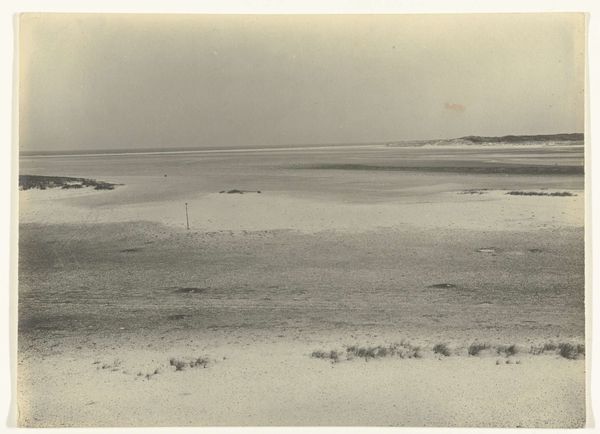
Dimensions: height 69 mm, width 82 mm
Copyright: Rijks Museum: Open Domain
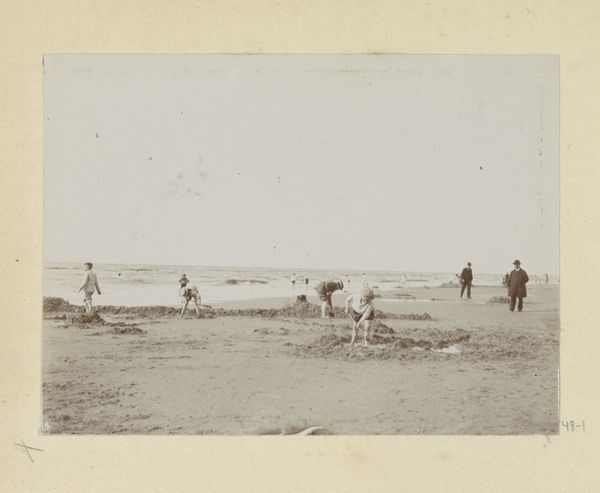
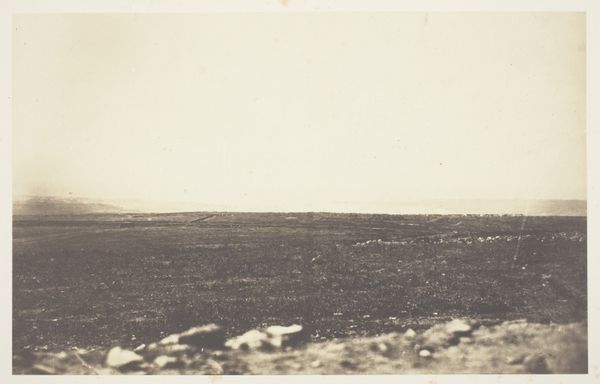
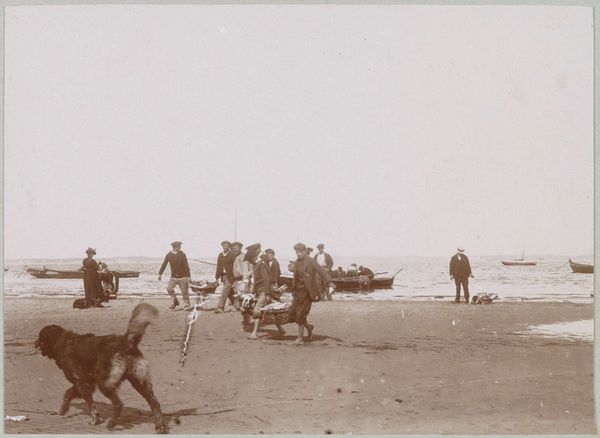
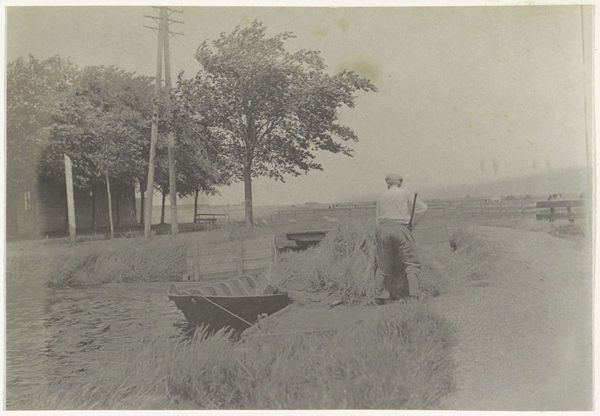
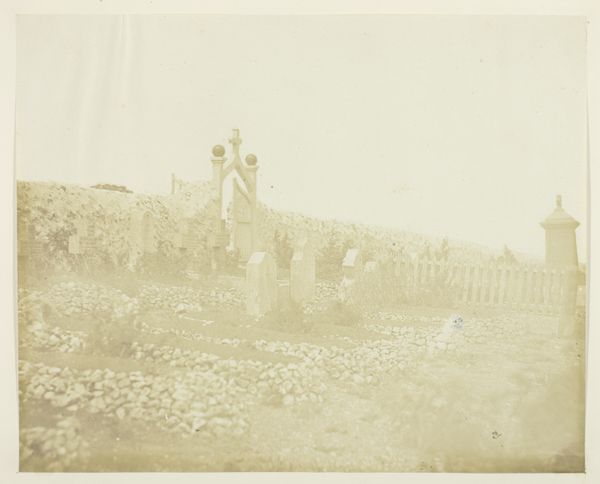
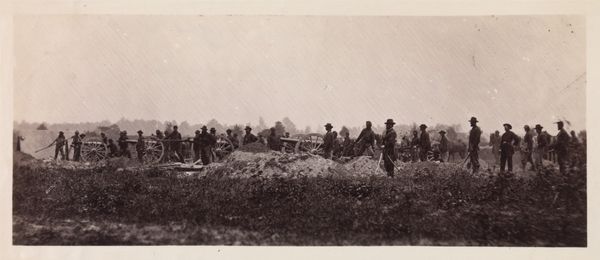
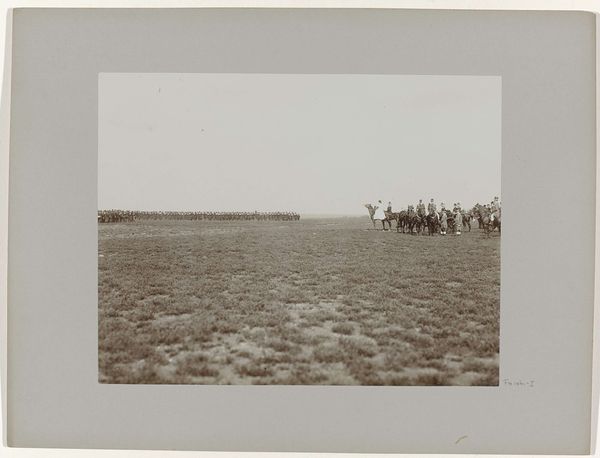
Editor: So, this photograph, “Muddy Landscape with Workers, possibly a Wadden area in France,” was taken in 1904. The sepia tone gives it a distant, almost forgotten feeling, but I’m struck by the sheer number of workers toiling in what looks like incredibly difficult conditions. What can you tell me about it? Curator: This image, particularly when viewed through a historical lens, presents a powerful commentary on labor and landscape. What’s captured isn’t just the natural world, but the socio-economic forces shaping it and the individuals within it. Note how the horizon line is quite low. Does this compositional choice evoke any particular feelings or ideas in you? Editor: I think it emphasizes the mud. And how much the workers are dwarfed by it. The amount of it, the monotony of it all… Curator: Precisely. It is quite interesting to me that this piece is in the Rijksmuseum in the Netherlands despite being in France, suggesting a fascination and connection with labor even across borders. This image encourages a look at the socio-political environment in which it was produced. Photography, in its relatively early stages here, serves to document not just a scene, but a social reality, and to disseminate that visual statement. This wasn’t just art for art’s sake, but something with a public role. Editor: I guess I was focused on the "mud," but there is so much more than just that. Curator: Indeed! Sometimes what appears simplest visually contains the most complex layers of meaning and commentary.
Comments
No comments
Be the first to comment and join the conversation on the ultimate creative platform.
 React
React Comment