

1831
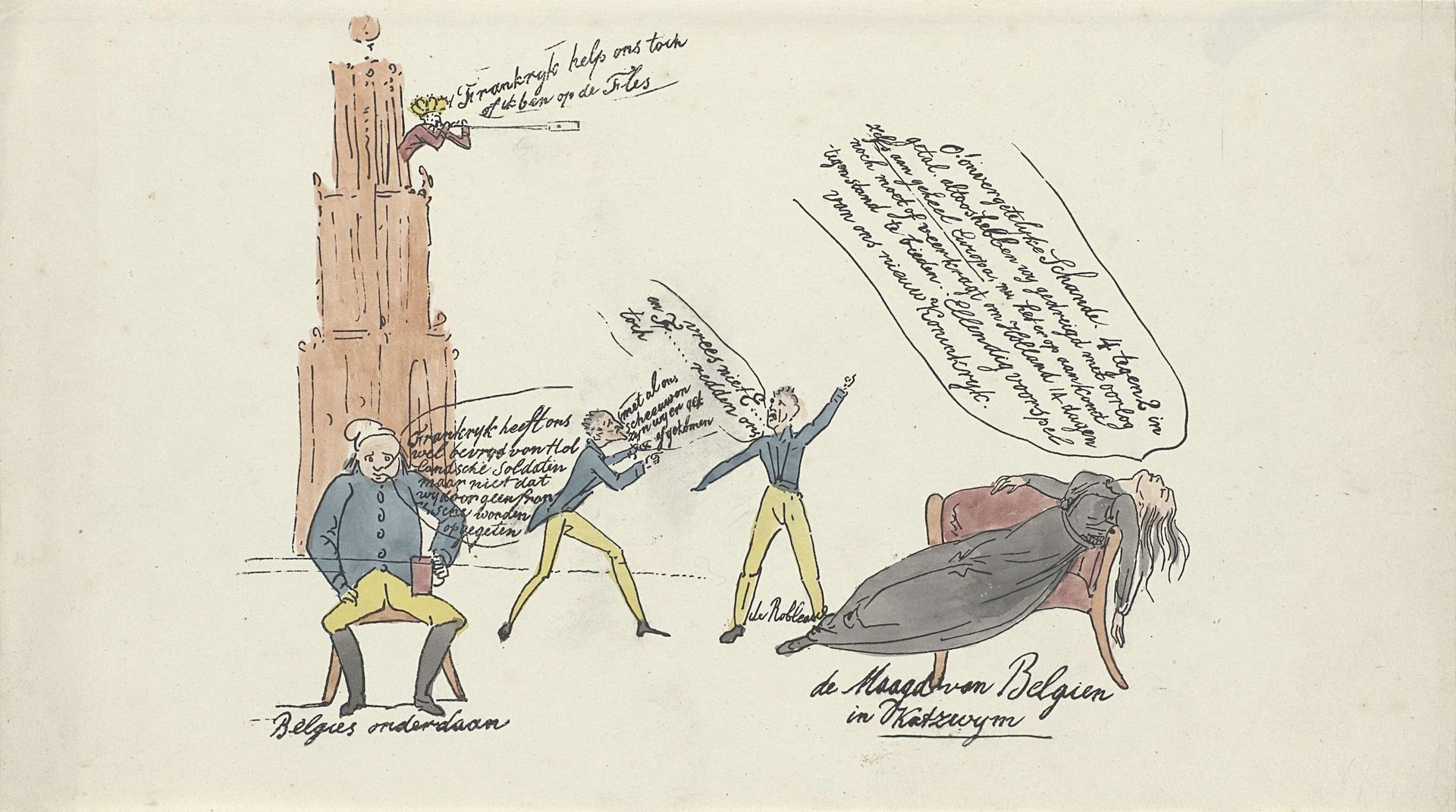
De Belgische Maagd in katzwijm, 1831

Anonymous
@anonymousLocation
RijksmuseumListen to curator's interpretation
Curatorial notes
Editor: This is "De Belgische Maagd in katzwijm, 1831," a pen and ink drawing from the Rijksmuseum collection. It depicts a swooning woman, with several figures around her seemingly in distress. It feels like a political cartoon, but I’m not entirely sure what’s happening. How do you interpret this work within its historical context? Curator: Indeed, it's a fascinating piece reflecting the political turmoil of its time. This drawing is a caricature, and understanding its context requires diving into the socio-political landscape of 1831 Belgium. The "Belgian Maiden" represents Belgium itself, overcome and collapsing. Given that it was made in 1831, just after the Belgian Revolution began, what do you think her "swoon" signifies? Editor: Perhaps a loss of independence? The other figures look like they are pleading with someone on a tower. The maiden looks… defeated. Curator: Precisely. The figures represent different factions and their pleas for aid – primarily from France. It embodies Belgium's struggle for autonomy from the Netherlands and the conflicting desires of different groups within Belgian society. The placement of some figures looking to a "foreign" tower of power can also speak about influence from abroad being detrimental to true self rule. Where do you think the piece stands on its assessment of its socio-political surrounding? Editor: I'd venture to say that its tone suggests the plea of the nation wasn't sincere, rather based on different interests; and overall questions if relying on foreign support will result in authentic freedom. I am more familiar now with how visual art can represent political events. Curator: Exactly! This piece isn't just about depicting a moment, it’s about commenting on the political forces at play. The artist clearly questions the motivations and implications surrounding Belgium's fight for freedom and its dependence on external support. A real narrative of disillusionment and power. Editor: It’s eye-opening to consider how art serves as both a mirror and a critical lens for society. Thank you!