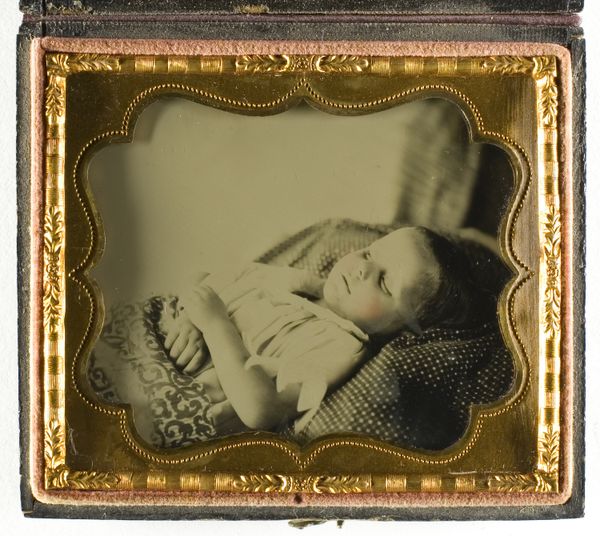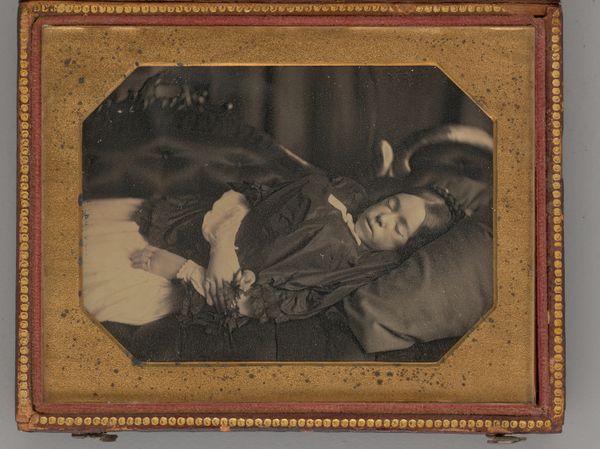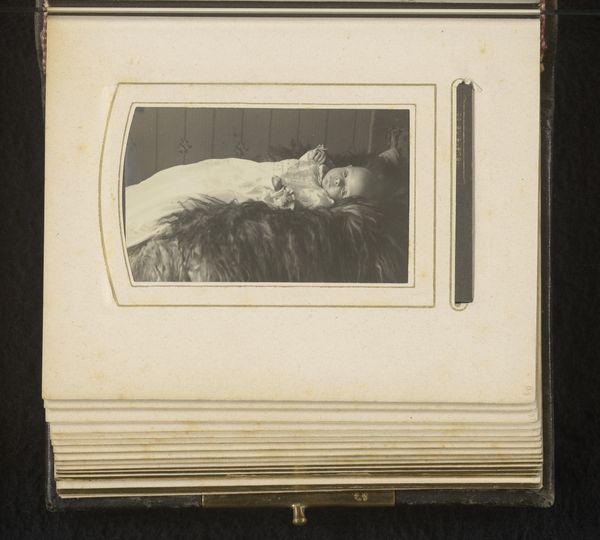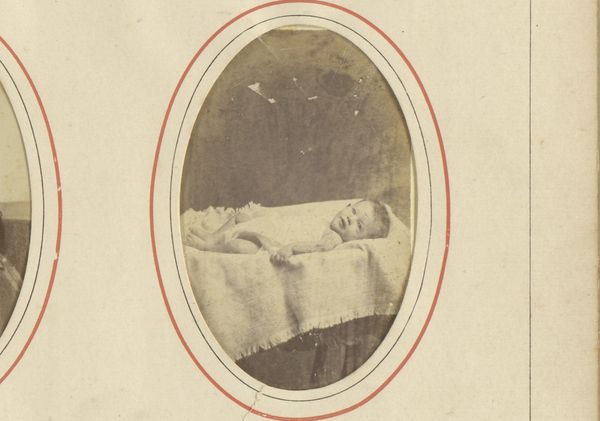
1840 - 1860
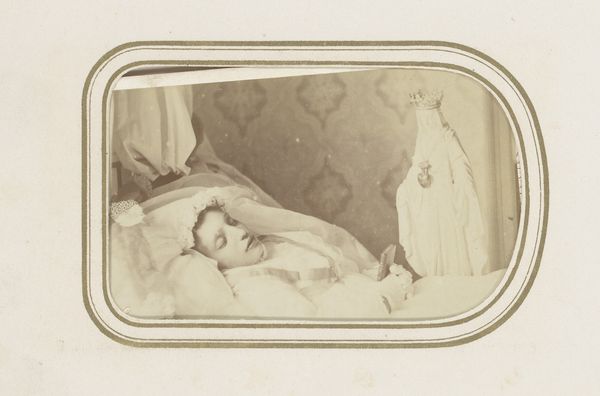
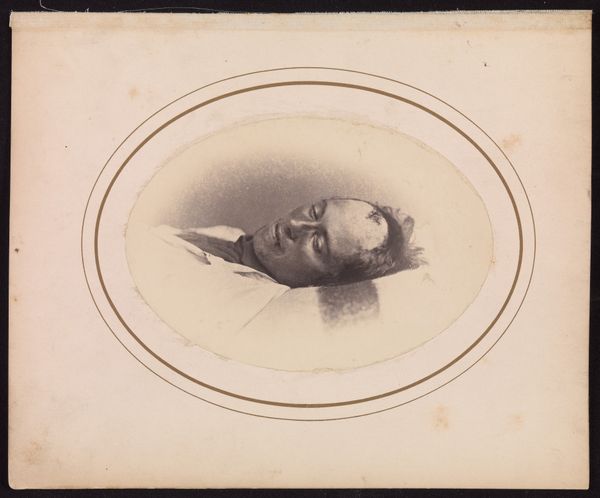
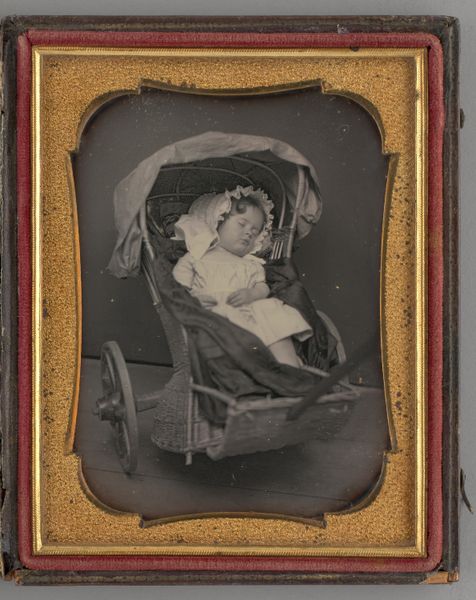
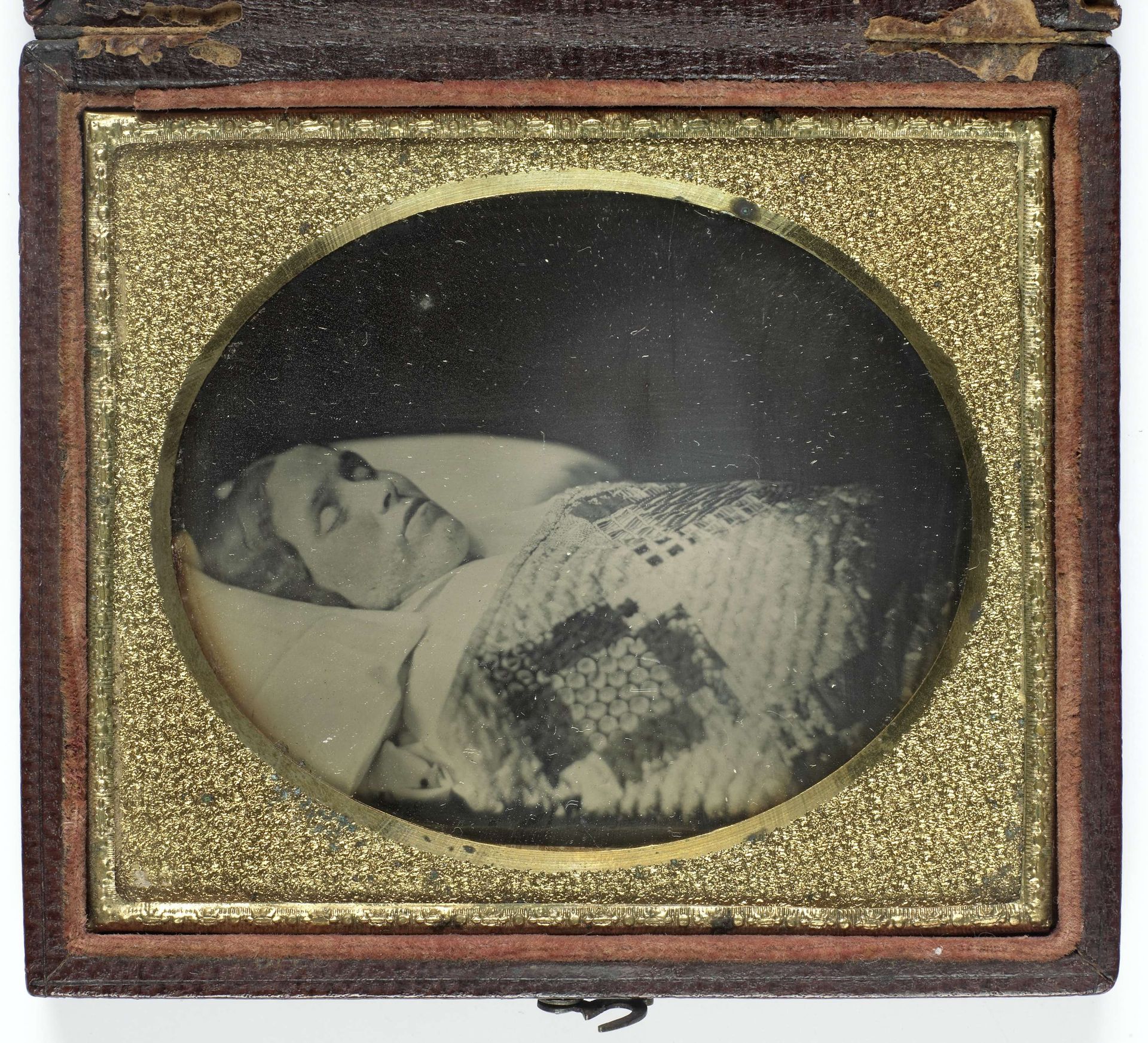
Post-mortemportret van vermoedelijk Mary Wheeler

Listen to curator's interpretation
Curatorial notes
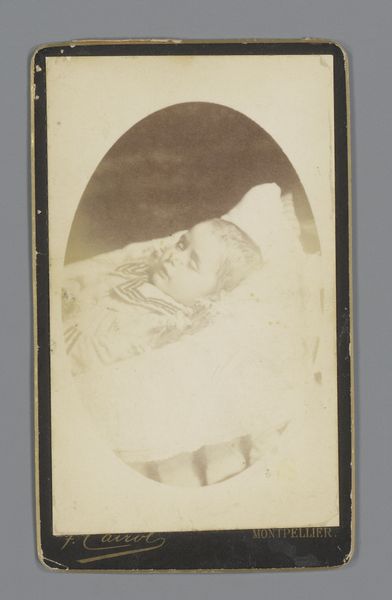
This haunting image is a post-mortem portrait, likely of a woman named Mary Wheeler, made with the daguerreotype process. This photographic technique, popular in the mid-19th century, involved exposing a silver-plated copper sheet to light, then developing the image with mercury vapor. Notice how the daguerreotype’s reflective surface gives the image a sense of depth and almost ethereal presence. The sharpness of detail contrasts with the softness of the subject's features, giving a feeling of both intimacy and distance. The use of photography for memorial portraits reflects a democratization of art, making images accessible to a wider public. The labor-intensive nature of the daguerreotype process itself, from preparing the metal plate to the careful development, speaks to the value placed on preserving a lasting image of the deceased. Ultimately, understanding the materials and processes behind this image helps us appreciate its social and cultural significance.