1616
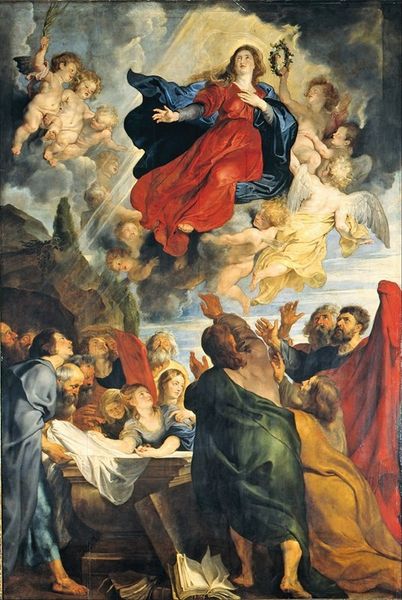
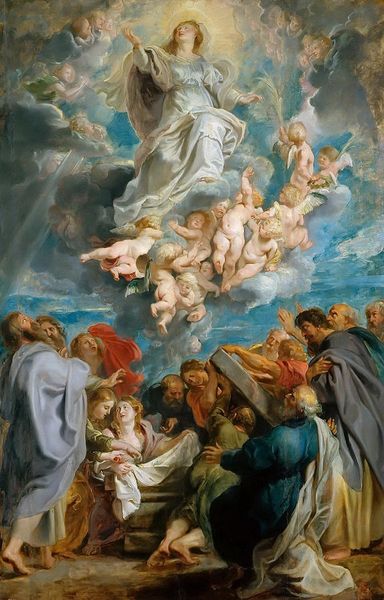
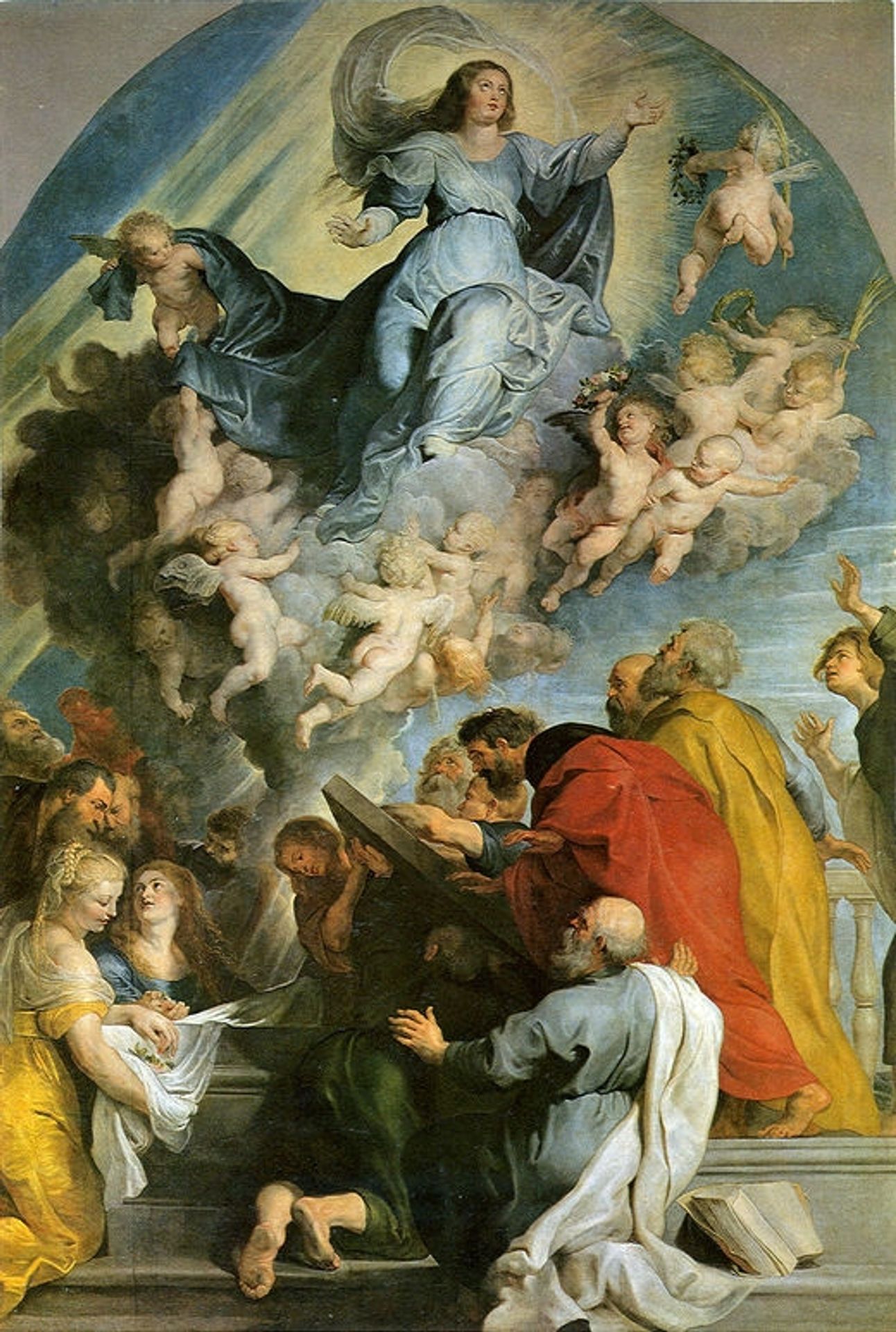
Assumption of Virgin

Peter Paul Rubens
1577 - 1640Location
Royal Museums of Fine Arts of Belgium, Brussels, BelgiumListen to curator's interpretation
Curatorial notes
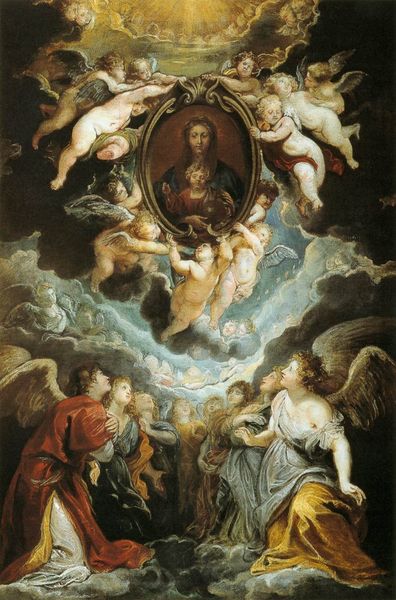
Peter Paul Rubens painted "Assumption of the Virgin," using oil on canvas, to capture a pivotal moment in Christian belief. Here, the Virgin Mary ascends to heaven, surrounded by cherubs and bathed in divine light, her upward gaze reflecting the promise of salvation. The gesture of upward reaching is not new. Consider its echo in ancient Roman art, where emperors were depicted ascending to the heavens, signaling their divine right and eternal glory. The 'Adlocutio' gesture of the raised hand, prevalent in Imperial imagery, finds a transformed yet resonant echo in Mary’s ascension. The cherubs, those winged infants, recall classical putti, symbols of love and innocence. Yet, within this Christian context, they represent a celestial host, facilitating Mary's ascent. Their presence speaks to the powerful force of collective memory and the way symbols evolve, carrying echoes of past cultures while acquiring new spiritual depth. This painting is more than a religious scene; it's a profound exploration of faith, memory, and the enduring power of symbols.