1800 - 1825
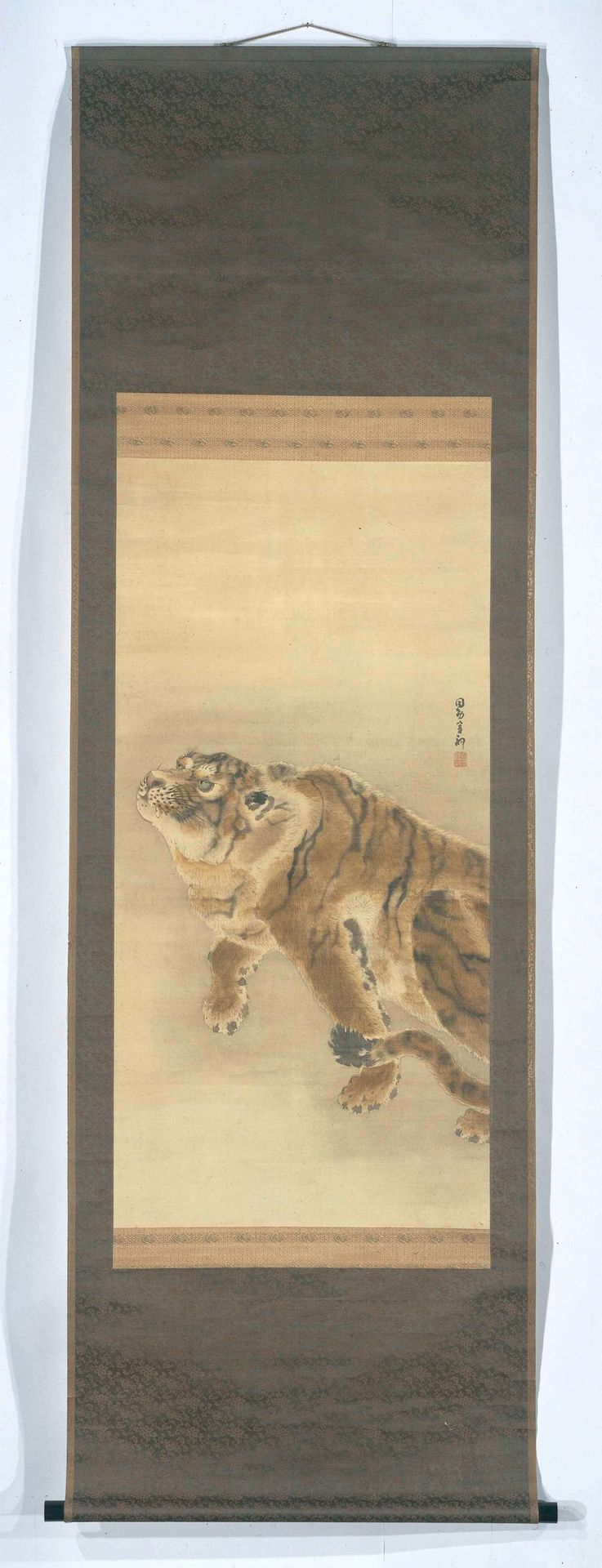
Tijger

Kishi Ganku
1756 - 1838Location
RijksmuseumListen to curator's interpretation
Curatorial notes
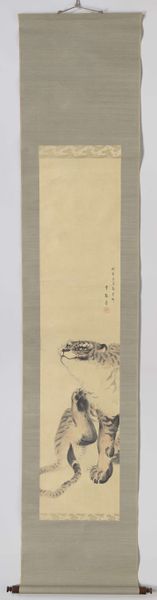
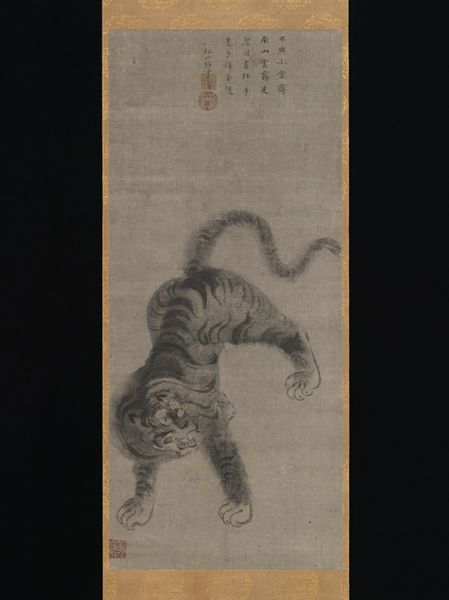
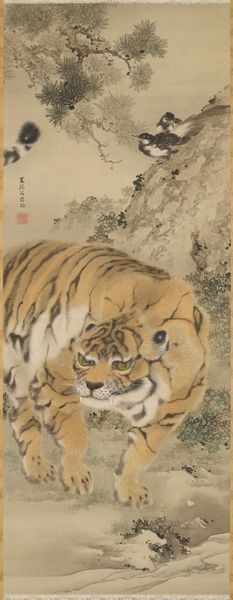
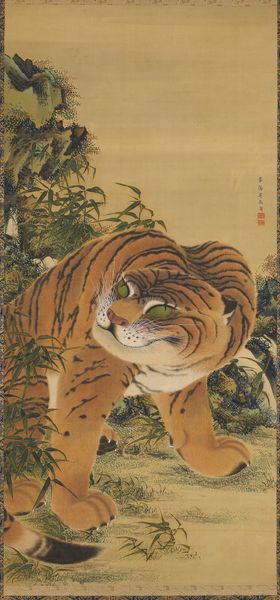
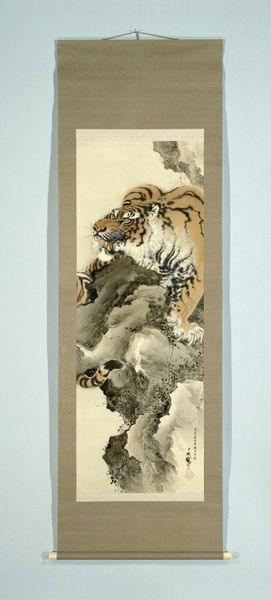
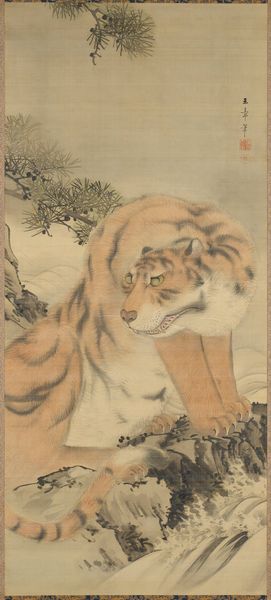
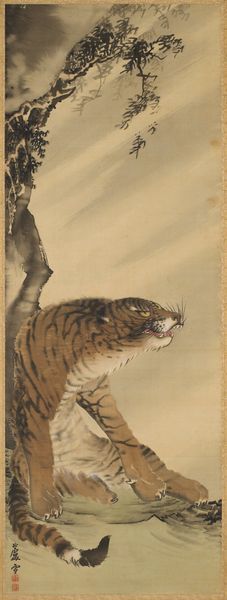
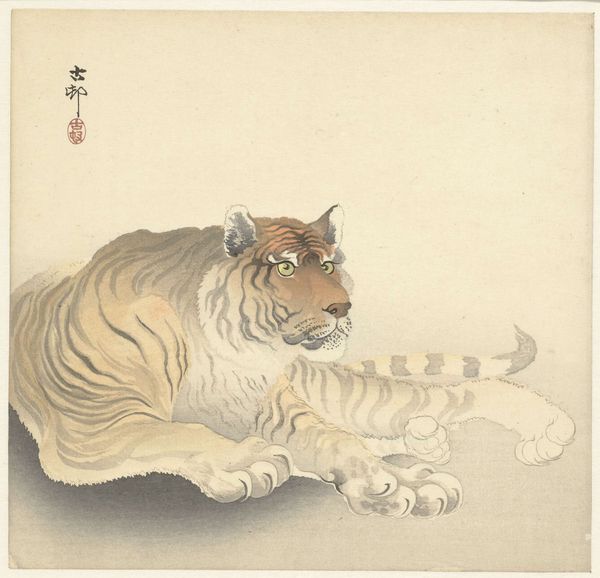
This scroll painting, "Tijger" by Kishi Ganku, compels with its dynamic composition and subtle washes of ink on silk. The tiger, rendered in warm earth tones, dominates the vertical space, its body twisting upwards. The artist masterfully employs the texture of the silk to suggest the animal's fur, while the stark negative space around it amplifies its powerful presence. Ganku's work here exemplifies the Japanese tradition of animal painting, or "kachō-ga," but it also disrupts it. Rather than portraying the tiger in a naturalistic setting, Ganku isolates the animal, emphasizing its symbolic weight. We can understand this isolation through the lens of Zen Buddhism, where animals often represent enlightenment or inner potential. The upward gaze of the tiger, combined with its dynamic pose, can be interpreted as a striving for higher awareness. Notice how Ganku uses asymmetry to create tension. The tiger's body is off-center, pulling the viewer's eye upward. This formal choice speaks to the impermanence of existence and the continuous striving for balance within the natural order.