1763
Clavichord


Listen to curator's interpretation
Curatorial notes
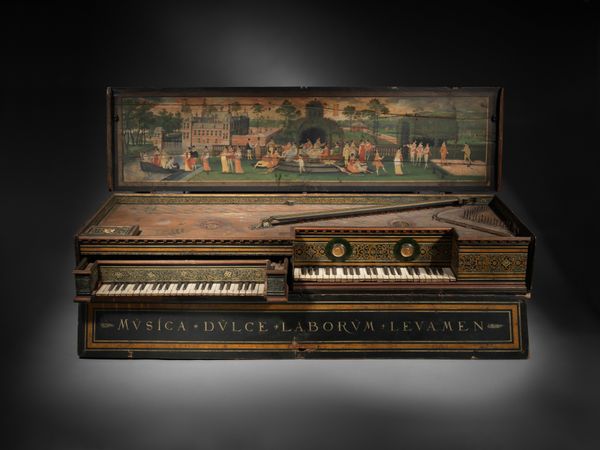
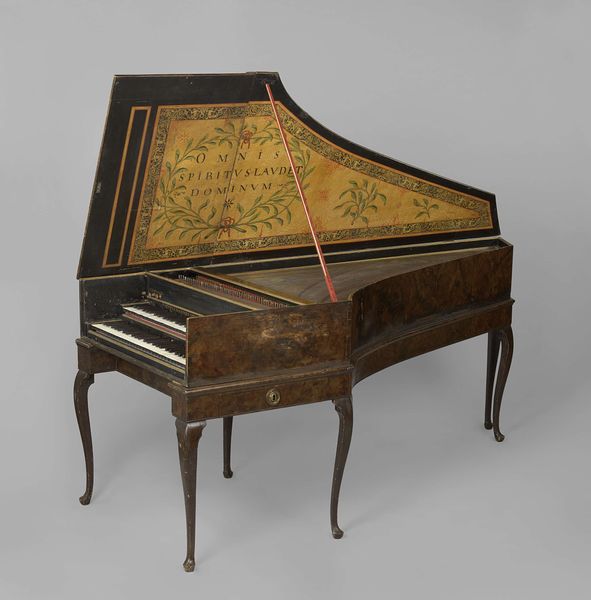
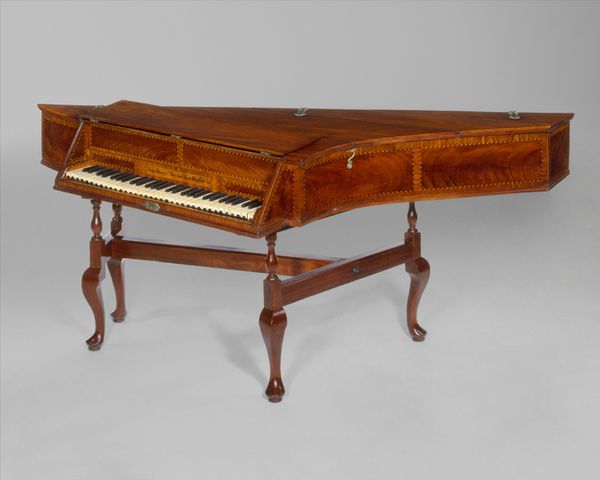
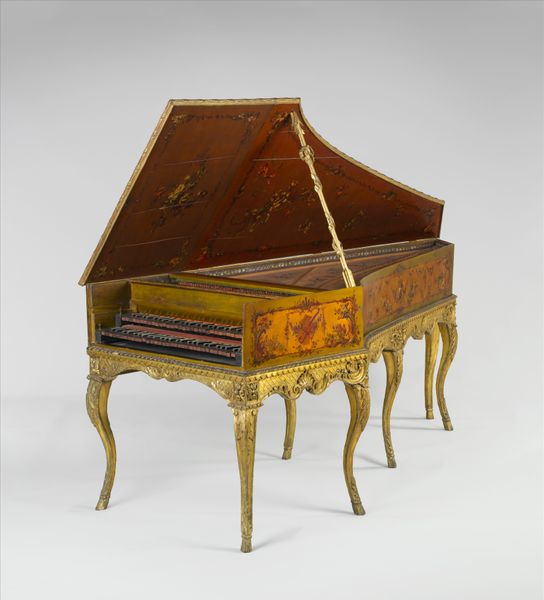
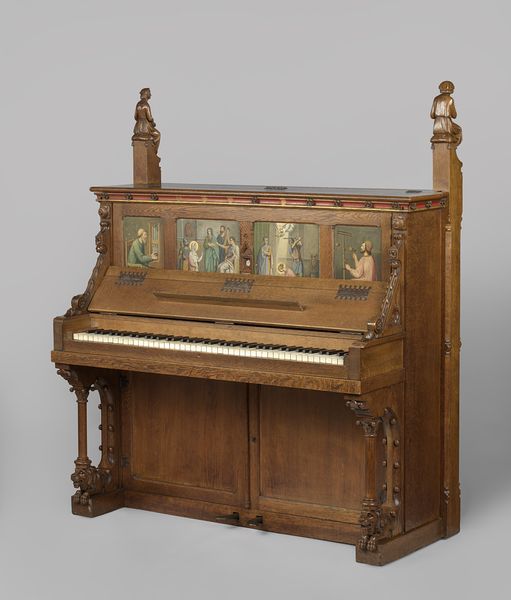
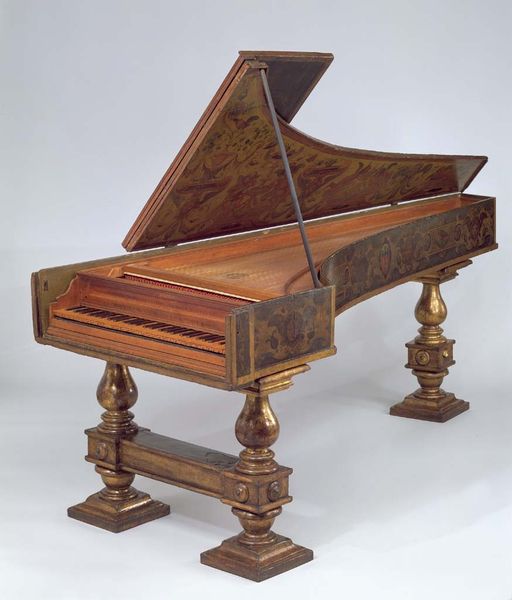
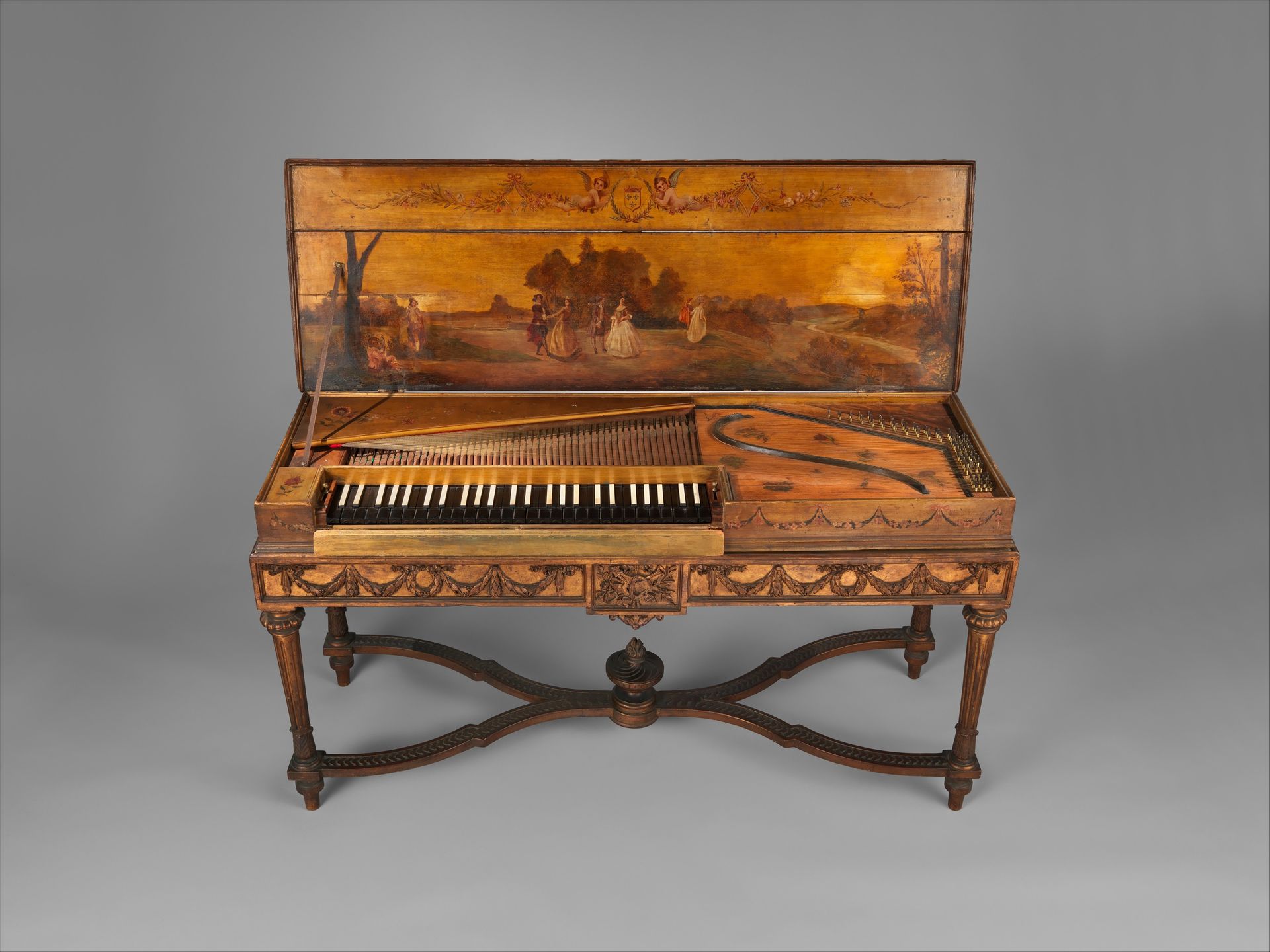
This clavichord was made by Christian Kintzing, who lived from 1707 to 1804. Look closely, and you'll see that it's made primarily of wood: a case of carved and inlaid timber, and a painted lid. The keys themselves are probably made of bone or ivory for the white notes, and ebony for the black. These materials give the instrument a feeling of warmth and elegance, fitting for the music it was designed to play. But the way it was made also tells us a lot. A clavichord like this would have required the skills of many different artisans: the joiner who made the case, the keyboard maker, the painter who decorated the lid with a pastoral scene, and the metal worker who crafted the delicate brass strings. Each of these individuals would have been trained in their own specialized craft, reflecting a highly developed division of labor. So, while this instrument may seem like a simple object, it’s actually a complex product of its time, embodying both the artistry and the social relations of 18th-century society. We shouldn’t forget that an object like this embodies many different skilled traditions, all coming together.