1581
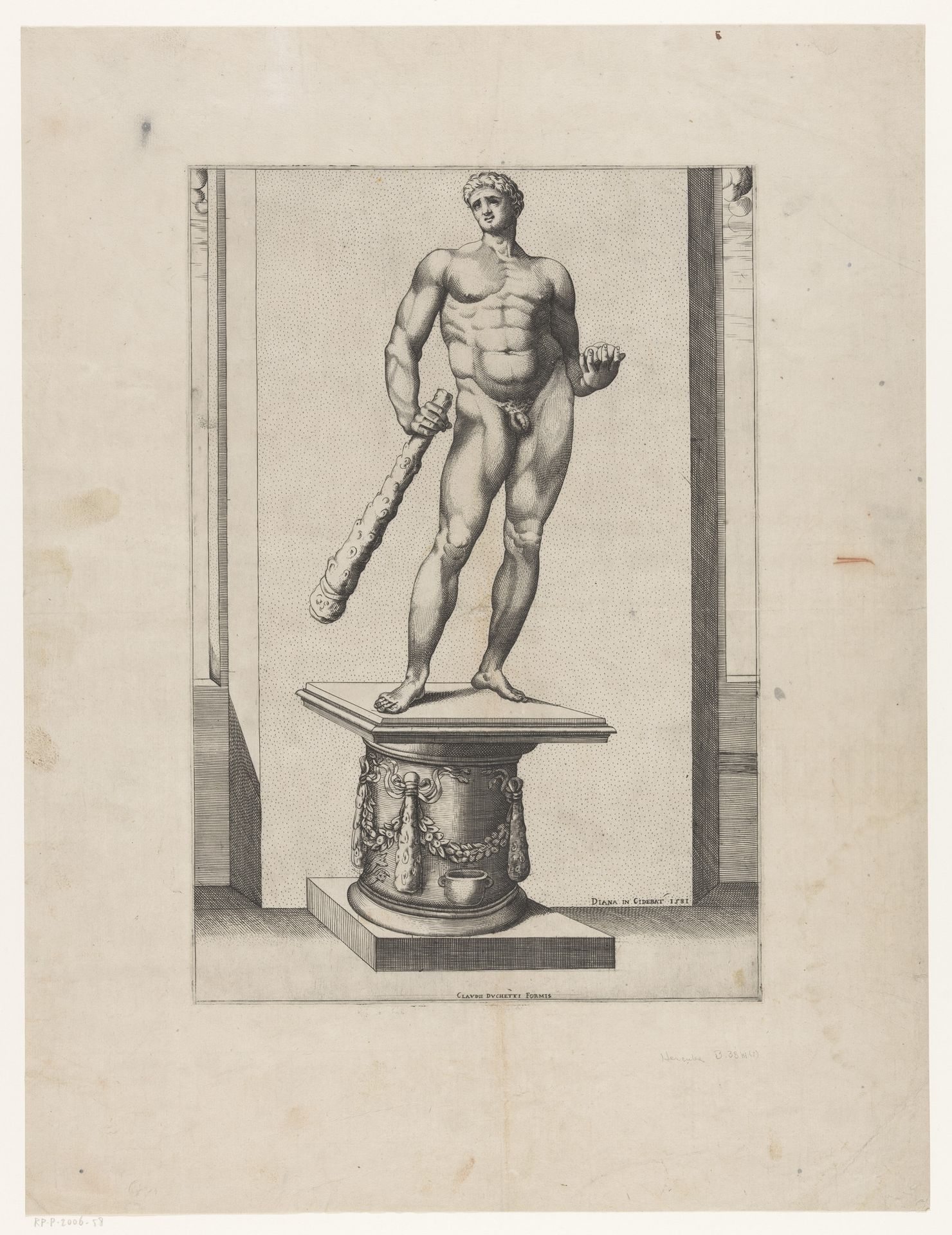
Hercules met de gouden appels

Listen to curator's interpretation
Curatorial notes
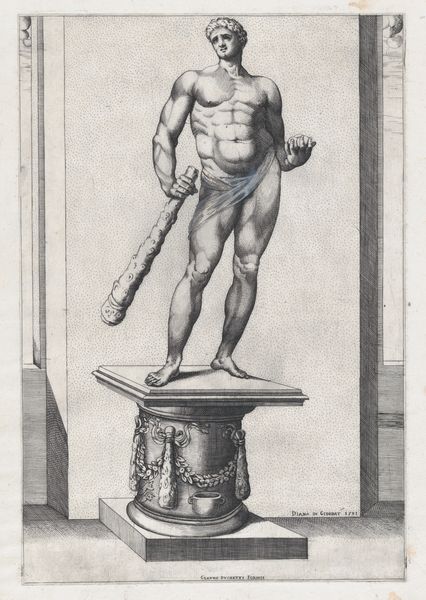
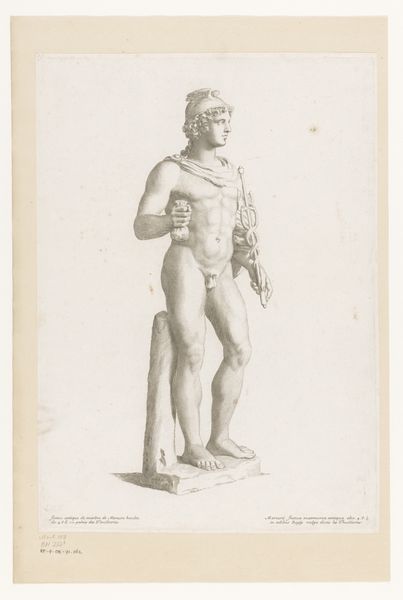
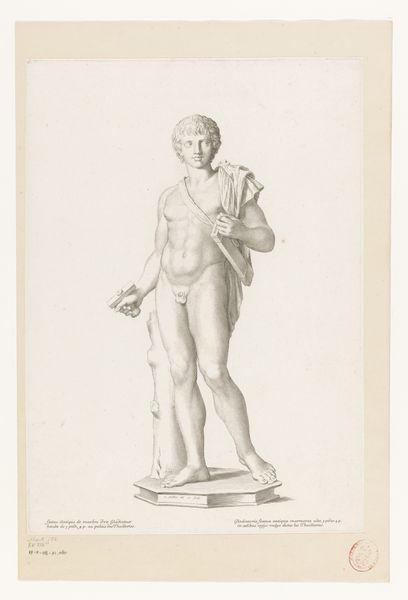
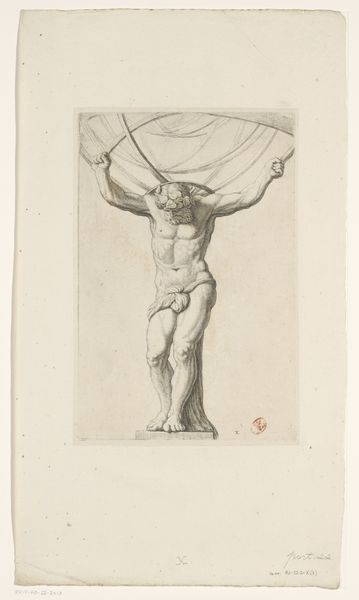
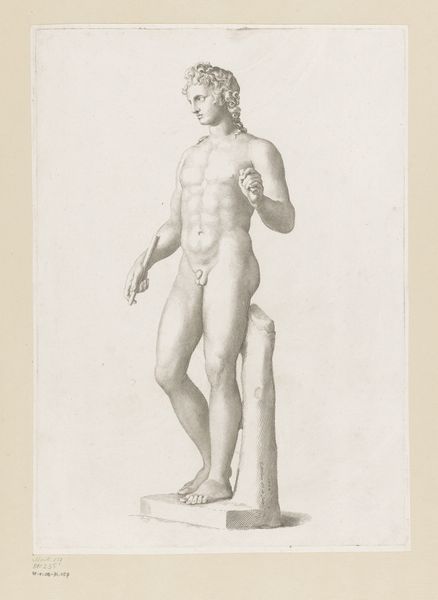
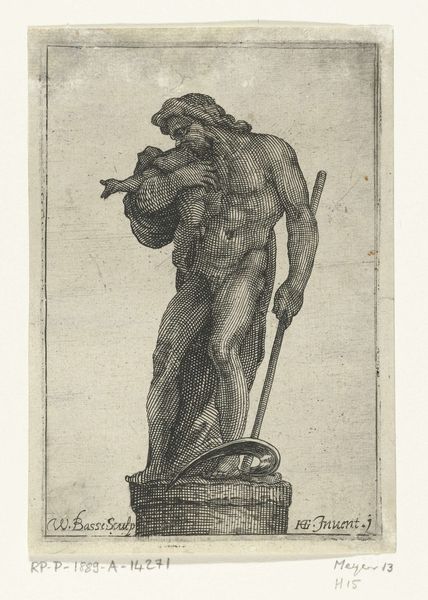
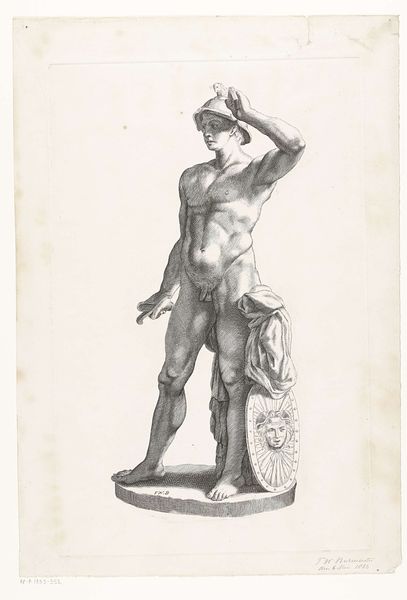
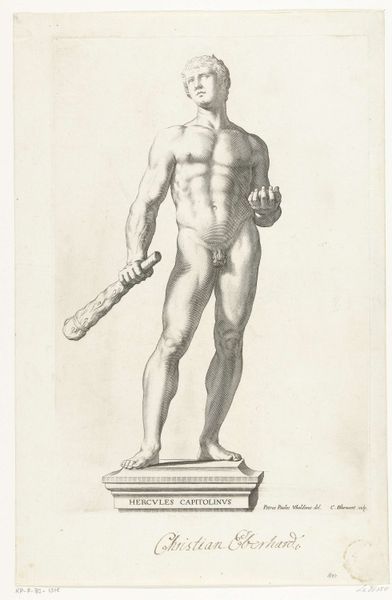
Curator: Diana Mantuana's 1581 engraving, "Hercules met de gouden appels", presents the hero after retrieving the golden apples of the Hesperides. It is striking, wouldn't you say? Editor: Striking in its...idealization? This is clearly a constructed masculinity, all hard lines and idealized anatomy. It almost feels like a declaration of power rather than a depiction of a vulnerable human experience. Curator: Indeed, the rigorous lines articulate Hercules’s form. Mantuana’s strategic use of hatching and cross-hatching sculpts a sense of volume and musculature, creating a highly structured composition. He dominates the framed space he inhabits. Editor: And that space is telling. The classical architecture surrounding Hercules—it frames and elevates him but it also cages him. I wonder about the tensions inherent in depicting a mythological hero within a rigid system of representation, almost a visual codification of patriarchal power. Curator: Yet, it’s also about mastering form. Note the precision of the engraving, a meticulous process of incising lines onto metal to achieve tonal gradations and textural effects. Mantuana clearly mastered her medium to capture and communicate classical ideals of beauty and strength. Editor: Absolutely, technically brilliant, but to what end? Hercules, often depicted as a figure of action, is presented here passively holding the apples, almost as a trophy. The labor he represents serves as a vehicle for masculine display. It asks us to reconsider who benefits from that labor, whose stories get told, and whose bodies become symbols. Curator: A persuasive counterpoint. It makes us appreciate how formal structure, while inherently fascinating, only truly resonates when brought into contact with the questions you raise. Editor: Agreed. Seeing Mantuana's Hercules isn't just about aesthetic appreciation. It is also about engaging in critical dialogue around power and representation within historical art.