1649 - 1680
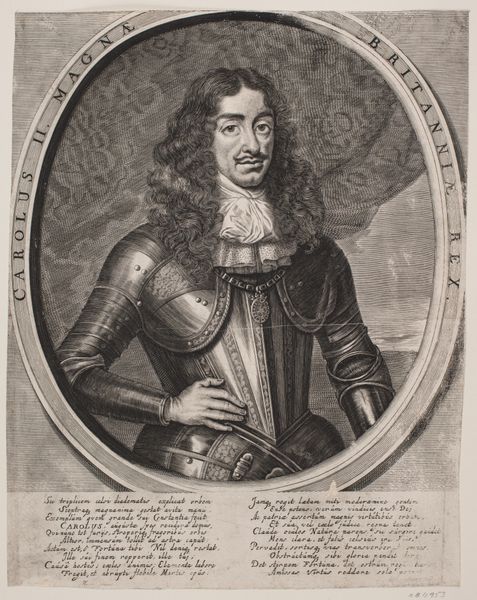
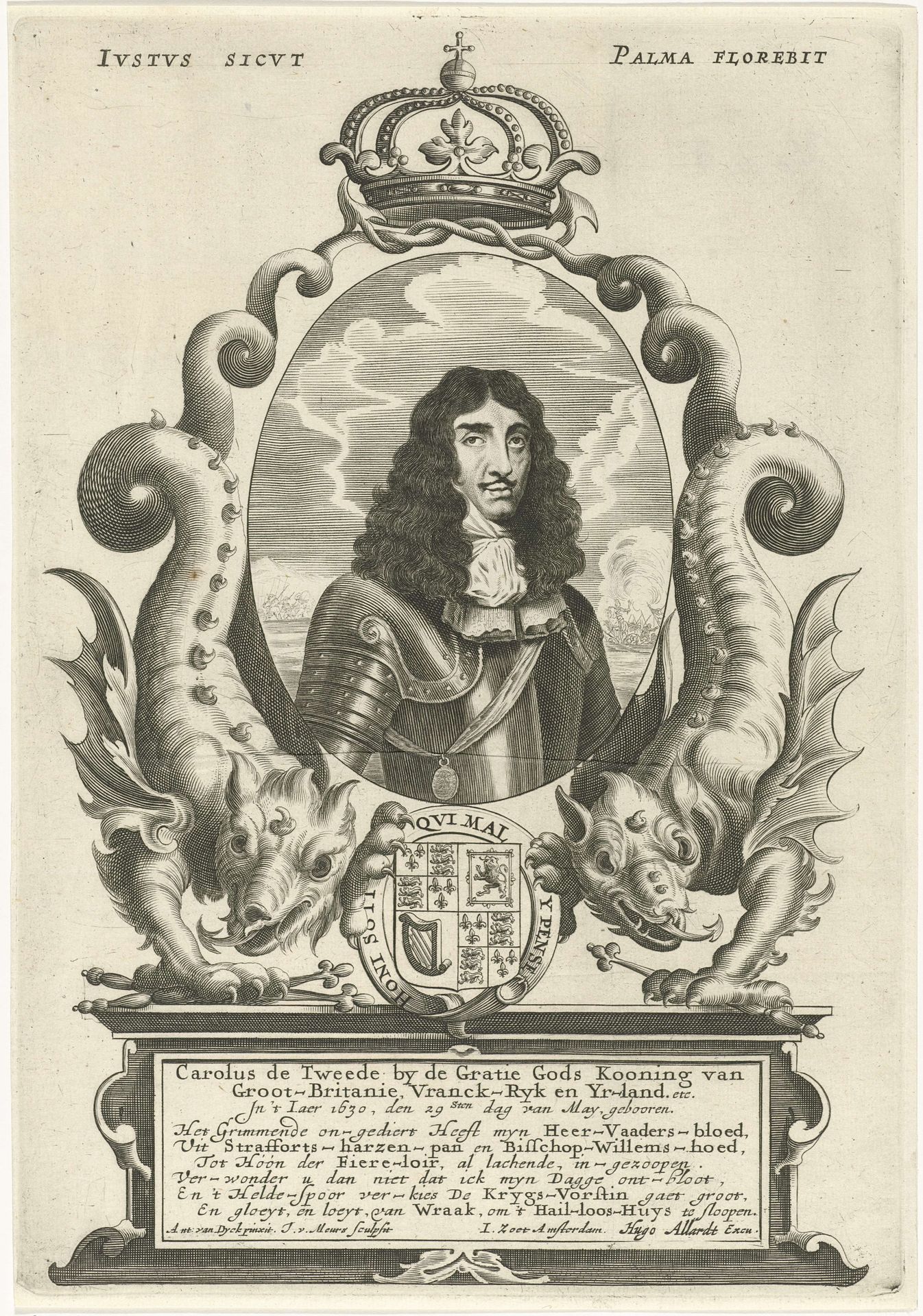
Portret van koning Karel II van Engeland

Jacob van Meurs
1620 - 1680Location
RijksmuseumListen to curator's interpretation
Curatorial notes
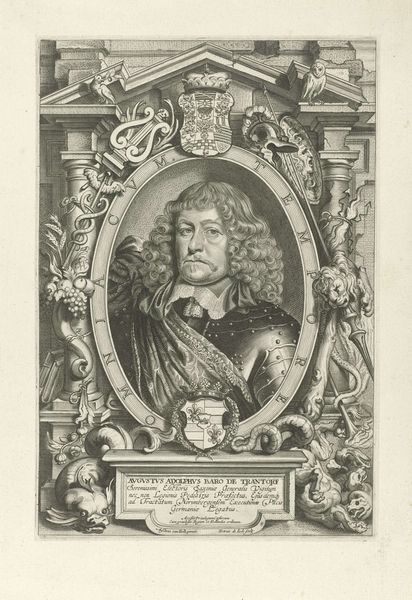
This portrait of King Charles II of England, made by Jacob van Meurs, is filled with symbols of power and legitimacy. Dominating the composition are two serpentine dragons framing the King. These aren’t merely decorative; dragons, historically, have been potent symbols of guardianship and strength, often associated with royalty and divine authority. But here, these dragons also evoke a deeper, more primal response. The serpent, a recurring motif throughout history from the Garden of Eden to Norse mythology, symbolizes both chaos and wisdom. In this portrait, the dragons may also symbolize the tumultuous times of Charles' reign, hinting at underlying subconscious anxieties about power and control. Consider how the dragon as a symbol has been passed down through history, shifting from a monstrous figure to a symbol of imperial might. This evolution mirrors our own psychological relationship with power: the dragon represents our fears, our aspirations, and our attempts to tame the untamable. It’s a non-linear progression, resurfacing in new forms, embodying the complex, often contradictory, nature of authority.