About this artwork
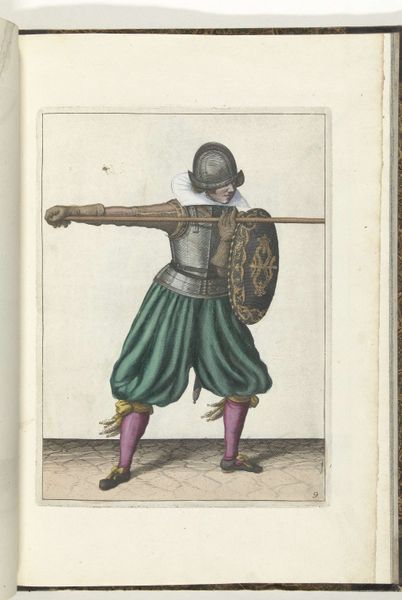
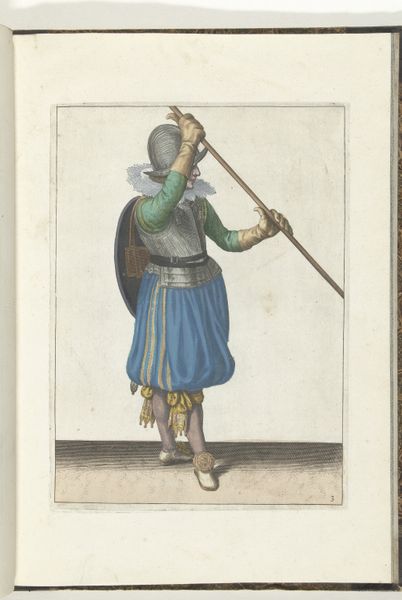
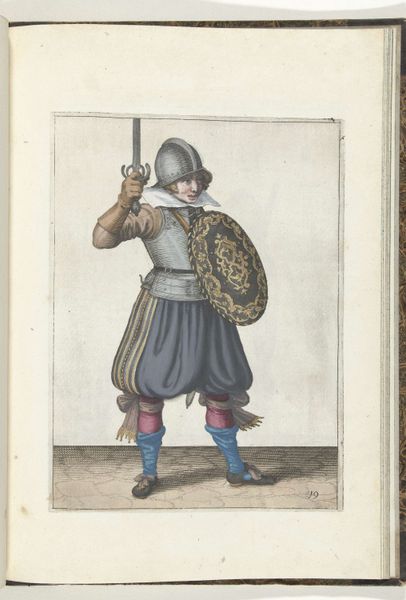
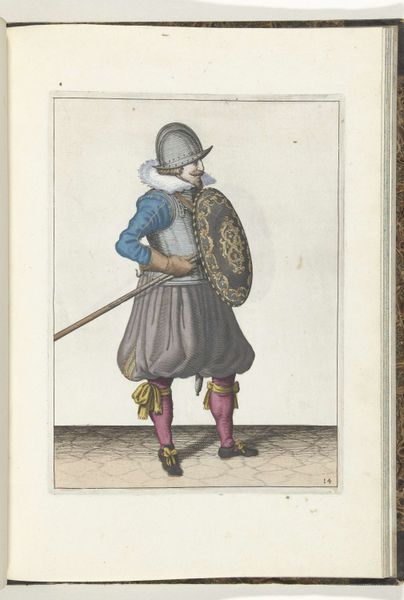
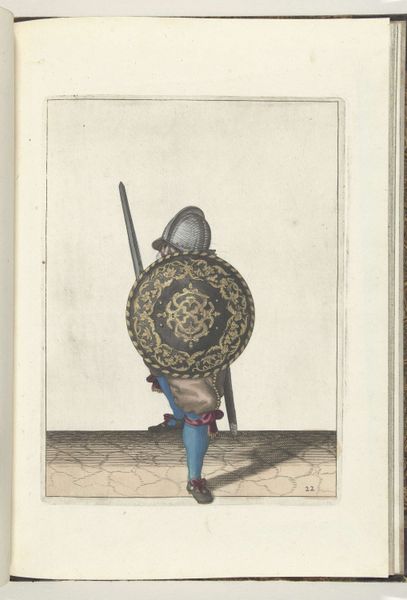
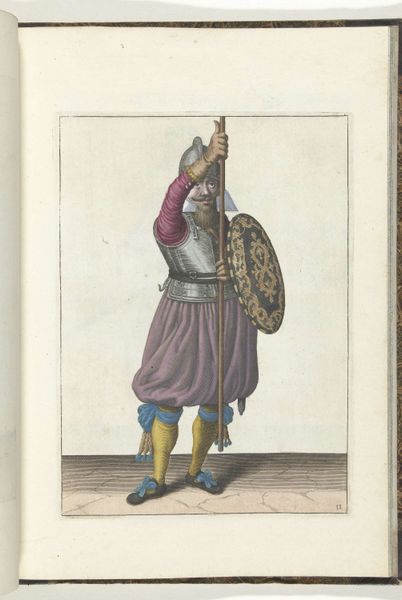
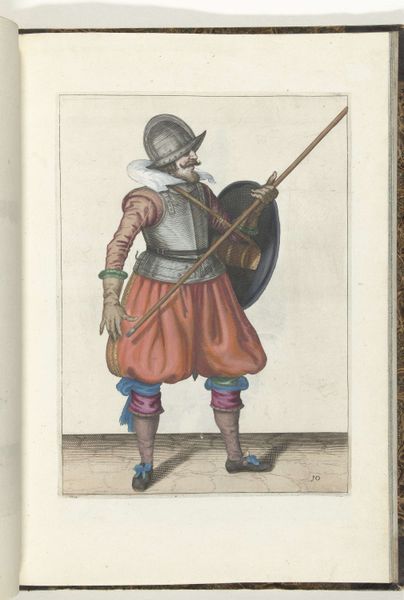
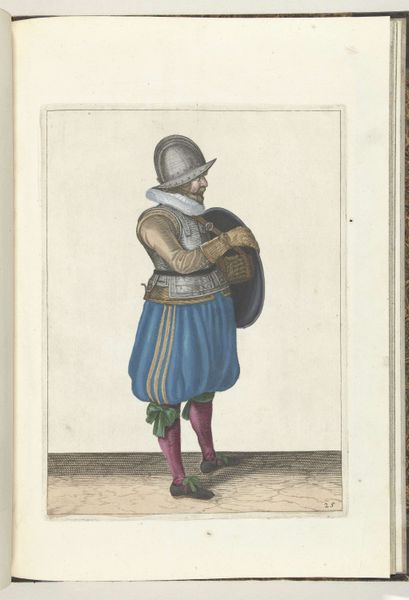
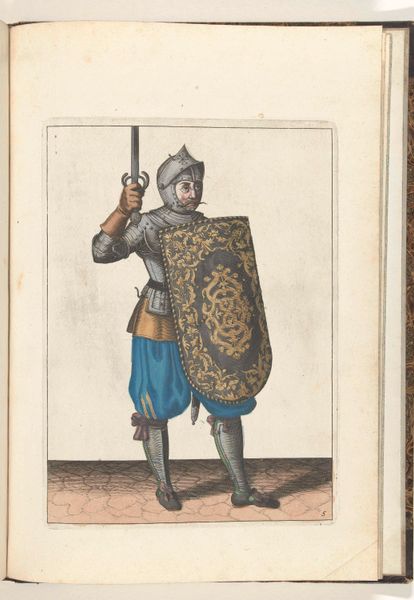
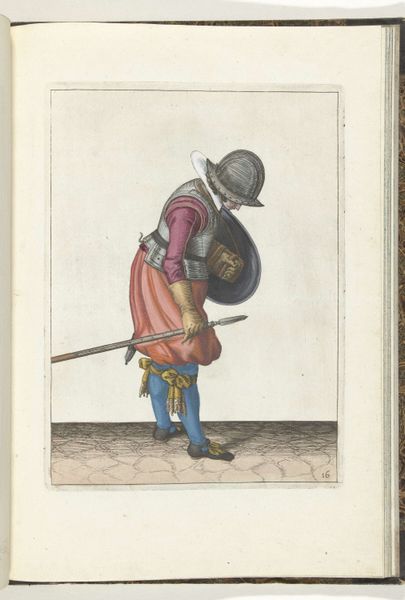
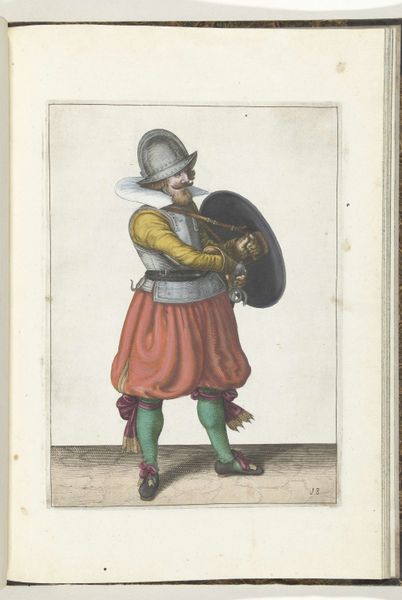
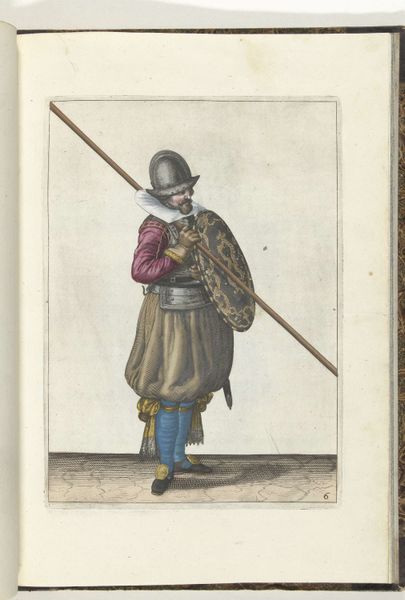
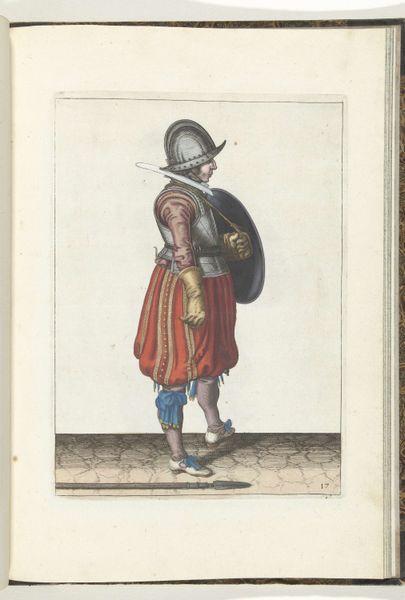
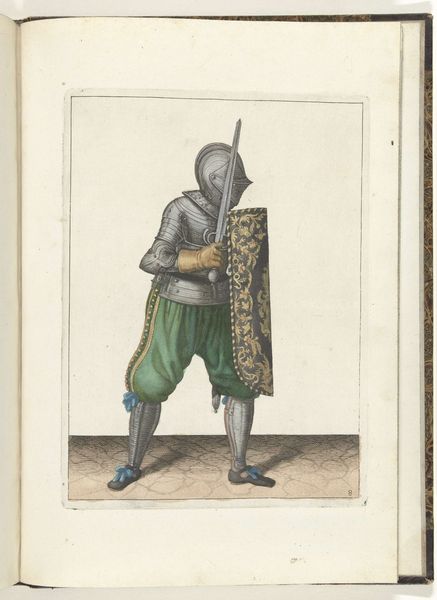
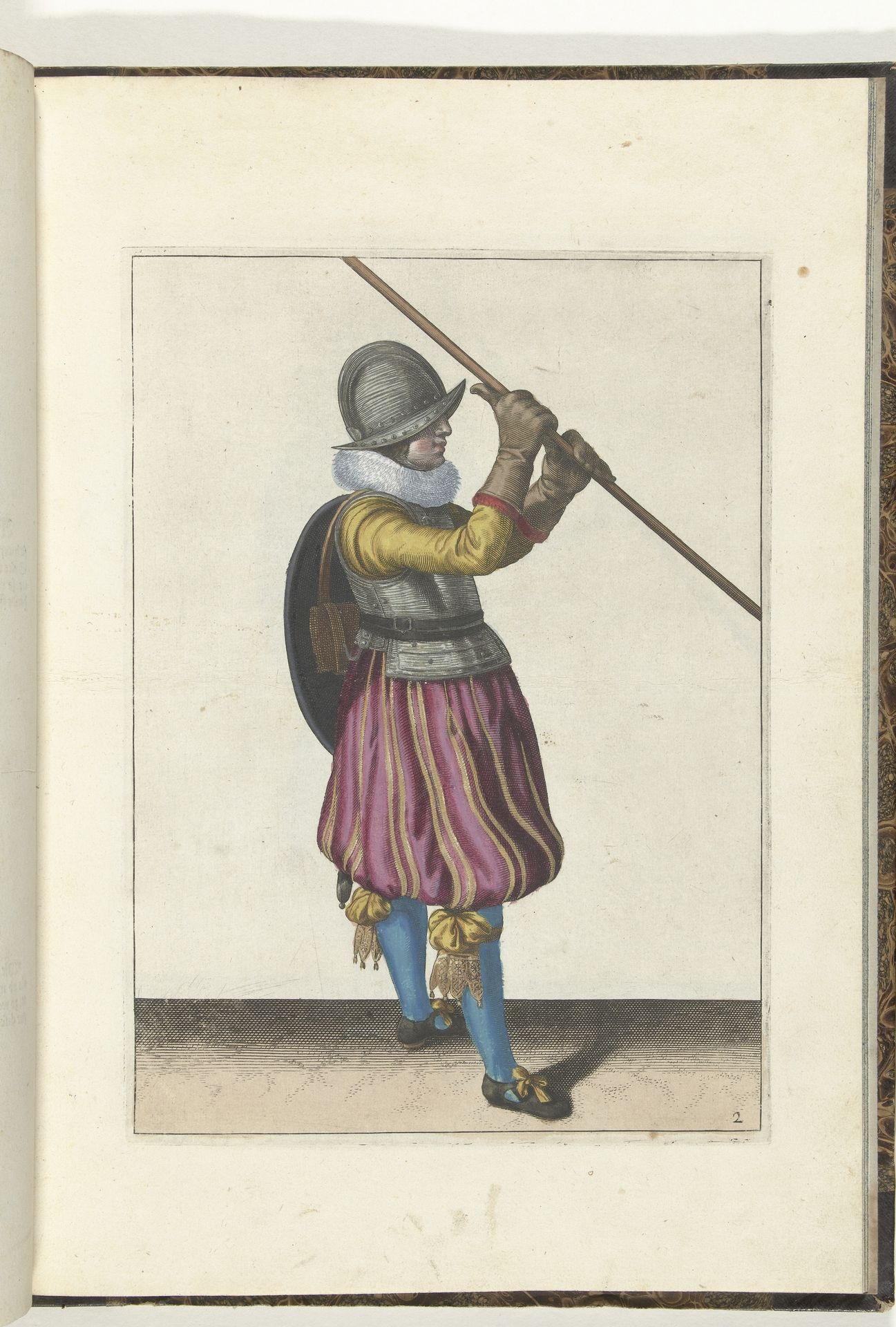
This print, made by Adam van Breen in 1618, presents a soldier in full kit, demonstrating the proper handling of a shield and pike. It is an etching, a printmaking process dating back to the early 16th century. To create an etching, the artist first coats a metal plate, often copper or zinc, with a waxy, acid-resistant substance. Using a needle, the artist scratches an image into the wax, exposing the metal underneath. The plate is then immersed in acid, which bites into the exposed lines. The longer the plate sits in the acid, the deeper and darker the lines will be when printed. The texture and detail achieved through etching lend a sense of immediacy to the image, while the application of color adds to its visual appeal, creating a fascinating blend of traditional craft and fine art sensibilities. The resulting print offers a valuable glimpse into the material culture and military practices of the early 17th century, blurring the boundaries between art, documentation, and social commentary.
De exercitie met schild en spies: de soldaat met de spies schuin in beide handen en het schild op de rug (nr. 2), 1618
1616 - 1618

Artwork details
- Dimensions
- height 260 mm, width 190 mm
- Copyright
- Rijks Museum: Open Domain
Tags
Comments
Share your thoughts
About this artwork
This print, made by Adam van Breen in 1618, presents a soldier in full kit, demonstrating the proper handling of a shield and pike. It is an etching, a printmaking process dating back to the early 16th century. To create an etching, the artist first coats a metal plate, often copper or zinc, with a waxy, acid-resistant substance. Using a needle, the artist scratches an image into the wax, exposing the metal underneath. The plate is then immersed in acid, which bites into the exposed lines. The longer the plate sits in the acid, the deeper and darker the lines will be when printed. The texture and detail achieved through etching lend a sense of immediacy to the image, while the application of color adds to its visual appeal, creating a fascinating blend of traditional craft and fine art sensibilities. The resulting print offers a valuable glimpse into the material culture and military practices of the early 17th century, blurring the boundaries between art, documentation, and social commentary.
Comments
Share your thoughts