About this artwork
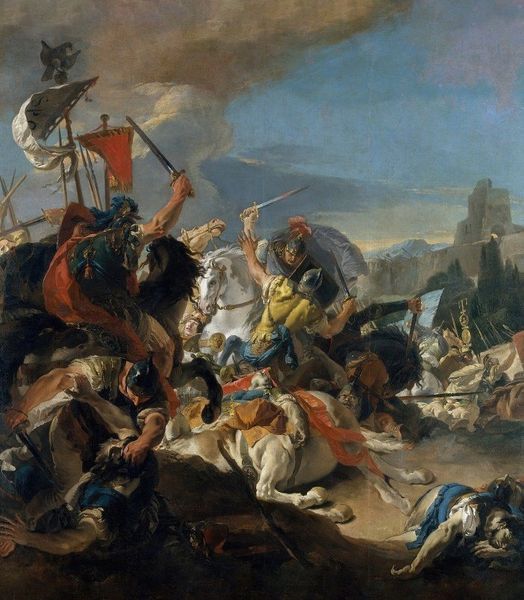
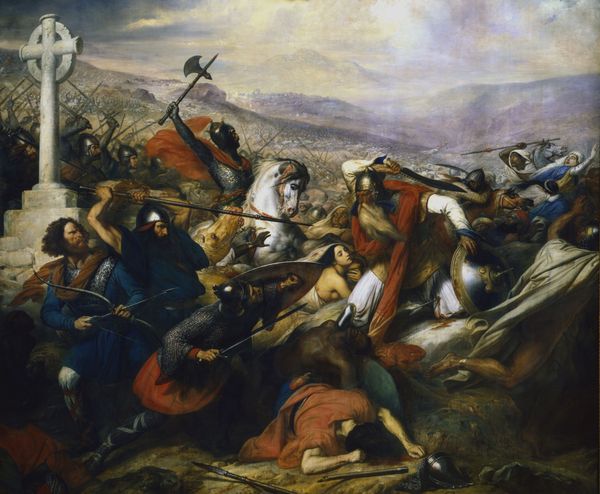
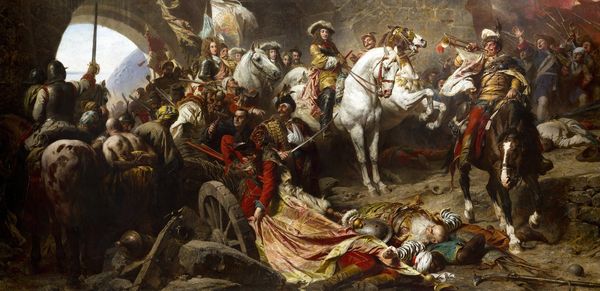
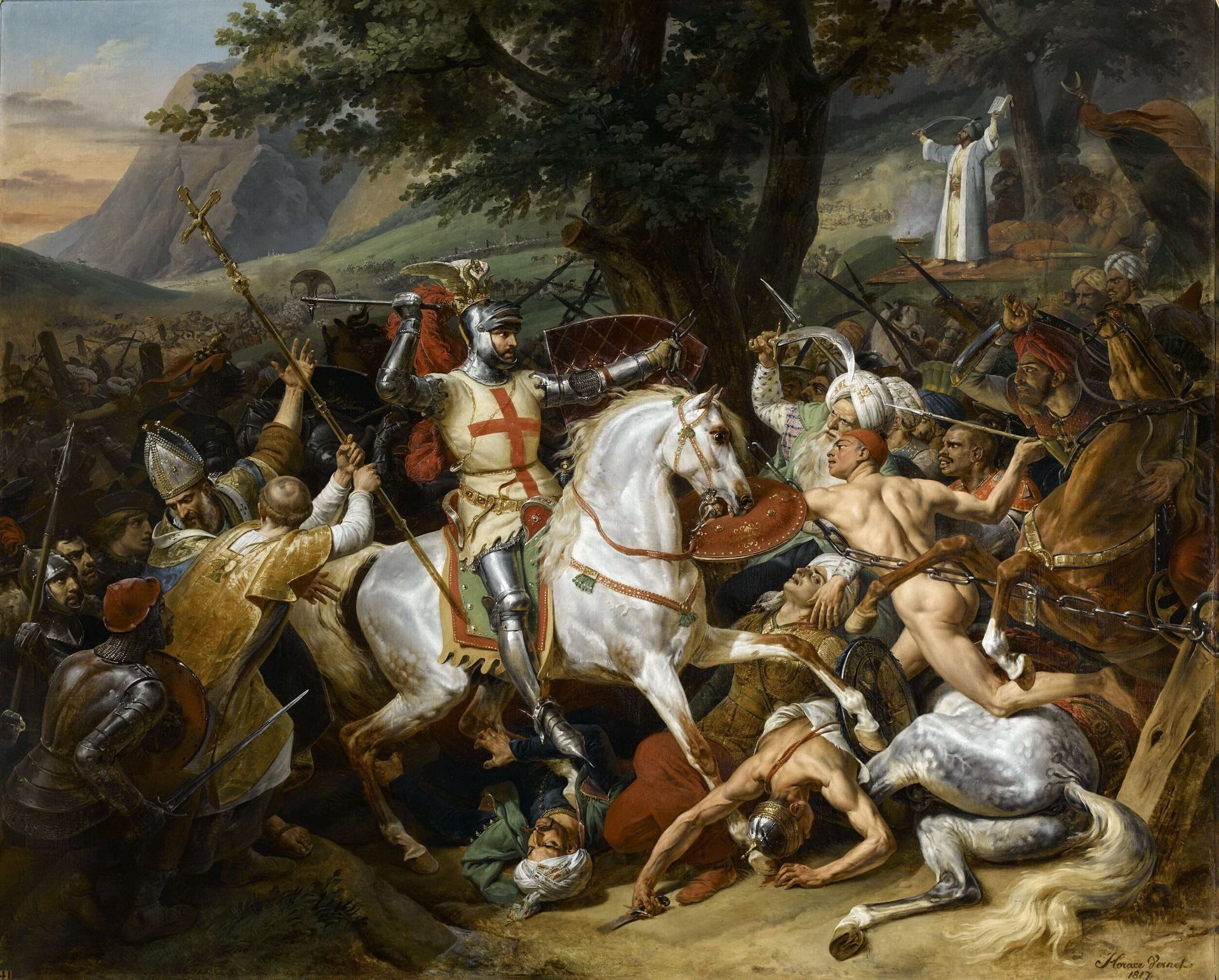
Horace Vernet painted this monumental canvas of The Battle of Las Navas de Tolosa in the mid-19th century using oil paint applied to a woven fabric support, likely linen. The choice of oil paint, with its capacity for rendering light and texture, allows Vernet to capture the chaos and drama of battle. He builds up layers of pigment, using brushes to create depth and movement. The relatively smooth weave of the linen provides a receptive surface for detailed depiction, from the glint of polished steel armour, to the contorted faces of the warriors. The work would have begun with the labour-intensive preparation of both the linen and the priming of the canvas. It's interesting to consider the immense labor involved in creating a painting of this scale. Vernet would have employed assistants to prepare the canvas, grind pigments, and even block in large areas of the composition. It reminds us that even seemingly individual acts of artistic creation are often the result of collective effort, embedded in complex economies of skill and production.
Battle of Las Navas de Tolosa, 1212
1817
Horace Vernet
1789 - 1863Location
Château de Versailles, Versailles, FranceArtwork details
- Medium
- painting, oil-paint
- Dimensions
- 405 x 492 cm
- Location
- Château de Versailles, Versailles, France
- Copyright
- Public domain
Tags
Comments
Share your thoughts
About this artwork
Horace Vernet painted this monumental canvas of The Battle of Las Navas de Tolosa in the mid-19th century using oil paint applied to a woven fabric support, likely linen. The choice of oil paint, with its capacity for rendering light and texture, allows Vernet to capture the chaos and drama of battle. He builds up layers of pigment, using brushes to create depth and movement. The relatively smooth weave of the linen provides a receptive surface for detailed depiction, from the glint of polished steel armour, to the contorted faces of the warriors. The work would have begun with the labour-intensive preparation of both the linen and the priming of the canvas. It's interesting to consider the immense labor involved in creating a painting of this scale. Vernet would have employed assistants to prepare the canvas, grind pigments, and even block in large areas of the composition. It reminds us that even seemingly individual acts of artistic creation are often the result of collective effort, embedded in complex economies of skill and production.
Comments
Share your thoughts