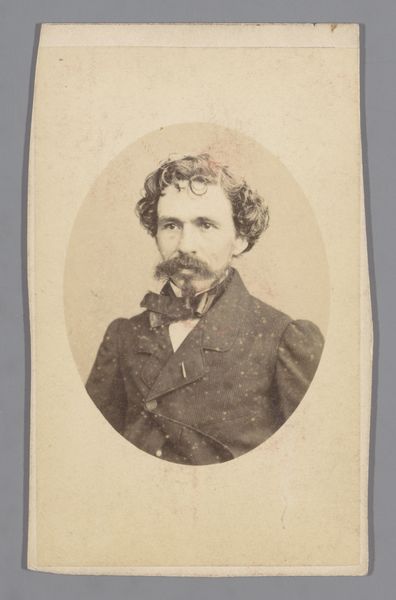
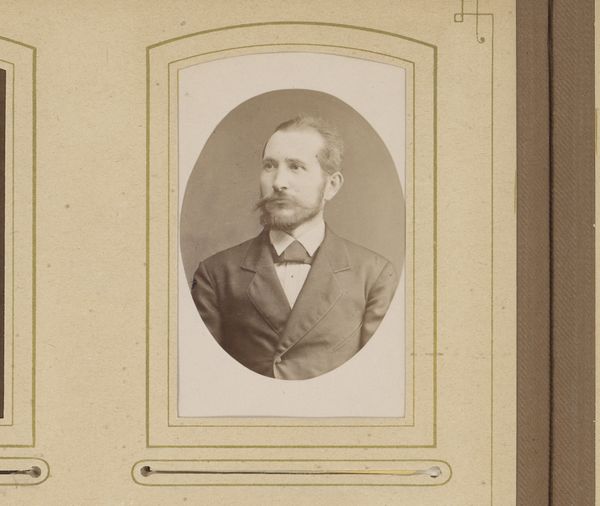
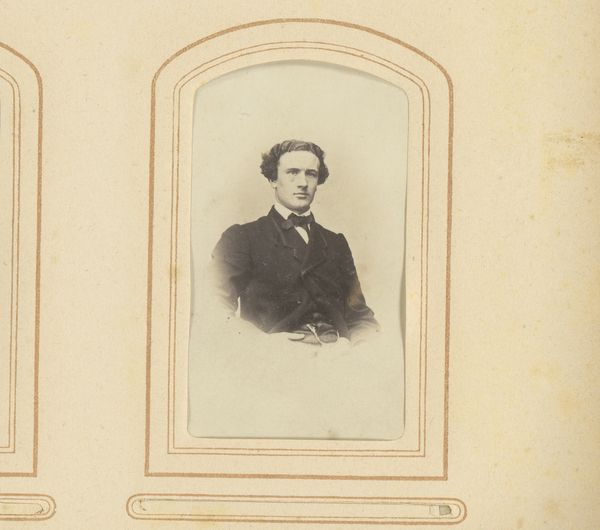
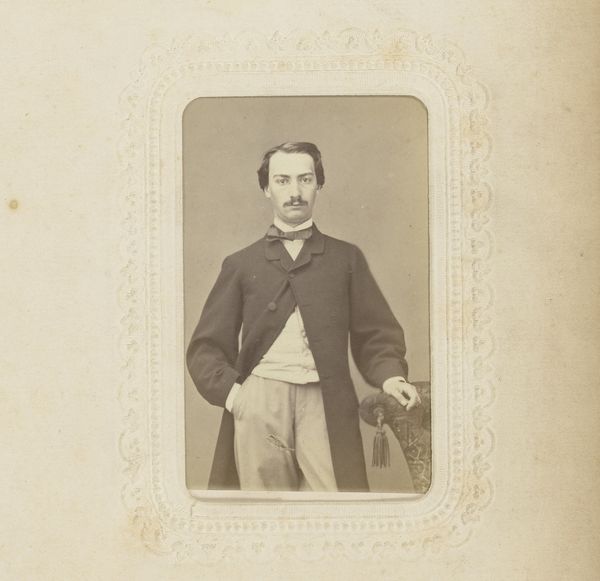
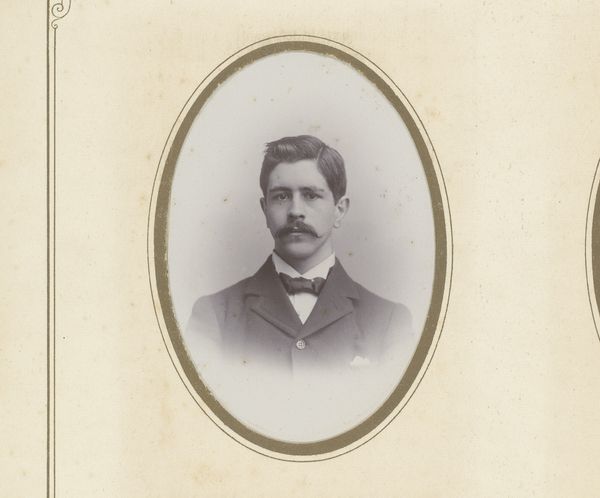
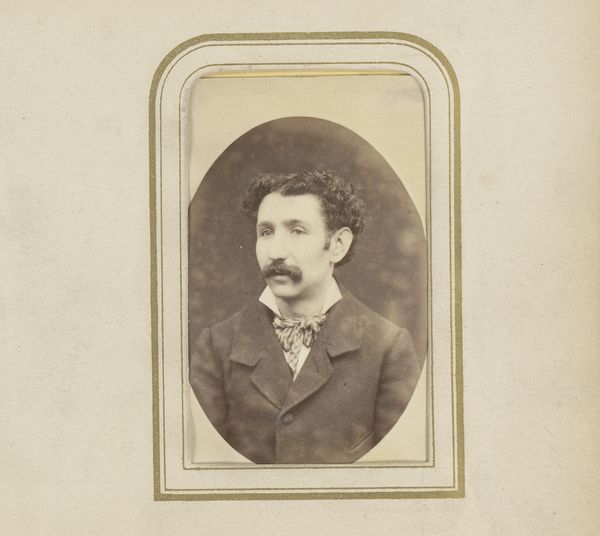
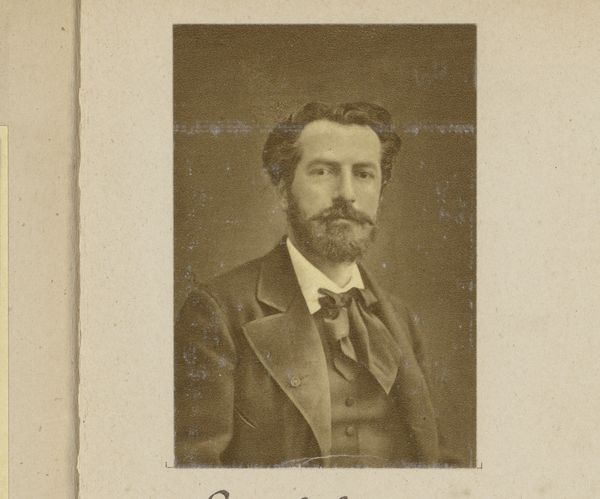
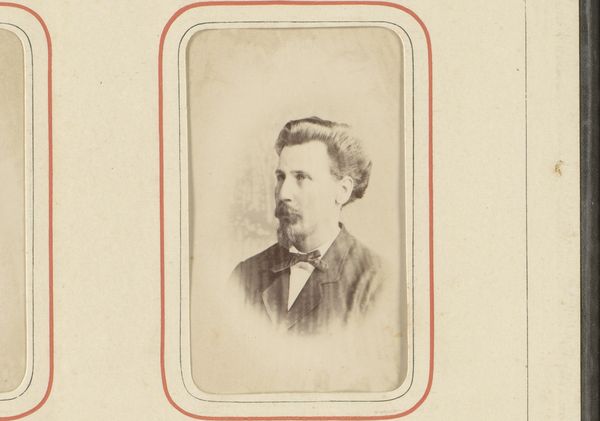
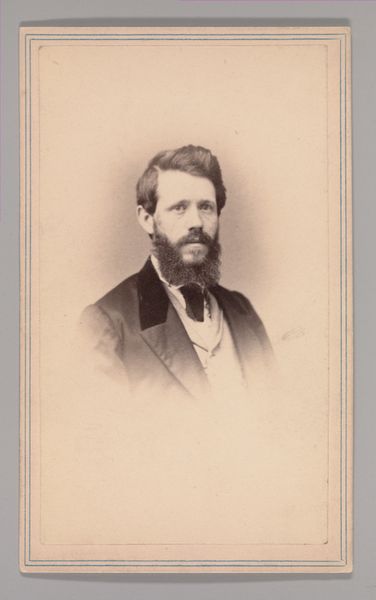
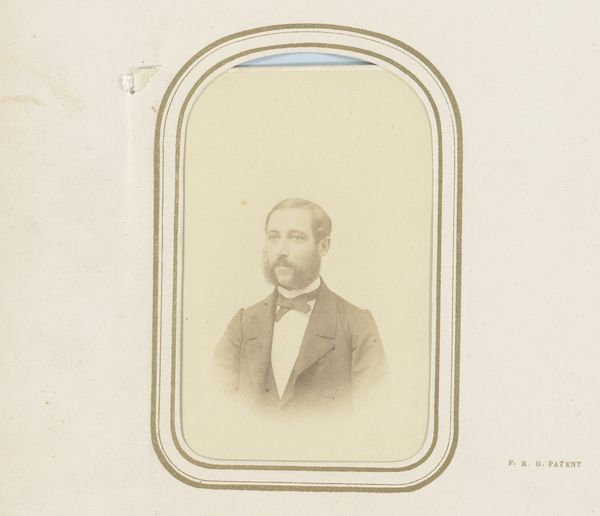
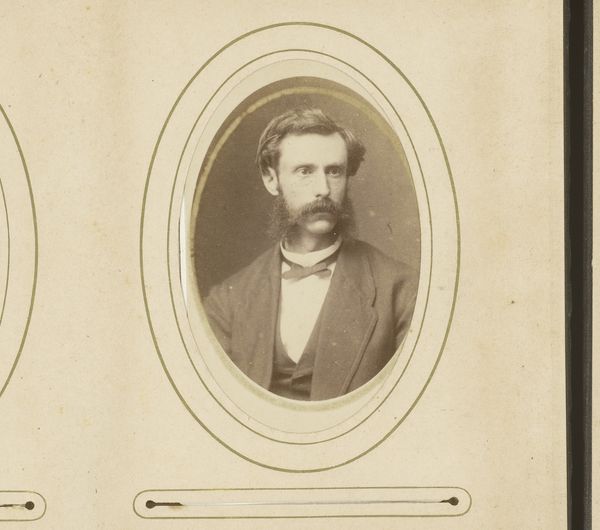
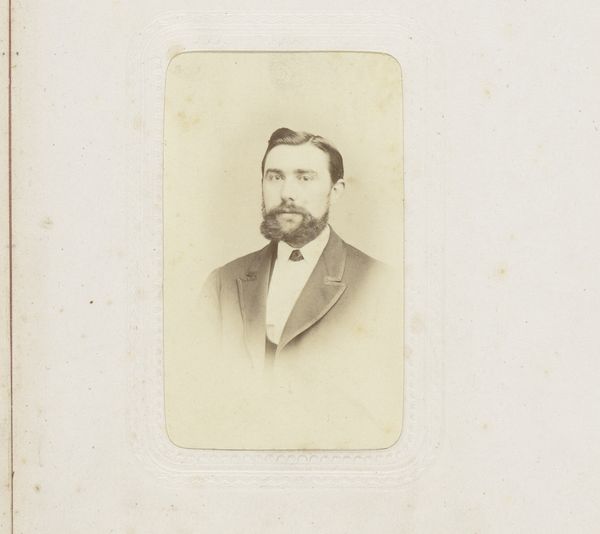
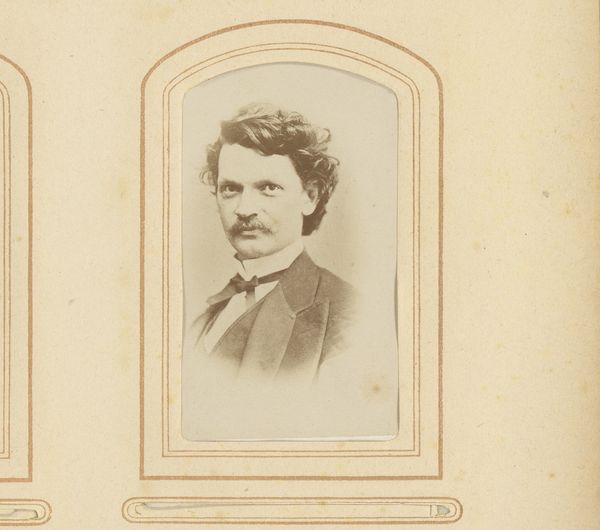
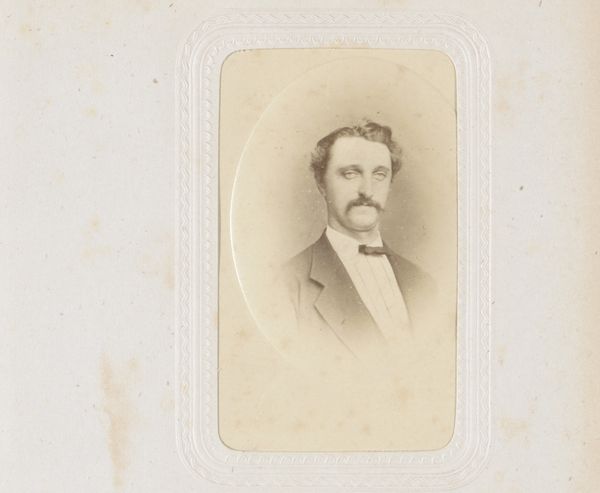
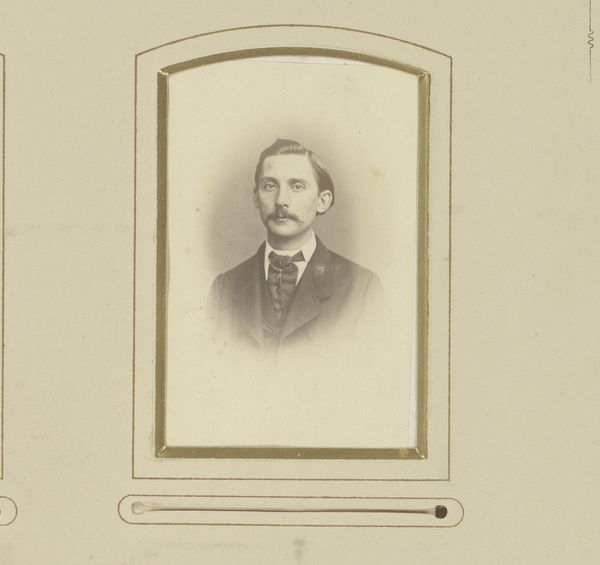
Fotoreproductie van een carte-de-visite van 'Giglio', Siciliaanse brigard, door Giuseppe Incorpora 1887 - 1888
0:00
0:00

photography, photomontage, gelatin-silver-print, albumen-print
#
portrait
#
aged paper
#
16_19th-century
#
photography
#
photomontage
#
gelatin-silver-print
#
albumen-print
#
realism
Dimensions: height 91 mm, width 59 mm
Copyright: Rijks Museum: Open Domain
Curator: This photograph is titled 'Fotoreproductie van een carte-de-visite van 'Giglio', Siciliaanse brigard, door Giuseppe Incorpora,' created between 1887 and 1888. It is a gelatin-silver print over an albumen print. Editor: The sepia tones lend such an old-world feel. You can almost smell the paper. It’s aged to a warm, subtle palette. Curator: Yes, these cartes-de-visite were wildly popular. This particular image is interesting, showing “Giglio”, who was, supposedly, a Sicilian brigand, a kind of outlaw figure that took root due to economic disparities in the Italian South. Consider the politics embedded in these images. How they can immortalize—and perhaps even romanticize—figures challenging social order. Editor: Brigands. Bandits. There's always been an allure. Looking at this, I’m curious about Incorpora’s darkroom practice. I wonder what photographic manipulations went into emphasizing texture and shadow? It has the mark of skilled labor, shaping how we consume even this criminal’s image. Curator: The sitter is interesting—‘Giglio’–likely a stage name or an alias of some kind. But in this era in Southern Italy the line between outright bandit and a poor rural villager resisting exploitation wasn't clear at all, so these details could point us in either direction when researching. The 'Giglio' photographed could be more subversive than his image allows. Editor: That’s fascinating to consider in the social context of the time, because I'm drawn in by the small details like the texture of his plaid shirt against the blurred background, which lends a sort of everyday quality to it. Not how you’d picture someone fighting class battles necessarily! Curator: Precisely. I think such cartes-de-visite had a powerful public role. They gave ordinary citizens, and those deemed 'outlaws,' the ability to shape their visual representation in the wider world. This simple portrait hints at how identity and resistance get publicly performed. Editor: It's funny to see how the specifics of photographic material contribute to Giglio's enduring image today. The combination of chemical processes, really. We end up idealizing him. Curator: Indeed, art—even a piece as apparently humble as this—shows us how photography can make heroes or villains according to political need and social imagination. Editor: Seeing art like this always gets me thinking about what kinds of manual labor and specific materials produce that feeling of historical "weight."
Comments
No comments
Be the first to comment and join the conversation on the ultimate creative platform.
 Collect
 React
React Comment
More like this