painting, plein-air, oil-paint
#
portrait
#
painting
#
impressionism
#
plein-air
#
oil-paint
#
landscape
#
impressionist landscape
#
oil painting
#
child
#
genre-painting
Copyright: Public domain
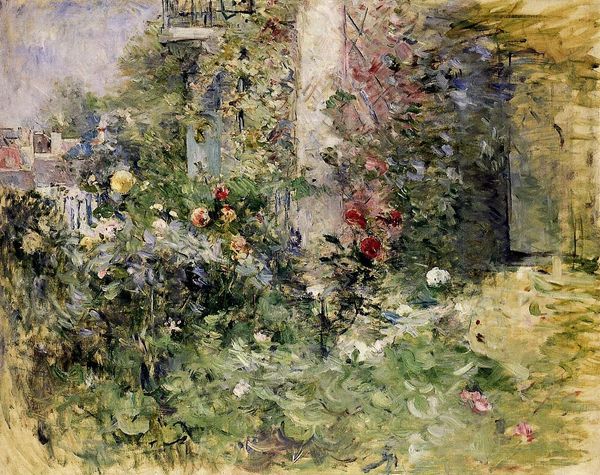
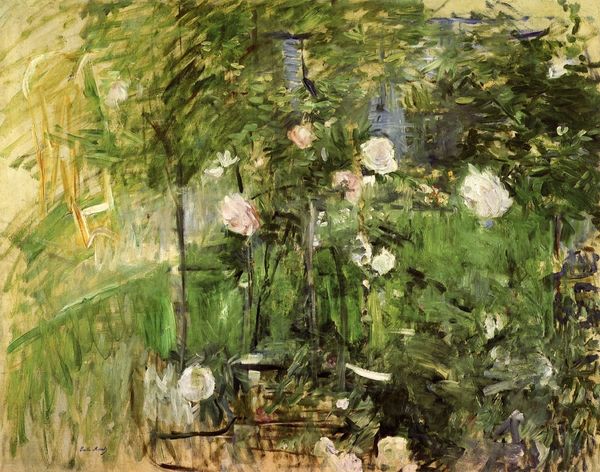
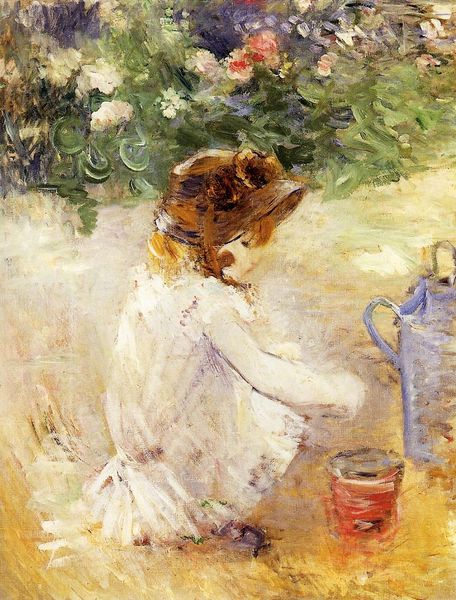
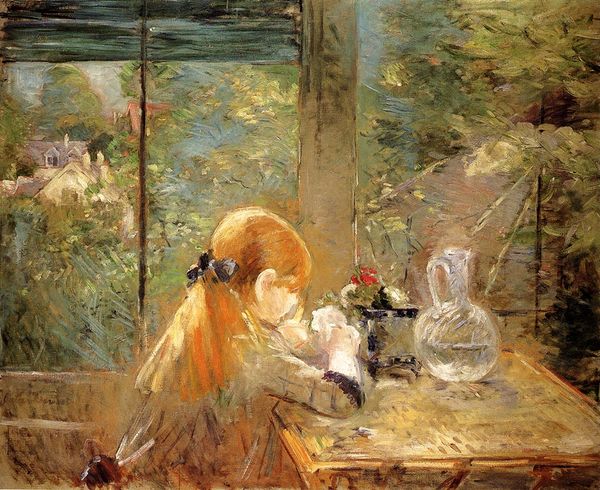
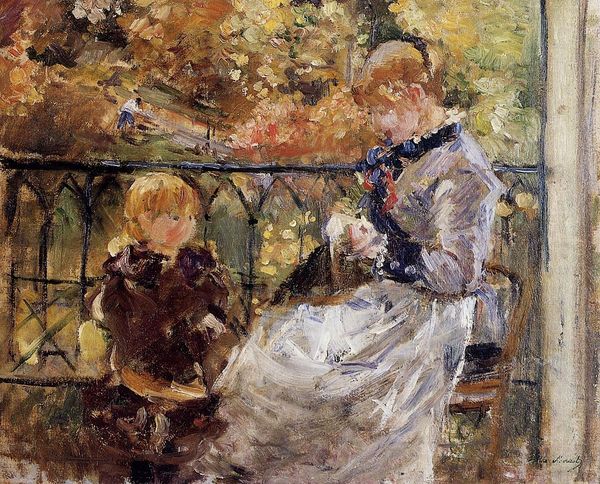
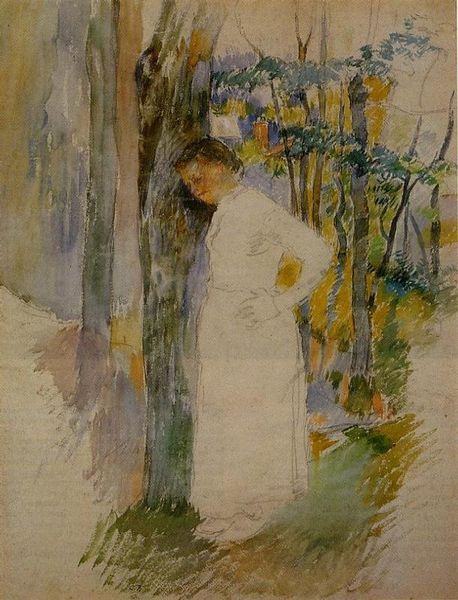
Curator: This is Berthe Morisot's "Child in the Rose Garden," painted in 1881. It's currently housed at the Wallraf-Richartz Museum in Cologne. Editor: It has a wonderfully wistful atmosphere, almost dreamlike. The soft brushstrokes and muted colors give it a sense of fleeting beauty. Curator: Morisot, deeply involved with Impressionist circles, was keen to represent everyday life, in her unique manner of painting *en plein air*, she uses loose brushwork that's evident here. I'm particularly interested in the visible texture of the oil paint, highlighting the process. Editor: Indeed, one must consider Morisot's position as a female artist within the Parisian art world. Scenes of domestic life and gardens, though seemingly apolitical, were arenas where women could exercise their artistic skill and find public exposure, navigating societal constraints. Curator: Precisely, the act of painting itself becomes a critical question. This piece feels both personal and carefully constructed, with the visible brushstrokes showing her mastery over her material conditions, emphasizing a female labor. Editor: Consider how the museum displays and frames this artwork within its larger collection. Its reception will be filtered through curatorial decisions, impacting our current reading. The location here matters because Cologne places it in a European, non-French, public sphere. Curator: Yes, the work itself becomes a point of exchange. Its location speaks of colonial acquisitions and also the movement of aesthetics within specific economic corridors during the late nineteenth century, thus affecting interpretations through time. The movement of materials across geopolitical terrains allows us to engage in a post-colonial lens. Editor: And the very presence of a child further complicates this context. Children often symbolize innocence and vulnerability, so the painting taps into broader cultural conversations about family and social roles. But again, this representation happens inside institutional walls. Curator: I find myself lingering over the fence. It becomes a framing device both literally in the garden, and, more conceptually, regarding Morisot's status as a woman operating in a largely patriarchal industry. Editor: Looking back, the painting offers a beautiful meditation on childhood, art, and its social construction, ripe for historical exploration. Curator: And that exploration continues today through every visible stroke, an understanding of which leads us to discuss women and the means to produce art.
Comments
No comments
Be the first to comment and join the conversation on the ultimate creative platform.
 Collect
 React
React Comment
More like this