1865
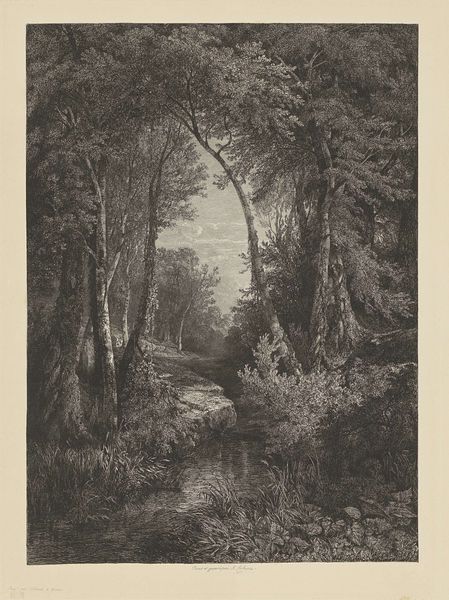
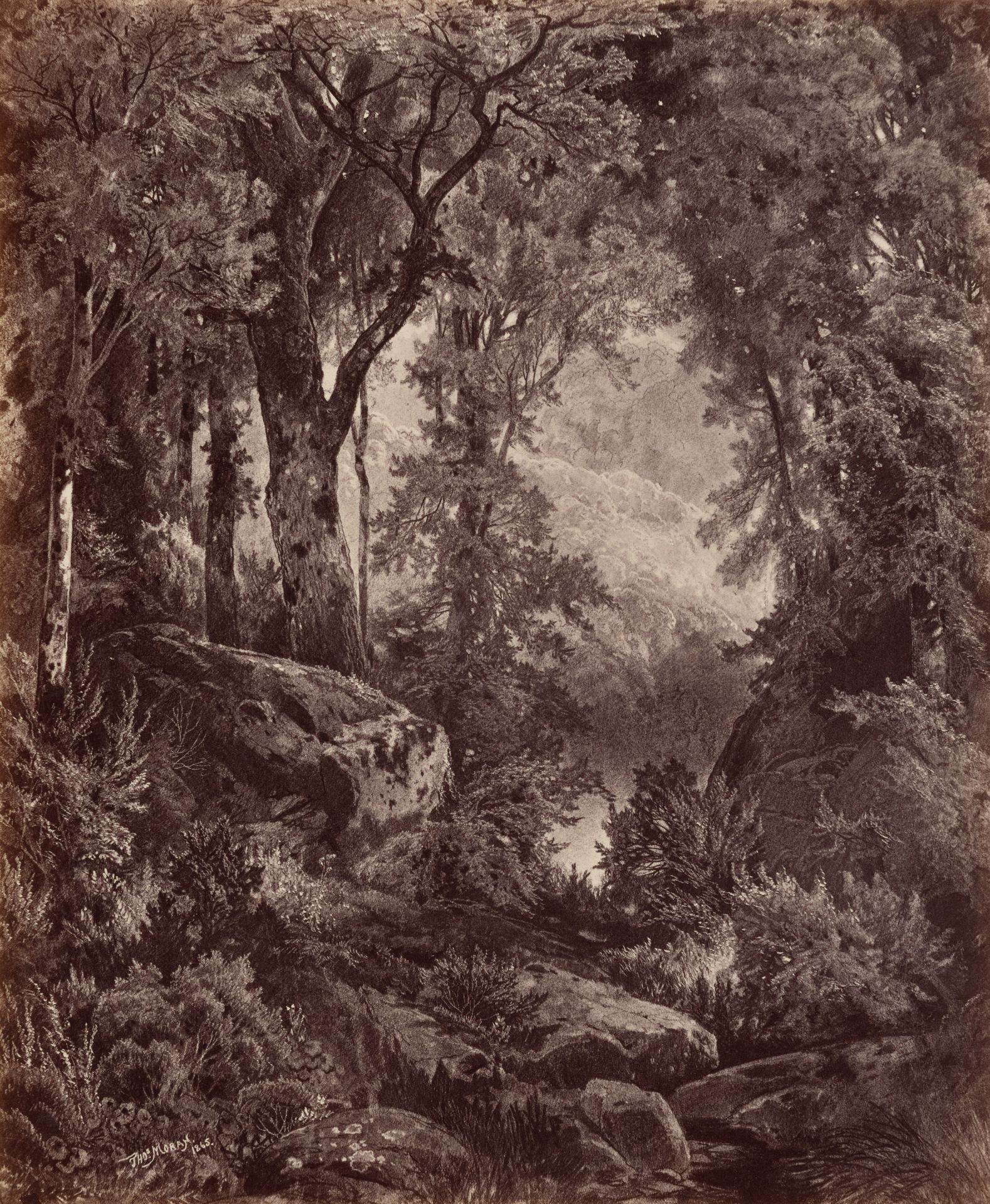
Solitude


Listen to curator's interpretation
Curatorial notes
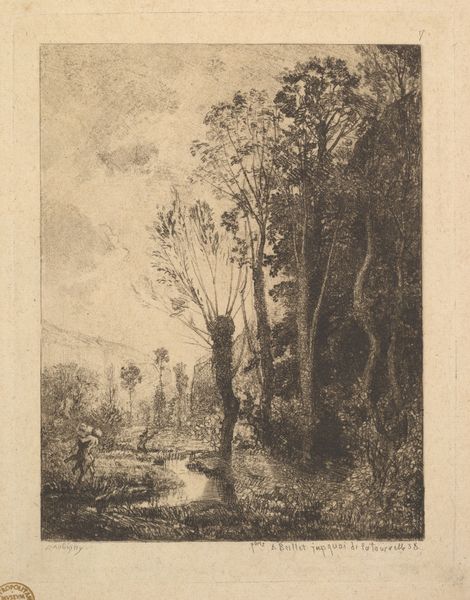
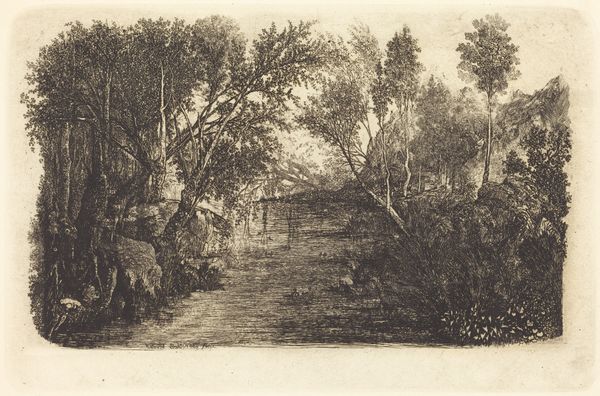
John Moran captures with light and shadow the quietude of the forest, in his work entitled 'Solitude'. The trees, like cathedral columns, arch overhead, their branches intertwining to form a sacred canopy. This imagery echoes through time, recalling the classical notion of the 'locus amoenus', the pleasant place, a staple in ancient literature and art representing an idealized natural landscape. Such places are retreats, offering solace and a space for contemplation. Yet, here, the shadows deepen, and the rocks loom large, evoking a sense of romantic solitude. The forest has, since the times of the German romantics, been a place of introspection, a mirror to the soul. It is a stage where the self confronts its innermost feelings. Consider the visual weight of the rocks: they are not merely geological features but psychological anchors, grounding the viewer in the present moment while hinting at the timelessness of nature's cycles. 'Solitude' is not merely the absence of company but a journey into the self, a theme that perpetually resurfaces in the human experience.