1825
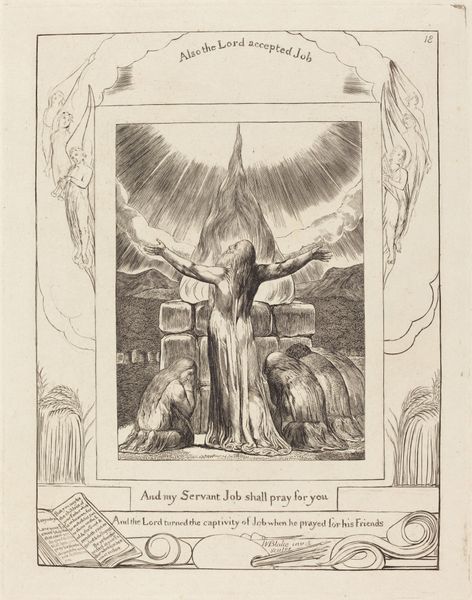
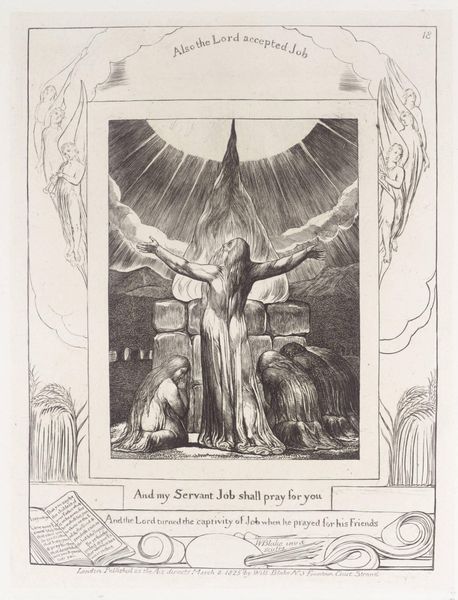
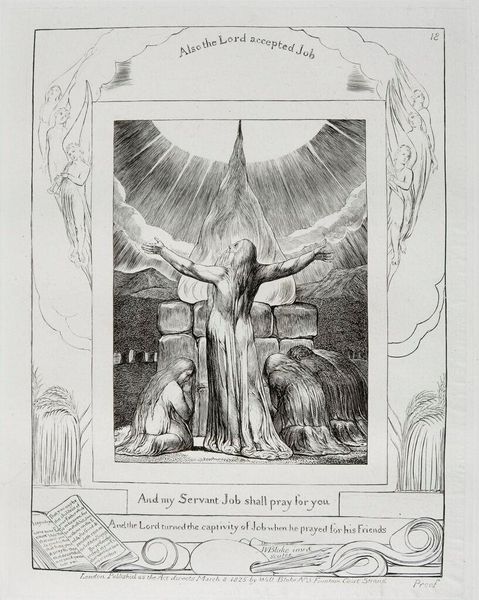
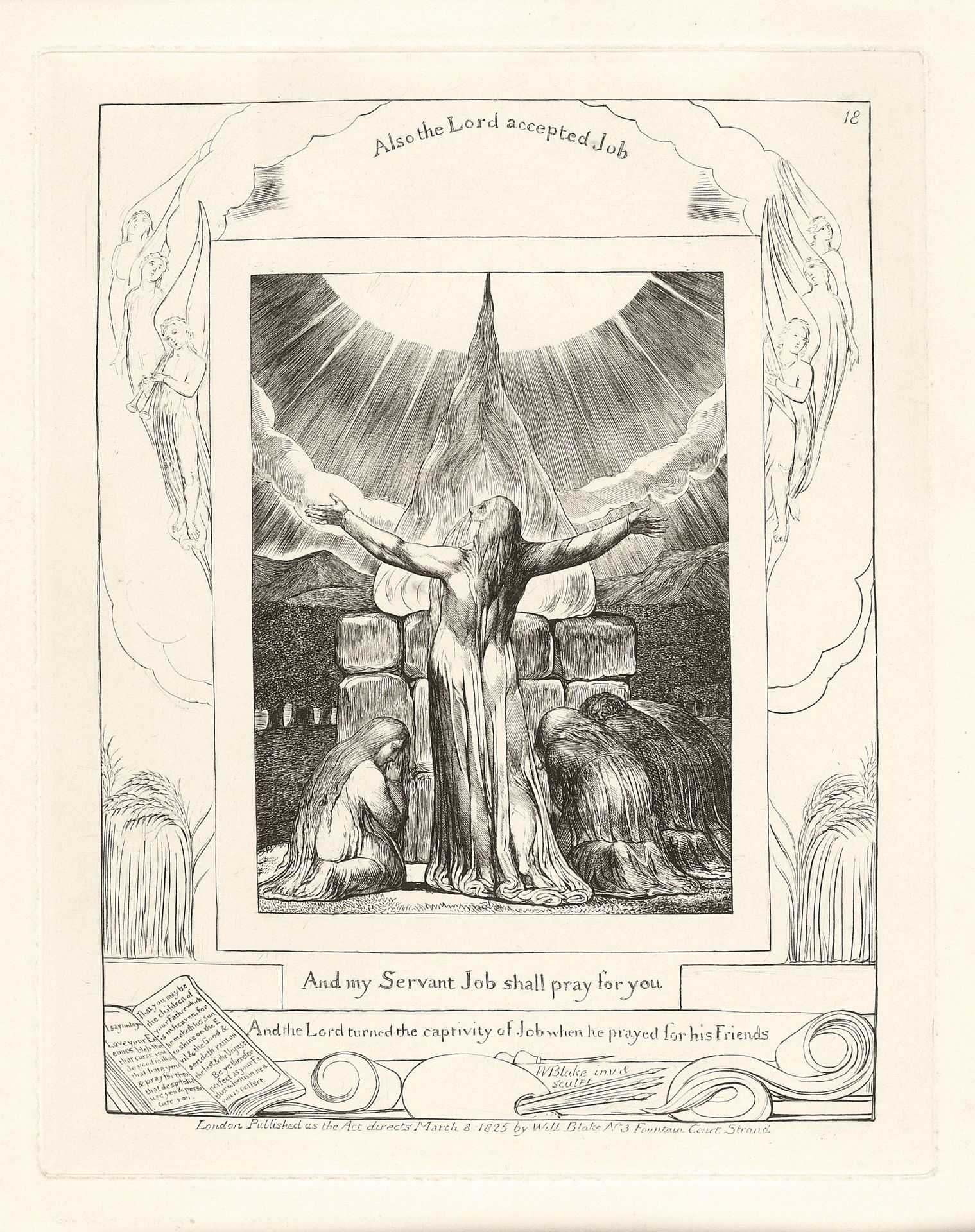
And my Servant Job shall pray for you


Listen to curator's interpretation
Curatorial notes
Editor: Here we have William Blake's engraving "And my Servant Job shall pray for you," created in 1825. I’m struck by the sharp lines and dramatic lighting; it's very theatrical, almost like a stage production. What draws your eye? Curator: Immediately, I notice the materiality of the print itself. The very act of engraving, a labor-intensive process, dictates a certain linearity and precision. Blake controlled every aspect of production, challenging the conventional separation of artist and artisan. The image becomes a record of his physical labor. Editor: So the process of making the artwork is central to its meaning? Curator: Absolutely. Consider the context: Blake was deeply critical of industrializing society. His emphasis on handcrafted production is a direct response to the burgeoning factories that were displacing skilled laborers. What is the relation between spiritual enlightenment and means of production? How does Blake, an artist, locate the intersection of morality and labor within art creation? Editor: I see, he is embedding a social critique within a religious narrative, critiquing the loss of individual skill with the rise of industrial manufacturing, making this choice quite compelling for interpreting its artistic intent. Curator: Precisely. And consider how this print might have been circulated – consumed, possessed, and potentially understood within these contexts of economic change. Does thinking about its original patronage perhaps influence its accessibility as a work of 'art'? Editor: I hadn't considered the societal critiques inherent in the work. Curator: Blake challenges the whole distinction of 'high' art detached from these factors, pointing at the politics inherent to its making and, thus, interpreting art history in general through the lens of materiality and labour. Editor: It's definitely shifted my understanding; seeing it as a product of its socio-economic time and artistic intentions provides context beyond simple aesthetics. Thanks.